
Share this
by Keith Gutierrez on Mar 19, 2026
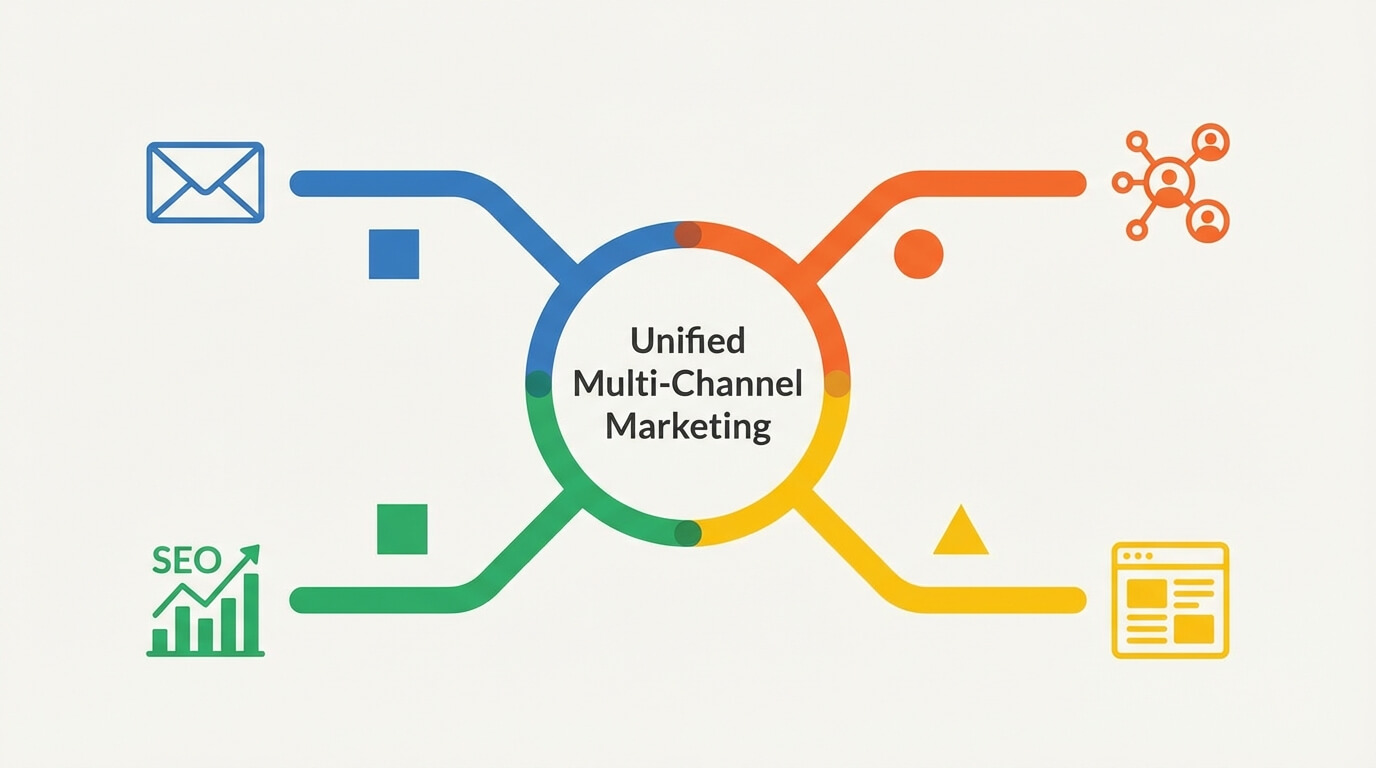
HubSpot Marketing Hub empowers B2B service companies to execute multi-channel strategies by centralizing all marketing activities—from email and social media to SEO and ads—on a single platform. This provides a unified view of the customer journey and ensures consistent messaging across all touchpoints.
What You'll Learn
This article breaks down exactly how HubSpot Marketing Hub acts as the command center for a modern B2B multi-channel strategy. You'll discover:
- How HubSpot unifies disparate marketing channels like email, social media, and your website.
- The strategic role of automation and personalization in the B2B buyer's journey.
- Why a single source of truth for data is critical for accurate attribution and reporting.
- How a professional HubSpot Marketing Hub Implementation unlocks the platform's full potential for omnichannel success.
The Core B2B Challenge: A Disconnected Customer Journey
For B2B service companies, the path from initial awareness to a signed contract is rarely linear. A prospect might discover your company through a LinkedIn post, read a blog article, download a whitepaper, and then receive a series of nurture emails—all before ever speaking to a sales representative.
When these channels operate in silos, the customer experience becomes fragmented, and your marketing team loses visibility. You're left asking critical questions: Which channel drove the most valuable leads? Is our messaging consistent? Are we wasting effort on tactics that don't work?
HubSpot Marketing Hub is designed to solve this exact problem by transforming disconnected, multi-channel efforts into a cohesive omnichannel strategy.
How HubSpot Marketing Hub Unifies Your Key Channels
HubSpot’s power lies in bringing all the essential B2B marketing functions under one roof. This integration allows for seamless campaign execution and a consistent brand experience. A proper HubSpot Marketing Hub Implementation ensures these tools are configured to work in concert from day one.
Centralized Content and SEO Strategy
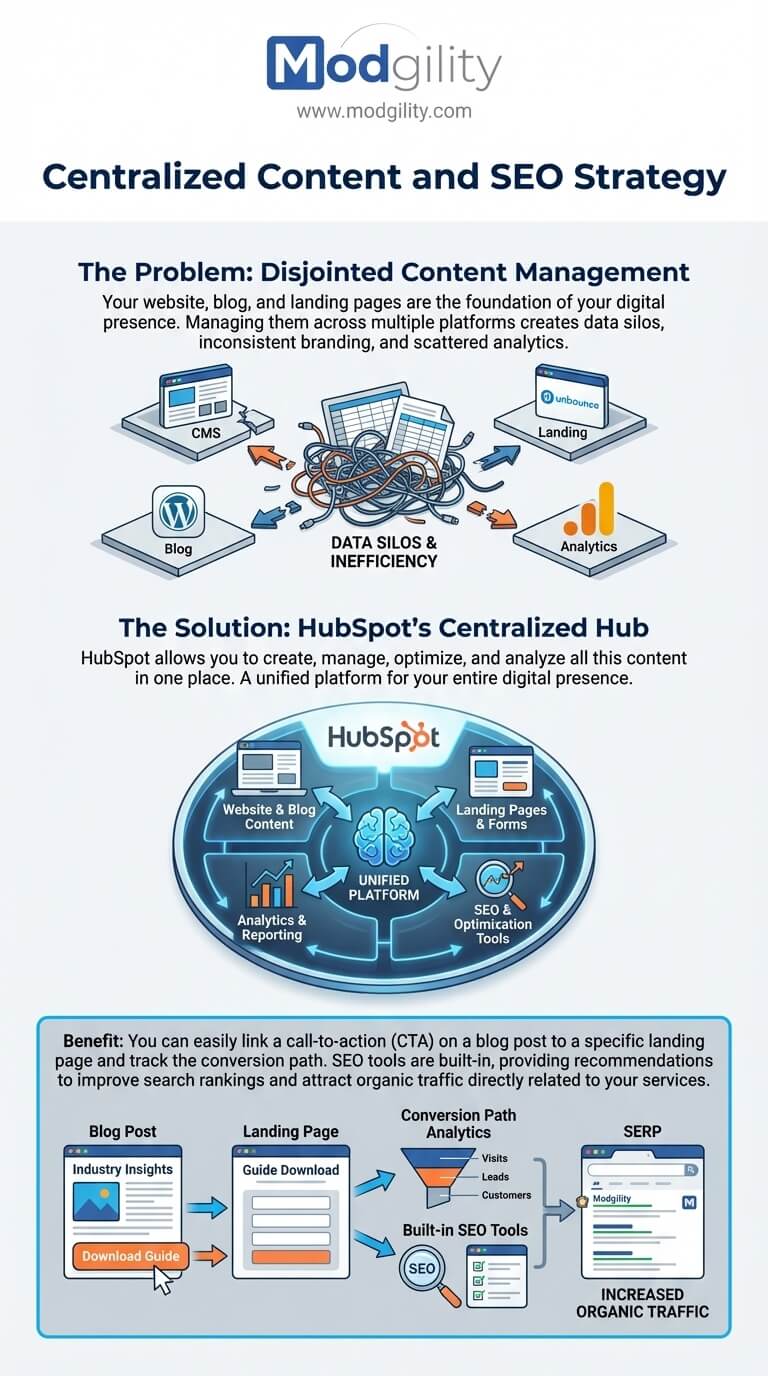
Your website, blog, and landing pages are the foundation of your digital presence. HubSpot allows you to create, manage, optimize, and analyze all this content in one place.
- Benefit: You can easily link a call-to-action (CTA) on a blog post to a specific landing page and track the conversion path. SEO tools are built-in, providing recommendations to improve search rankings and attract organic traffic directly related to your services.
Integrated Social Media Management
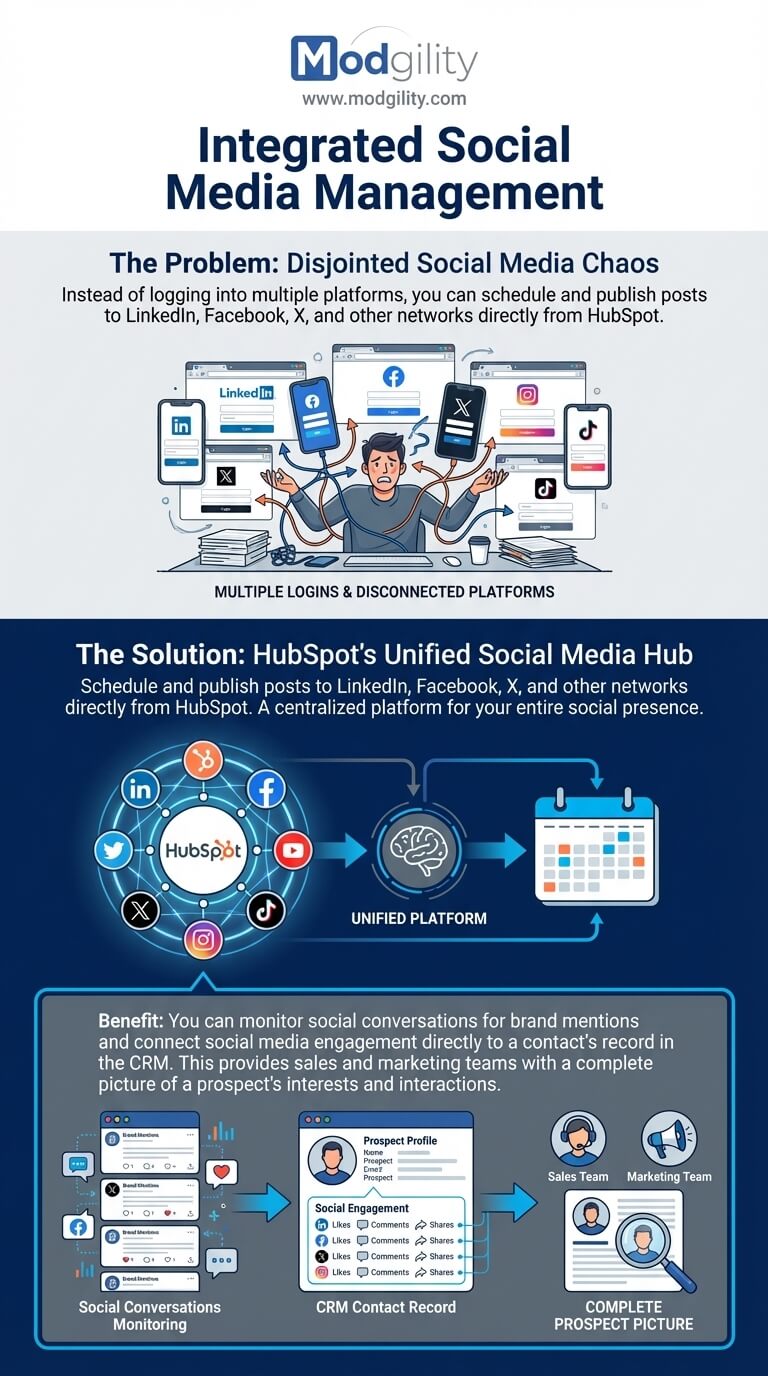
Instead of logging into multiple platforms, you can schedule and publish posts to LinkedIn, Facebook, X, and other networks directly from HubSpot.
- Benefit: You can monitor social conversations for brand mentions and connect social media engagement directly to a contact's record in the CRM. This provides sales and marketing teams with a complete picture of a prospect's interests and interactions.
Sophisticated Email Marketing and Nurturing
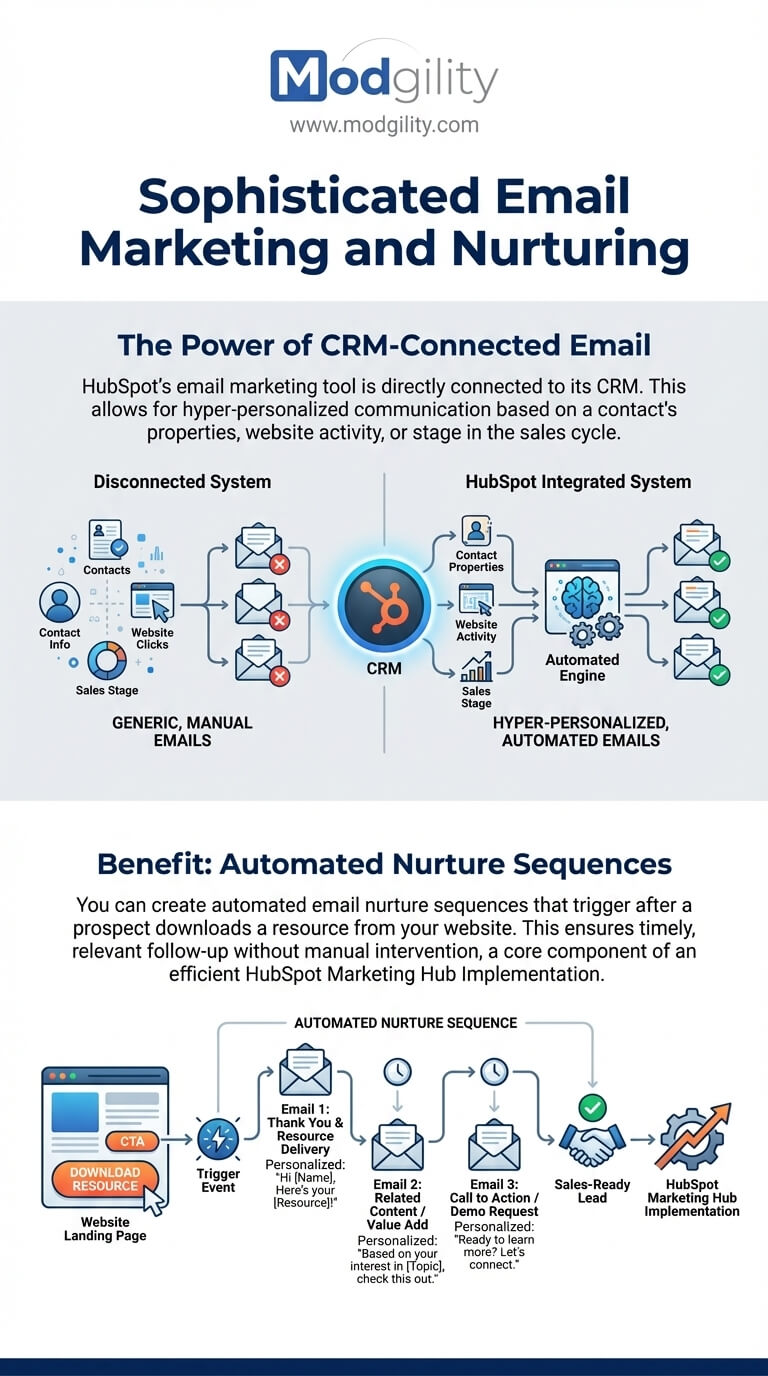
HubSpot’s email marketing tool is directly connected to its CRM. This allows for hyper-personalized communication based on a contact's properties, website activity, or stage in the sales cycle.
- Benefit: You can create automated email nurture sequences that trigger after a prospect downloads a resource from your website. This ensures timely, relevant follow-up without manual intervention, a core component of an efficient HubSpot Marketing Hub Implementation.
The Strategic Advantage: Data, Automation, and Personalization
Unifying your channels is the first step. The real strategic advantage comes from leveraging the shared data across those channels to automate and personalize the customer experience.
A Single Source of Truth: The HubSpot CRM
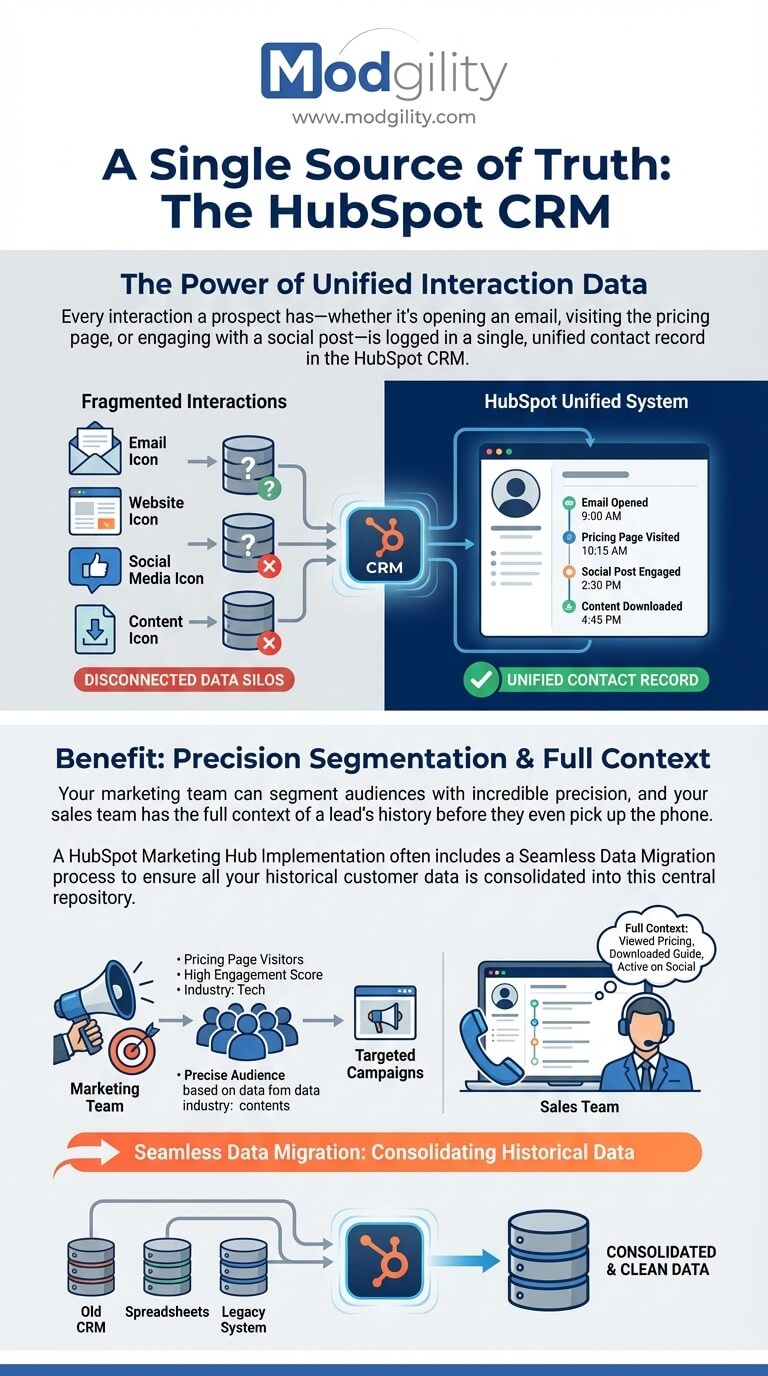
Every interaction a prospect has—whether it's opening an email, visiting the pricing page, or engaging with a social post—is logged in a single, unified contact record in the HubSpot CRM.
- Benefit: Your marketing team can segment audiences with incredible precision, and your sales team has the full context of a lead's history before they even pick up the phone. A HubSpot Marketing Hub Implementation often includes a
Seamless Data Migrationprocess to ensure all your historical customer data is consolidated into this central repository.
Powerful Marketing Automation Workflows
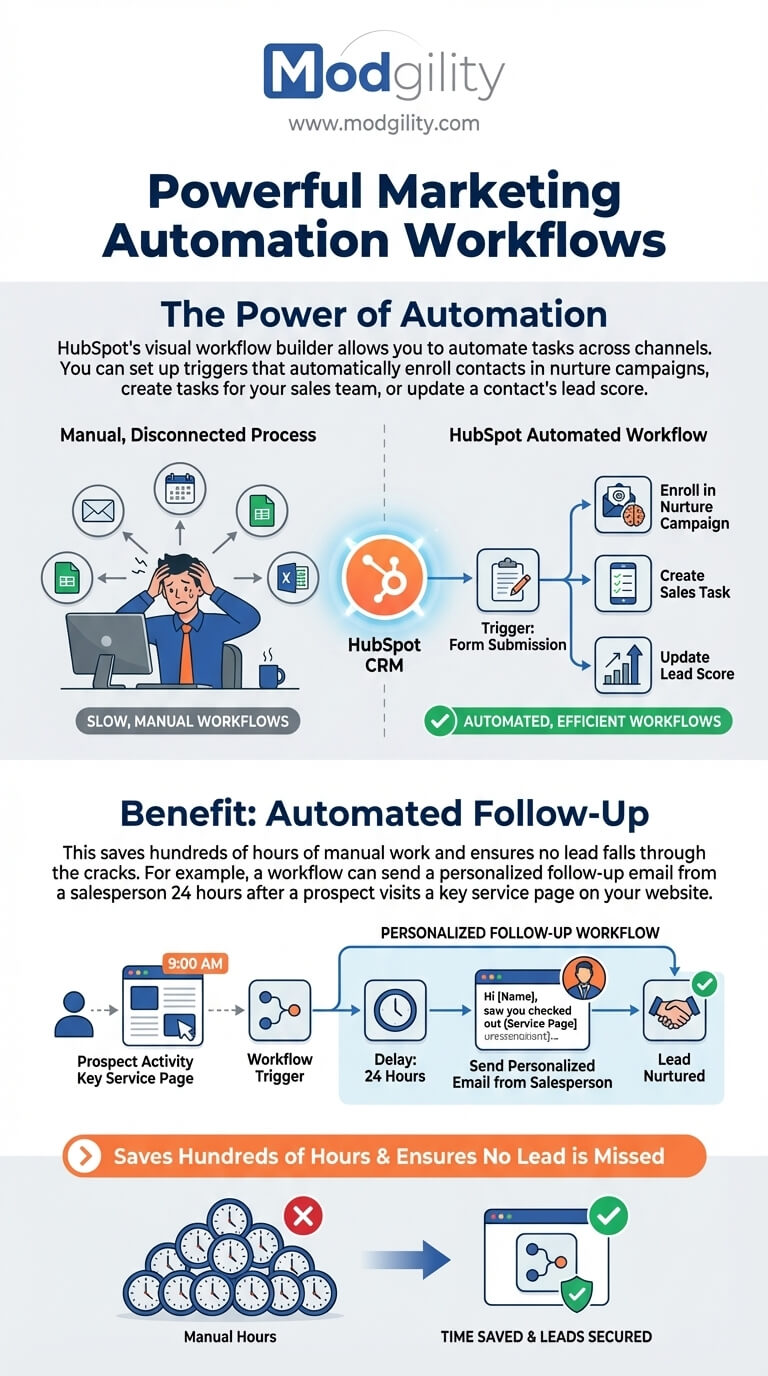
HubSpot's visual workflow builder allows you to automate tasks across channels. You can set up triggers that automatically enroll contacts in nurture campaigns, create tasks for your sales team, or update a contact's lead score.
- Benefit: This saves hundreds of hours of manual work and ensures no lead falls through the cracks. For example, a workflow can send a personalized follow-up email from a salesperson 24 hours after a prospect visits a key service page on your website.
Measuring What Matters: Unified Reporting and Analytics
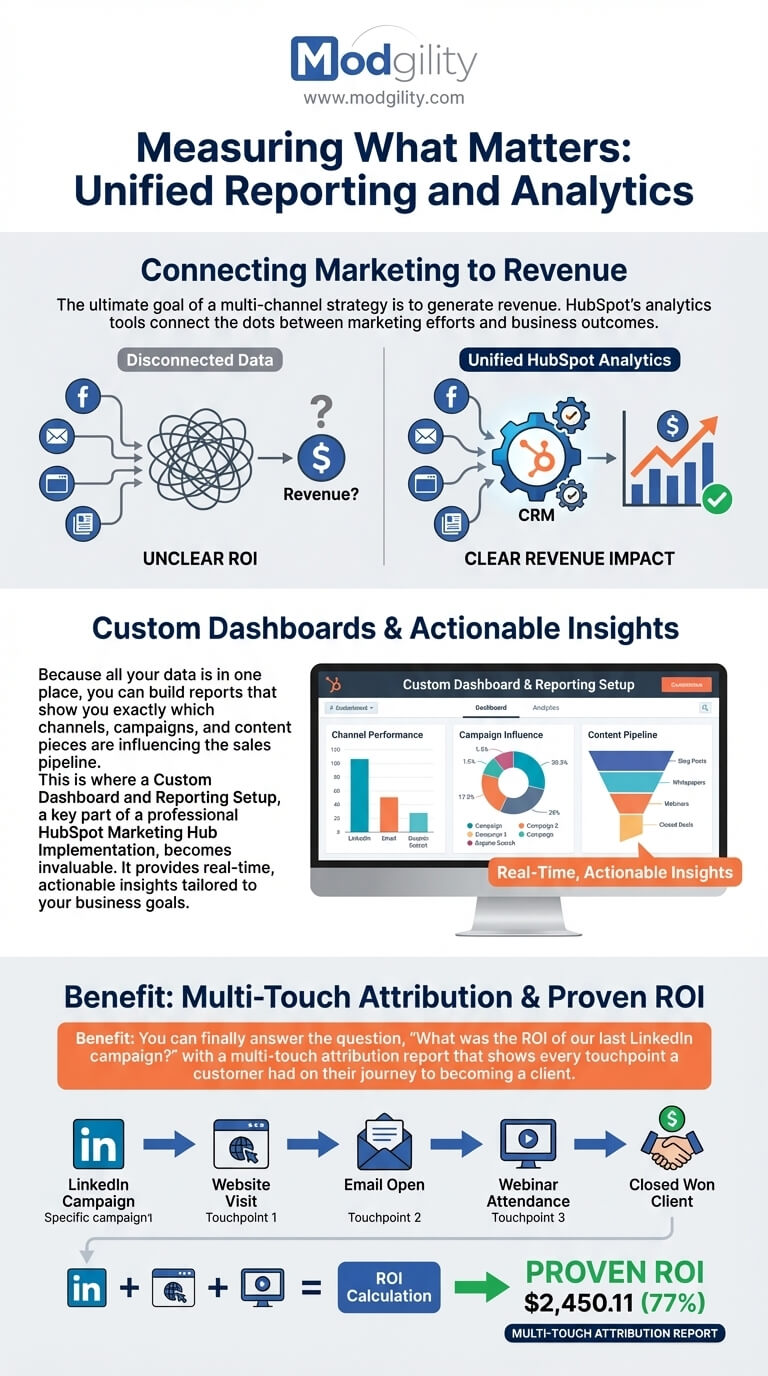
The ultimate goal of a multi-channel strategy is to generate revenue. HubSpot's analytics tools connect the dots between marketing efforts and business outcomes.
Because all your data is in one place, you can build reports that show you exactly which channels, campaigns, and content pieces are influencing the sales pipeline. This is where a Custom Dashboard and Reporting Setup, a key part of a professional HubSpot Marketing Hub Implementation, becomes invaluable. It provides real-time, actionable insights tailored to your business goals.
- Benefit: You can finally answer the question, "What was the ROI of our last LinkedIn campaign?" with a multi-touch attribution report that shows every touchpoint a customer had on their journey to becoming a client.
Unlocking Full Potential with a Professional HubSpot Marketing Hub Implementation
Simply subscribing to HubSpot is not enough to achieve omnichannel excellence. The platform is powerful and complex, and its true value is unlocked through strategic setup and configuration. This is why a professional HubSpot Marketing Hub Implementation is critical for B2B service companies.
A specialized implementation partner ensures the platform is perfectly aligned with your business processes and goals. Key services include:
- Tailored Onboarding and Setup: Configuring every tool—from email templates to lead scoring rules—to match your specific marketing and sales funnel.
- Seamless Data Migration: Securely transferring all your existing contact, company, and deal data from previous systems into HubSpot, creating a clean and unified database.
- Integration with Existing Systems: Ensuring HubSpot works flawlessly with your other business-critical software for a truly connected technology stack.
- Custom Dashboard and Reporting Setup: Building analytics dashboards that give you immediate, at-a-glance insights into the KPIs that matter most to your business.
- Comprehensive Training and Support: Empowering your team with the knowledge and confidence to use the platform effectively and drive measurable results.
By investing in a proper implementation, you ensure your team can leverage the platform's full suite of tools to create a truly seamless and effective multi-channel marketing machine.
Frequently Asked Questions
How does HubSpot Marketing Hub help with B2B multi-channel marketing?
HubSpot Marketing Hub helps by centralizing all B2B marketing activities—including email, social media, SEO, and ads—onto a single platform. This unification provides a complete view of the customer journey and ensures consistent messaging across all channels.
What core problem does HubSpot solve for B2B marketers?
HubSpot solves the problem of a disconnected customer journey where marketing channels operate in silos. It transforms fragmented, multi-channel efforts into a cohesive omnichannel strategy, providing clear visibility into which tactics are effective and ensuring a consistent customer experience.
How does HubSpot create a 'single source of truth' for customer data?
HubSpot creates a single source of truth by using its integrated CRM to log every prospect interaction—such as email opens, website page visits, and social media engagement—into one unified contact record. This gives both marketing and sales teams a complete history of a lead's activities.
Why is a professional HubSpot Marketing Hub Implementation important?
A professional implementation is critical because HubSpot is a powerful and complex platform. A specialized partner ensures the platform is correctly configured to align with specific business goals, manages seamless data migration, integrates with other systems, and provides the necessary training to unlock its full potential and achieve omnichannel success.
No Comments Yet
Let us know what you think