
Share this
by Keith Gutierrez on Mar 20, 2026
HubSpot Marketing Hub revolutionizes B2B SaaS lead generation by unifying marketing activities, automating complex nurturing workflows, and delivering deep analytical insights. This transforms scattered efforts into a cohesive, data-driven engine that consistently attracts, engages, and converts high-quality leads into paying customers.
What You'll Learn
- Centralized Lead Capture: How to stop losing leads by unifying all your capture points—from forms to ads—into a single, powerful system.
- Automated Nurturing: The impact of automating follow-ups and lead scoring to guide prospects through the complex B2B sales cycle without manual effort.
- Hyper-Personalization: How to use data to personalize every touchpoint, dramatically increasing engagement and conversion rates.
- Data-Driven Optimization: The importance of end-to-end analytics for understanding what works and making decisions that directly impact revenue.
- The Implementation Advantage: Why professional setup is the critical factor in unlocking HubSpot's full potential and achieving a rapid return on investment.
The Core Challenge: Fragmented Lead Generation in B2B SaaS
Lead generation is a fundamental metric for success, particularly in growth-focused B2B SaaS environments. However, many companies struggle with a fragmented tech stack. They use one tool for email, another for social media, a separate one for landing pages, and a spreadsheet to track leads.
This disconnection creates data silos, making it impossible to get a clear view of the buyer's journey. Leads fall through the cracks, marketing efforts are duplicated, and attributing revenue to specific campaigns becomes a guessing game.
How HubSpot Marketing Hub Drives B2B SaaS Lead Generation
HubSpot Marketing Hub solves this fragmentation by bringing all essential marketing functions under one roof. When set up correctly, it becomes the central nervous system for your company's growth.
1. Centralize Lead Capture and Management
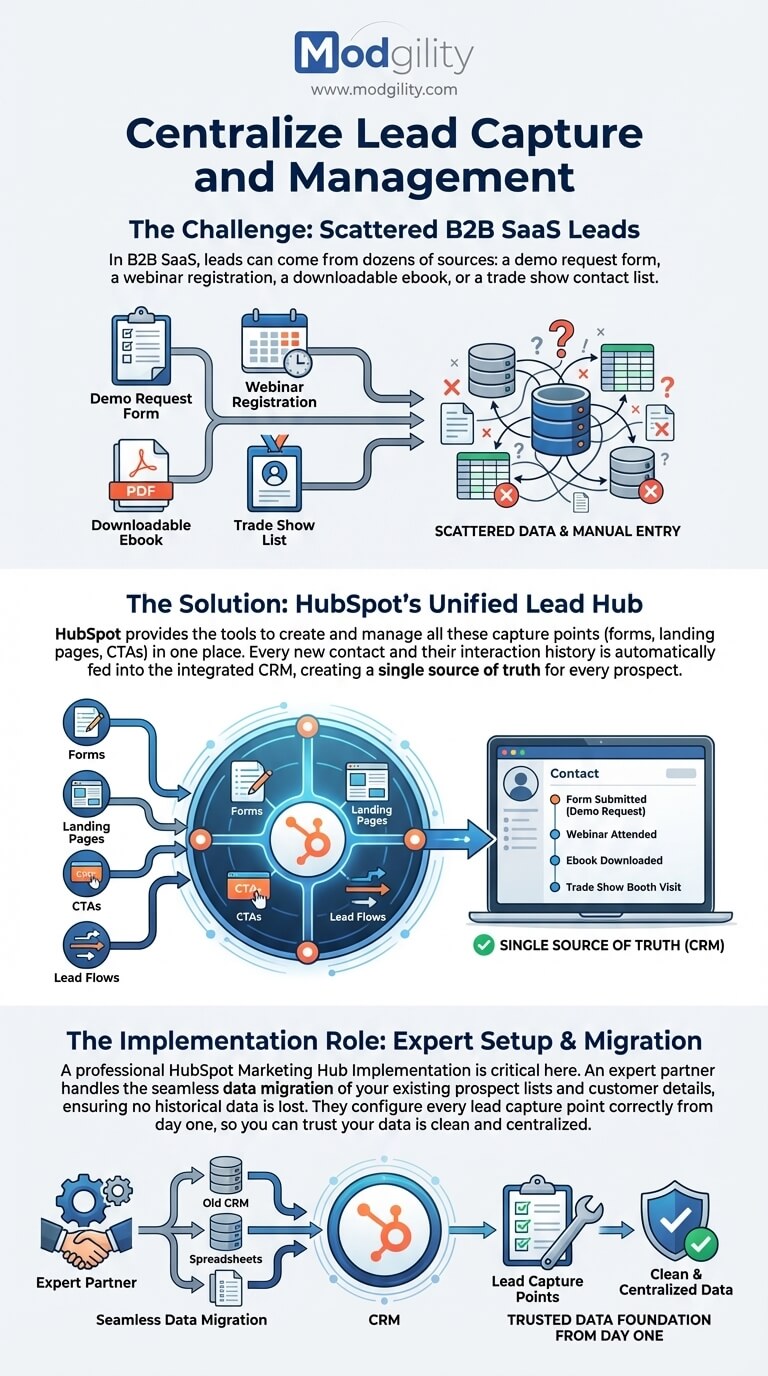
In B2B SaaS, leads can come from dozens of sources: a demo request form, a webinar registration, a downloadable ebook, or a trade show contact list. HubSpot provides the tools to create and manage all these capture points (forms, landing pages, CTAs) in one place.
Every new contact and their interaction history is automatically fed into the integrated CRM, creating a single source of truth for every prospect.
- The Implementation Role: A professional HubSpot Marketing Hub Implementation is critical here. An expert partner handles the seamless data migration of your existing prospect lists and customer details, ensuring no historical data is lost. They configure every lead capture point correctly from day one, so you can trust your data is clean and centralized.
2. Automate Lead Nurturing at Scale
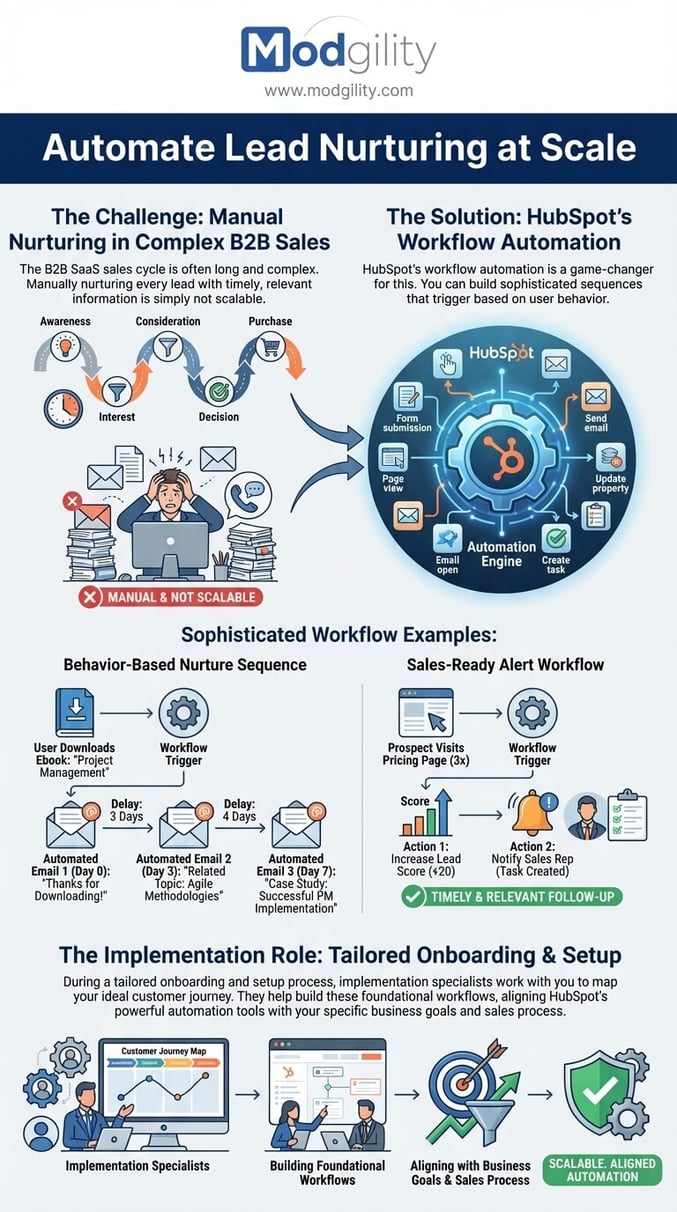
The B2B SaaS sales cycle is often long and complex. Manually nurturing every lead with timely, relevant information is simply not scalable. HubSpot’s workflow automation is a game-changer for this.
You can build sophisticated sequences that trigger based on user behavior. For example:
- A user downloads an ebook on "Project Management." They automatically receive a 3-part email series on related topics.
- A prospect visits your pricing page three times. The system automatically increases their lead score and notifies a sales rep to follow up.
This ensures that every lead receives the right message at the right time, guiding them toward a purchase decision.
- The Implementation Role: During a tailored onboarding and setup process, implementation specialists work with you to map your ideal customer journey. They help build these foundational workflows, aligning HubSpot's powerful automation tools with your specific business goals and sales process.
3. Personalize the Buyer's Journey
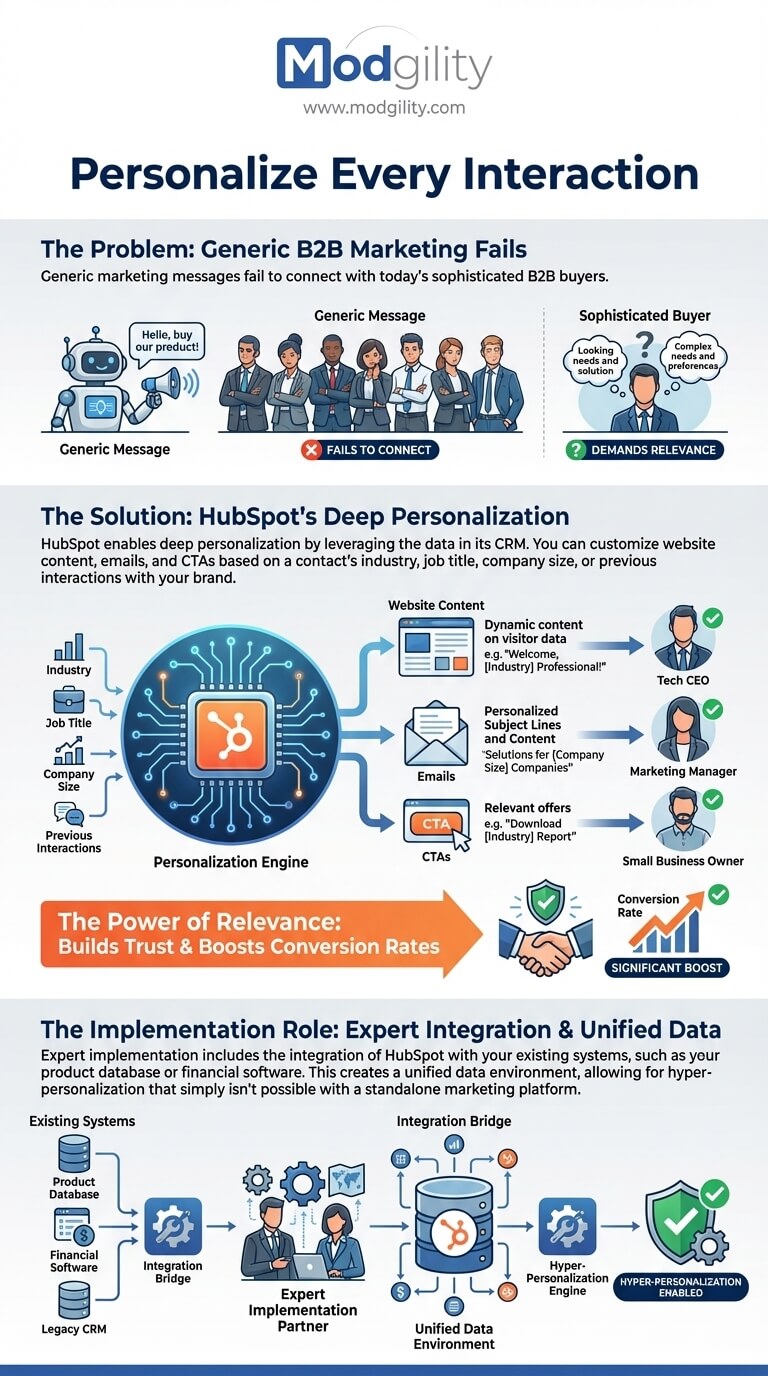
Generic marketing messages fail to connect with today's sophisticated B2B buyers. HubSpot enables deep personalization by leveraging the data in its CRM. You can customize website content, emails, and CTAs based on a contact's industry, job title, company size, or previous interactions with your brand.
This level of relevance makes prospects feel understood, building trust and significantly boosting conversion rates.
- The Implementation Role: Expert implementation includes the integration of HubSpot with your existing systems, such as your product database or financial software. This creates a unified data environment, allowing for hyper-personalization that simply isn't possible with a standalone marketing platform.
4. Measure and Optimize with Powerful Analytics
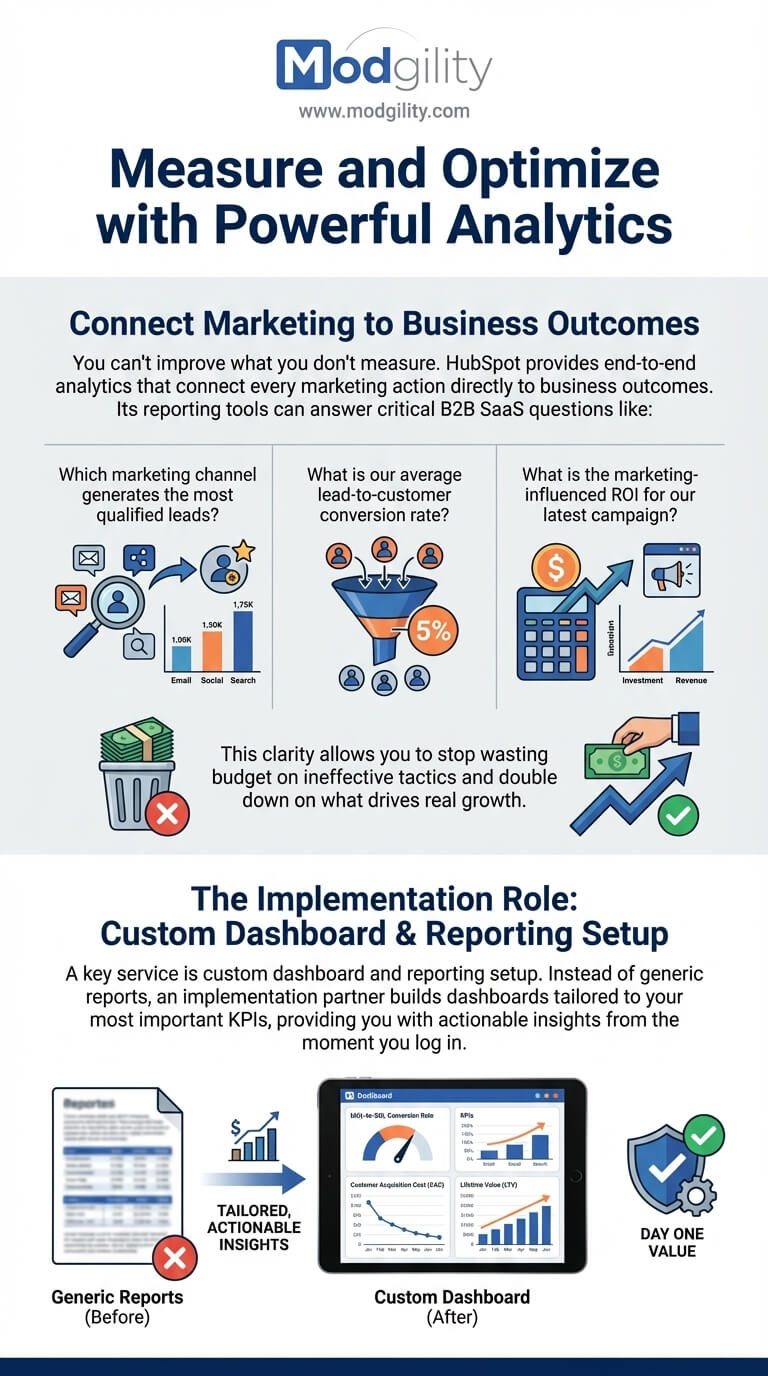
You can't improve what you don't measure. HubSpot provides end-to-end analytics that connect every marketing action directly to business outcomes. Its reporting tools can answer critical B2B SaaS questions like:
- Which marketing channel generates the most qualified leads?
- What is our average lead-to-customer conversion rate?
- What is the marketing-influenced ROI for our latest campaign?
This clarity allows you to stop wasting budget on ineffective tactics and double down on what drives real growth.
- The Implementation Role: A key service is custom dashboard and reporting setup. Instead of generic reports, an implementation partner builds dashboards tailored to your most important KPIs—like MQL-to-SQL conversion rates, Customer Acquisition Cost (CAC), and Lifetime Value (LTV)—providing you with actionable insights from the moment you log in.
The Implementation Advantage: Unlocking HubSpot's Full Potential
HubSpot Marketing Hub is an incredibly powerful platform, but its value is only realized when it's configured to match your unique business processes. A DIY setup often leads to underutilization, messy data, and frustrated teams.
A professional HubSpot Marketing Hub Implementation ensures you avoid these pitfalls. With expert guidance, you can:
- Accelerate Time-to-Value: Get the system running optimally in weeks, not months.
- Empower Your Team: Comprehensive training and support ensure your marketers are confident and capable of using the platform to its full potential.
- Build for Scale: A properly implemented HubSpot instance is built on a solid foundation that can grow with your business, not hold it back.
Conclusion: From Scattered Tactics to a Cohesive Growth Engine
For B2B SaaS companies, HubSpot Marketing Hub is more than just a marketing tool—it's a strategic asset for growth. By centralizing data, automating nurturing, enabling personalization, and providing clear analytics, it transforms lead generation from a series of disconnected tactics into a predictable, scalable, and highly effective system.
To truly harness this power, a strategic implementation is not a luxury; it's a necessity. By partnering with experts, you ensure your investment in technology translates directly into measurable business growth.
Frequently Asked Questions
How does HubSpot solve fragmented lead generation for B2B SaaS companies?
HubSpot solves fragmentation by unifying essential marketing functions like lead capture forms, landing pages, email, and analytics into a single platform. This eliminates data silos by feeding every contact and interaction into an integrated CRM, creating a single source of truth for the entire buyer's journey.
What is HubSpot's key feature for lead nurturing?
The key feature for lead nurturing is its powerful workflow automation. This allows businesses to build sophisticated sequences that send timely, relevant messages to leads based on their specific behaviors, such as downloading content or visiting a key page. This process guides prospects through the sales cycle without manual intervention.
Why is professional implementation of HubSpot Marketing Hub so important?
Professional implementation is crucial because it helps avoid the common pitfalls of a DIY setup, such as underutilization and messy data. It accelerates the time-to-value, ensures the team is properly trained, and builds a scalable system that aligns with specific business goals for measurable growth.
How does HubSpot enable personalization in marketing?
HubSpot enables deep personalization by using the rich data stored in its integrated CRM. Marketers can customize website content, emails, and calls-to-action (CTAs) based on a contact's industry, company size, job title, or past interactions, making prospects feel understood and significantly boosting engagement.
No Comments Yet
Let us know what you think