
Share this
by Keith Gutierrez on Jul 6, 2026
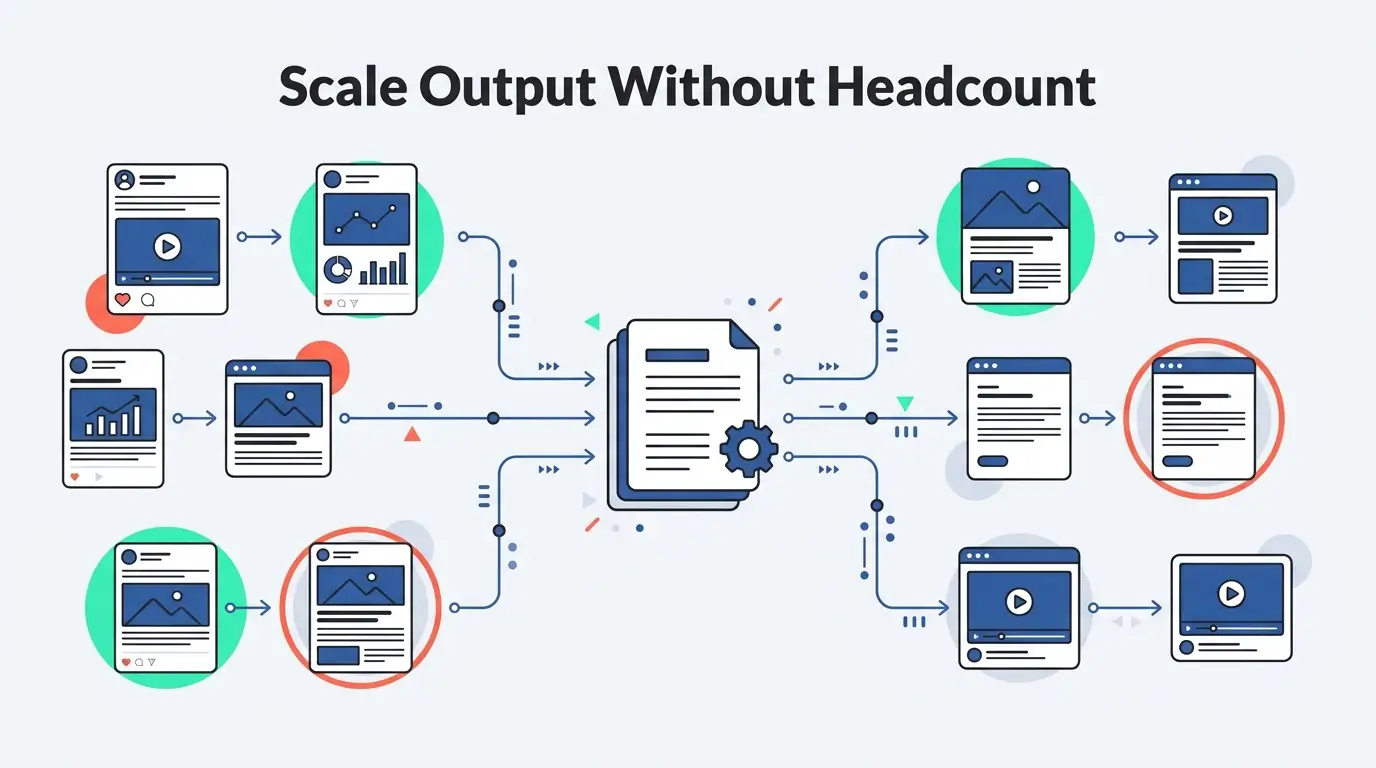
Most marketing leaders believe increasing output requires either a $70,000 headcount or a $5,000 monthly agency retainer.
If you are trying to drive qualified demand under strict budget constraints, those numbers are a non-starter for your CFO.
Below is the actual financial math on scaling business-to-business content production without adding staff, the hidden operational drags that kill return on investment, and a blueprint for generating publish-ready output at a fraction of the expected cost.
The True Financial Burden of Traditional Content Growth
Adding a dedicated writer to your payroll does not inherently solve your throughput problem.
Marketing directors frequently operate under the assumption that hiring an in-house creator or retaining a specialized agency will automatically clear their backlog.
The financial reality looks quite different when you account for the entire production lifecycle.
An in-house B2B writer costs an average of $6,000 per month when factoring in benefits, taxes, and software licenses.
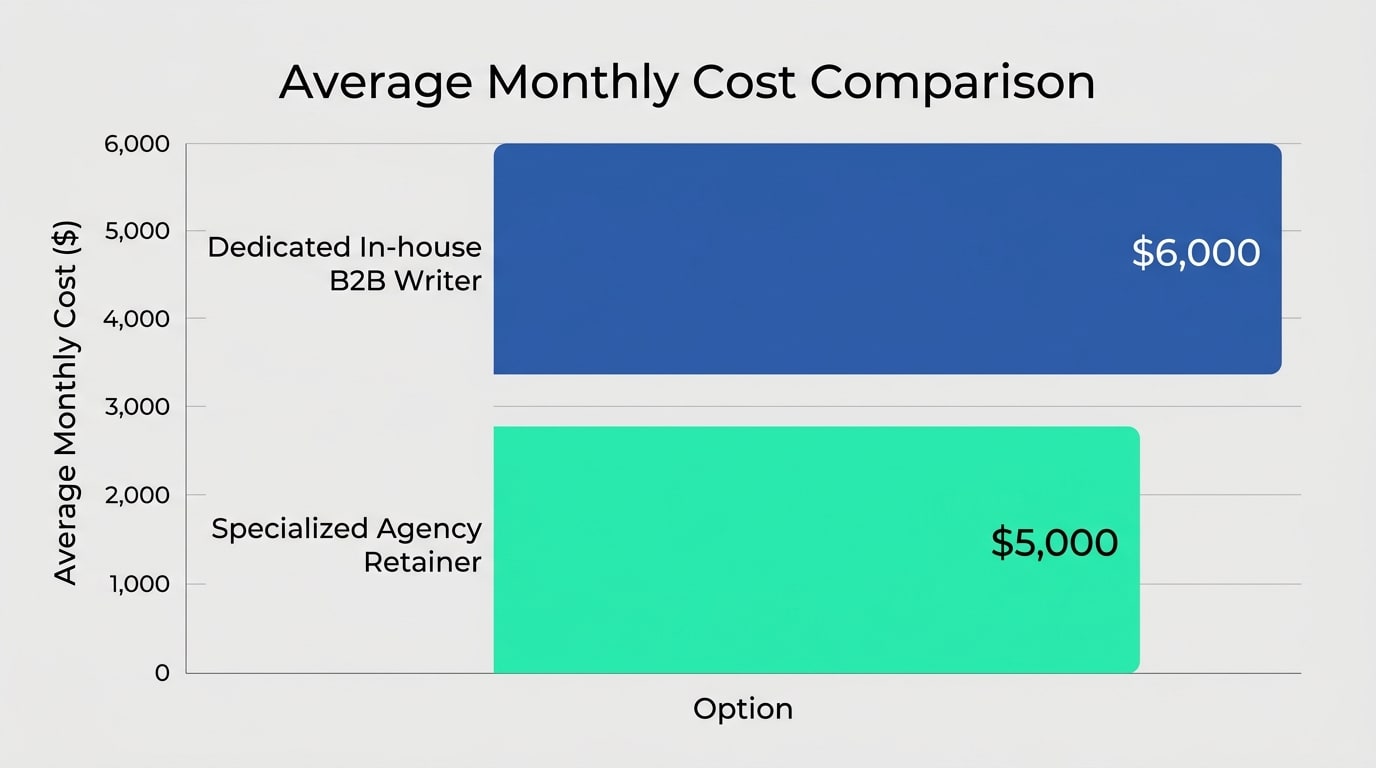
A specialized industry agency often charges retainers starting at $5,000 per month for a handful of blog posts and social assets.
But here's where it gets interesting:
The actual cost is not just the invoice.
It is the fragmented tool stack you must maintain to support them, the leaky handoffs between writers and marketing operations, and the countless hours your team spends correcting industry terminology.
You are paying premium rates for output that often fails to translate into sales-accepted opportunities.
What Actually Breaks When You Try to Scale Output
In our implementation with Highland Consulting at Crocker Park in Westlake, we saw content approval cycles stretch for months due to regulatory compliance requirements.
This happened despite having a dedicated financial industry content writer embedded directly on the agency team.
Throwing human capital at a workflow problem rarely works.
When the workflow is manual, the bottleneck merely shifts from the drafting phase to the editing and approval phases.
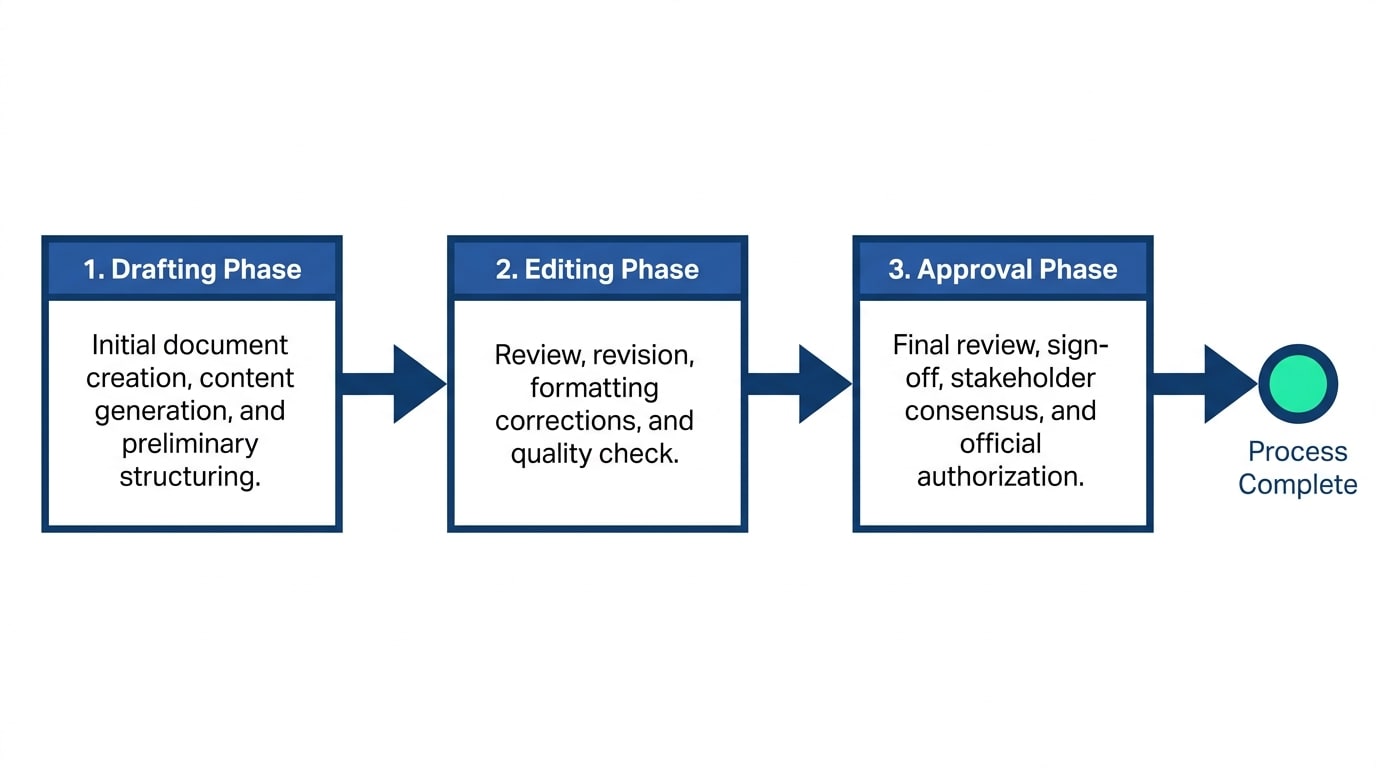
A marketing department trying to increase its publishing cadence without the right operational systems will quickly bury its own leaders in endless Google Doc revisions.
This creates measurable challenges in achieving consistent publishing progress.
You miss your targets not because the writing is poor, but because the infrastructure cannot handle the volume required to feed modern search engines.
The Financial Blueprint for AEO-Driven Scaling
The bottleneck is not writing, it is the 47 minutes spent manually reformatting and tagging after the draft already exists.
Scaling without staff requires a system that handles the entire downstream execution.
For organizations looking to control customer acquisition costs, the Modgility AEO MAX suite provides a concrete financial alternative to the agency model.
Included in Modgility AEO MAX at $500 per month are 3 seats, 25,000 credits per month, and all three products.
This full suite encompasses Content MAX, Social MAX, and Insights MAX.
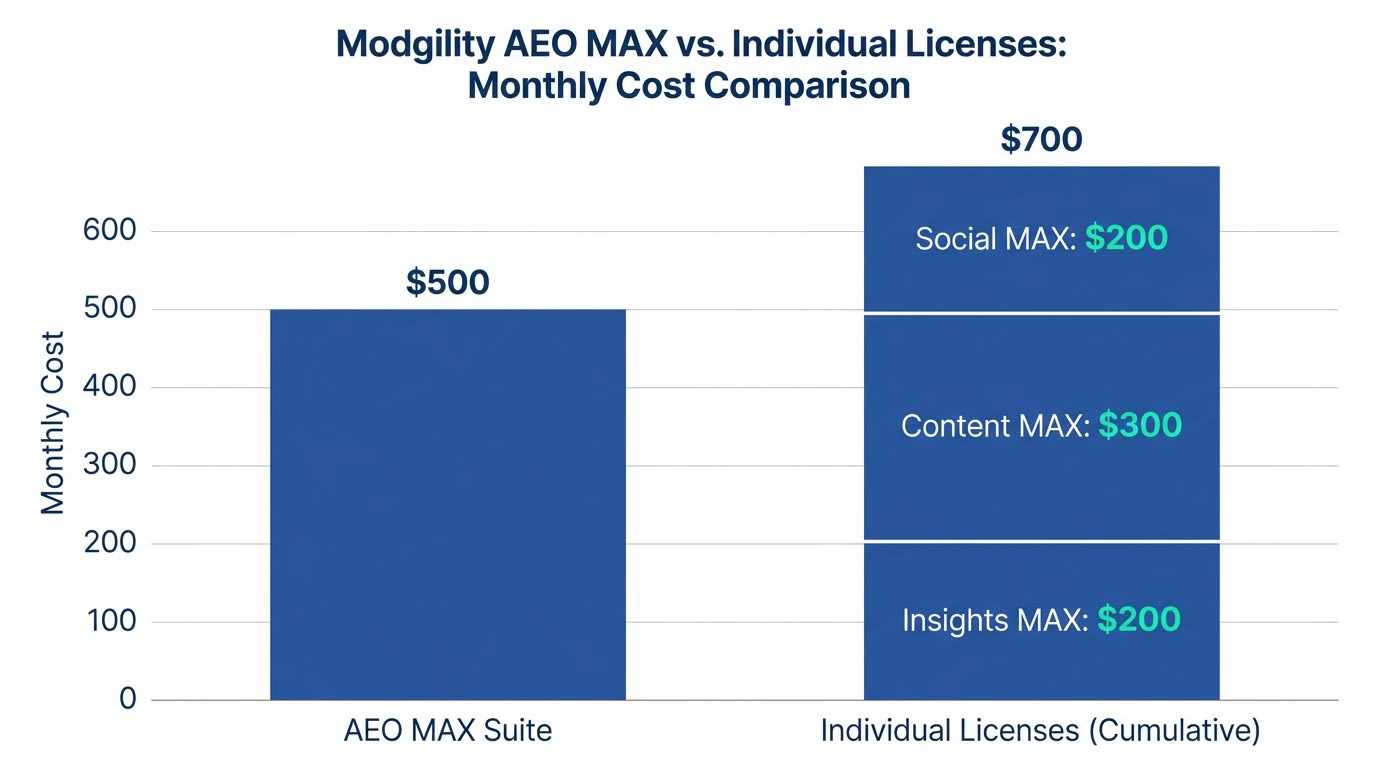
Purchasing the suite outright saves approximately $297 per month compared to buying the individual licenses.
If you were to piece this together standalone, Insights MAX is $200 per month, Content MAX is $300 per month, and Social MAX is $200 per month.
The suite requires a one-time setup fee of $750.
If your team expands, additional seats are $25 per seat per month, and additional credits are $20 per 1,000, with credits rolling over month to month.
There is no annual contract required, as the platform operates exclusively month-to-month.
Now:
Consider what happens to your budget justification when you compare a $500 monthly software expense to a $5,000 agency retainer.
Calculating the ROI of High-Volume Production
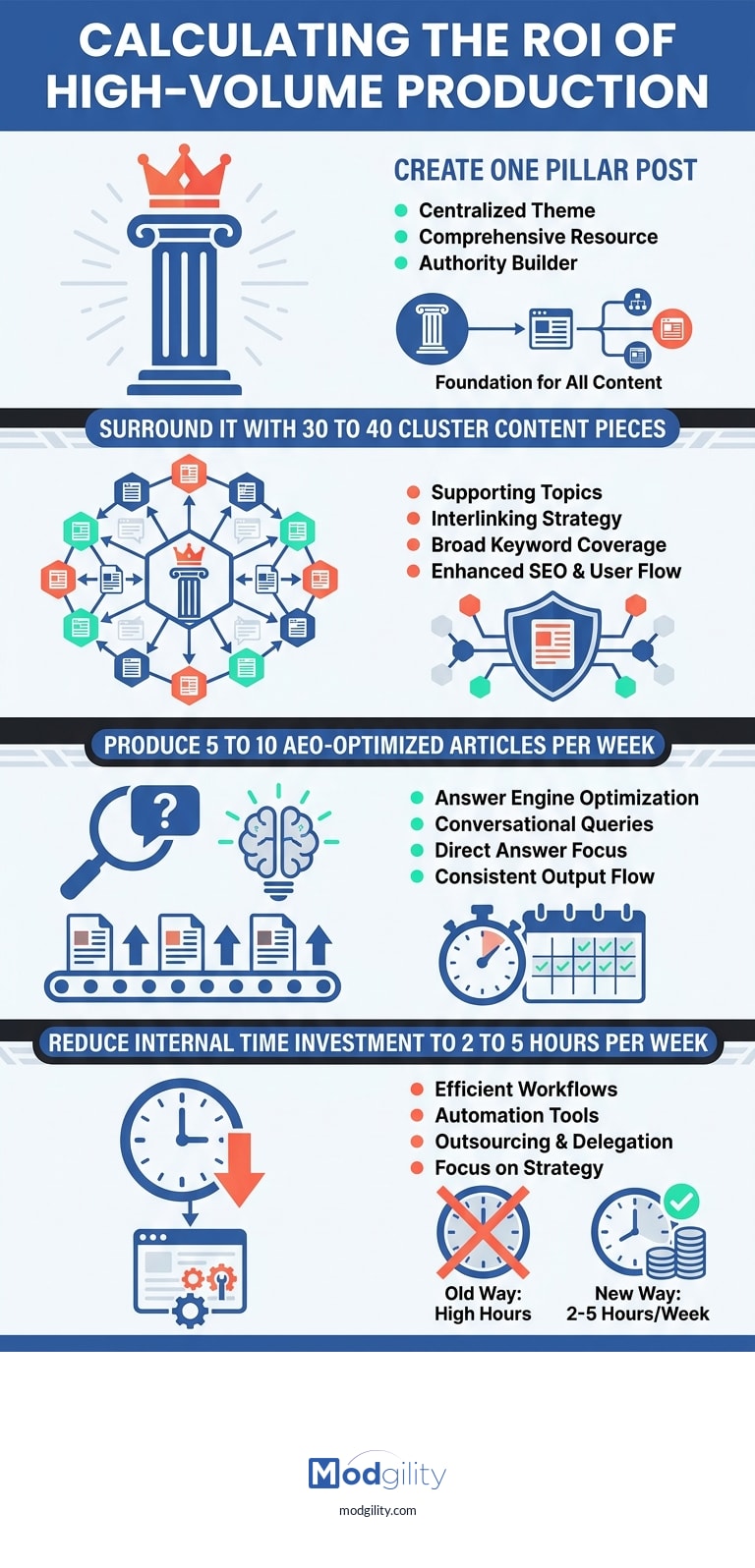
Our AEO content methodology requires creating one pillar post surrounded by 30 to 40 pieces of cluster content.
Each of these cluster posts targets a specific persona-and-product combination.
We use distinct phrasing engineered specifically to match likely queries inside large language models and answer engines.
Depending on the number of audience segments you serve, your total volume may easily exceed 40 distinct pieces per campaign.
Trying to execute this volume manually would require an entire department.
A fully set up AEO MAX system produces 5 to 10 AEO-optimized articles per week.
These articles are publish-ready out of the system.
That means they include light-edit-ready copy, fully optimized WebP featured and in-content images, JSON-LD schema markup, and HTML formatted for direct copy-paste into any content management system.
Your internal time investment drops to exactly 2 to 5 hours per week for articles, covering light editing and publishing.
The Amplification Effect of Knowledge Base Integration
In our work with Bunting Magnetics, we connected their retrieval-augmented generation knowledge base directly to their social media creation tool.
This mechanism allows exact viewpoints pulled from their proprietary database to be used as context inputs when generating LinkedIn assets.
What does that look like in practice?
The intended publishing model generates five to six social posts from every single blog or pillar piece.
Those posts are then scheduled across platforms to maintain consistent daily visibility.
This is accomplished without any additional manual writing effort from your internal team.
Using Social MAX, your system starts from article synopses that automatically pre-load campaign-aligned topic angles and prompts.
You can expect 5 to 15 social posts per week, reducing social production from scratch to just 1 to 3 hours per week.
Your team stops staring at blank screens and transitions into an editorial approval role.
Five Technical Requirements for Replacing Staff With Systems
The Ground phase exists because open web data produces output that sounds exactly like your competitors.
If you attempt to scale output using generic generation tools, you risk damaging the credibility you have built with your executive team and your buyers.
A reliable system must differentiate itself from standard chat interfaces in five specific ways.
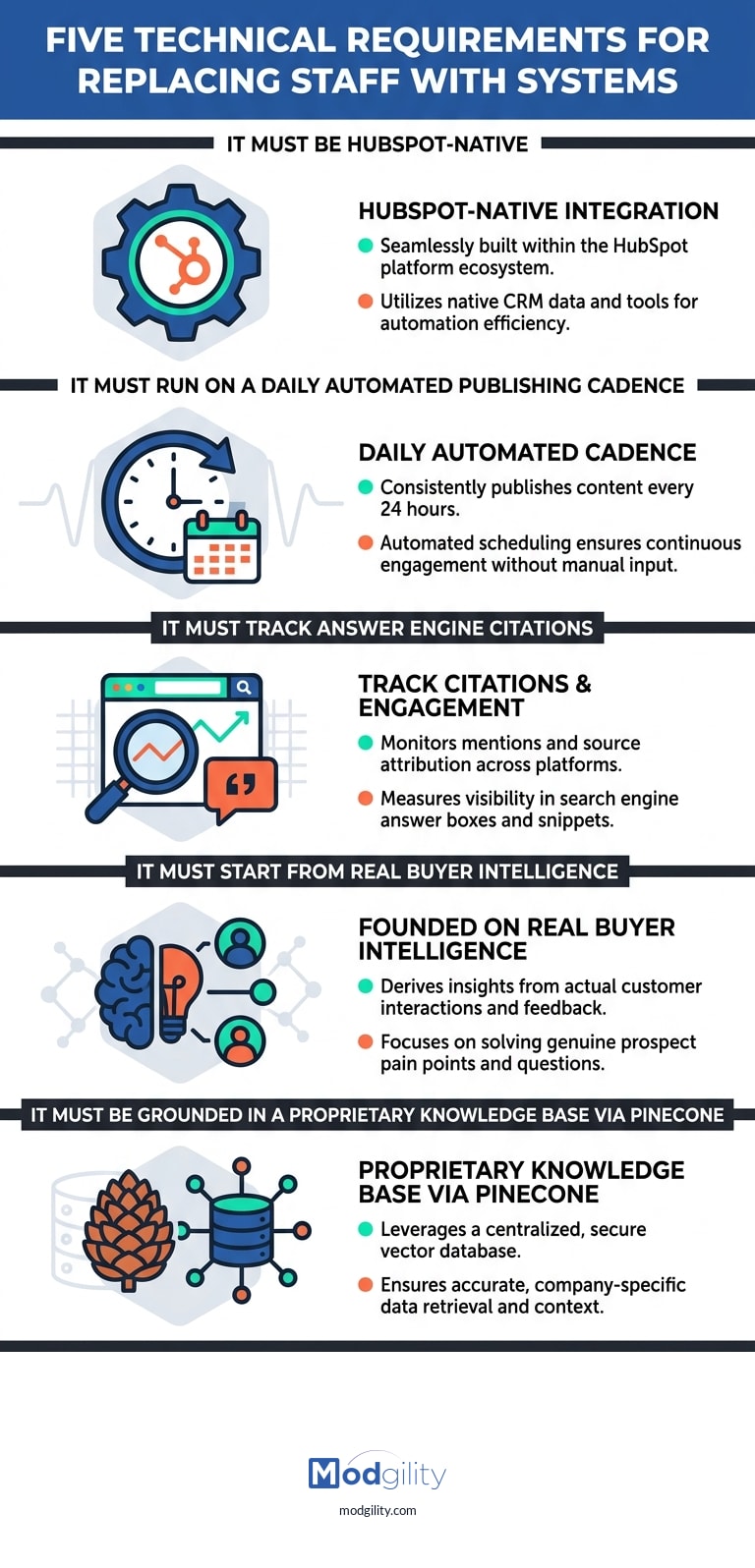
- It must be HubSpot-native. You should not have to adopt a new technology stack or build fragile API connections to get your assets into your marketing hub.
- It must run on a daily automated publishing cadence. If your team still has to manually trigger every campaign phase, you have not actually scaled your operations.
- It must track answer engine citations. You need to know which pieces of your intellectual property are actively being cited by modern search interfaces to prove return on investment.
- It must start from real buyer intelligence. Blank prompts create generic output. Systems must begin with documented insights about your target audience.
- It must be grounded in a proprietary Knowledge Base via Pinecone. Your output must pull exclusively from your own private data, not the open web.
The bottom line?
When your assets flow downstream to fuel social and email channels automatically, you create a multiplication effect from a single initial effort.
This is how a small marketing department out-publishes competitors with dedicated newsrooms.
The Strategic Path to Broader Revenue Operations
Clients running this system use it as a deliberate entry point to solve their immediate output challenges before committing to massive platform overhauls.
When you are not quite ready to invest the $1,300 to $1,500 per month required for the HubSpot Professional tier, starting with content operations is the most logical first step.
Demonstrating tangible pipeline growth through efficient marketing output is the fastest way to earn the executive buy-in necessary for a comprehensive customer relationship management upgrade. Keith Gutierrez, VP Revenue Operations, Modgility
You onboard the scaling tools, you demonstrate the subsequent traffic and lead growth, and you establish unshakeable credibility with your finance department.
Once you prove that marketing can be tightly aligned to revenue through structured publishing, the conversation shifts.
The discussion moves from justifying a creator's salary to optimizing the broader sales handoff.
This path fundamentally reframes marketing from a cost center into an accountable driver of business outcomes.
Your Next Step
Open your marketing analytics dashboard right now and look at your primary acquisition campaigns from the last quarter.
If your reporting cannot clearly attribute a closed-won deal back to the specific cluster topic that originally captured the buyer's attention, you have an infrastructure problem, not a headcount problem.
Fix your foundational publishing and tracking systems before you spend another dollar recruiting external writers.
No Comments Yet
Let us know what you think