
Share this
by Keith Gutierrez on Mar 9, 2026
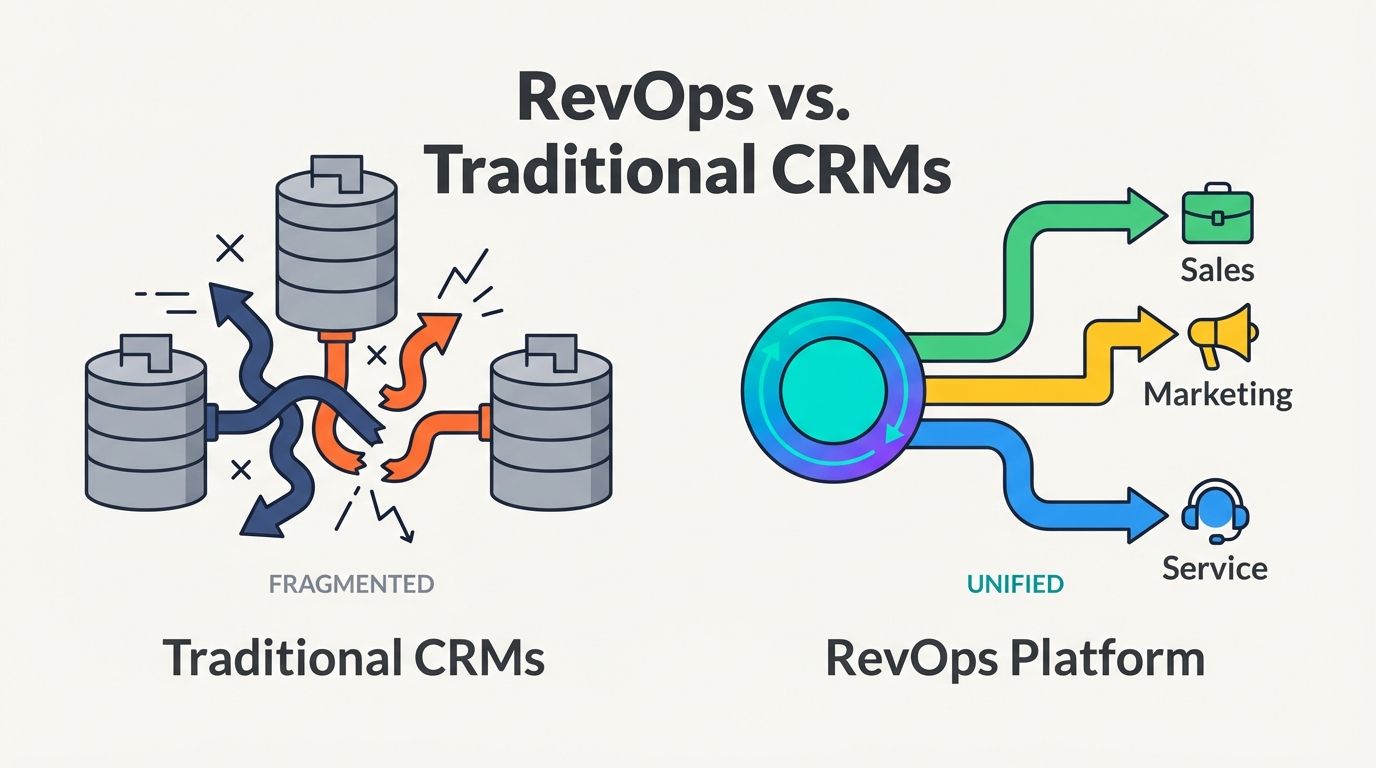
In the MedTech sector, HubSpot RevOps surpasses traditional CRMs by unifying sales, marketing, and service data on a single platform. This creates a cohesive, compliant customer journey, unlike fragmented legacy systems that silo critical information and hinder growth in a complex regulatory environment.
What You'll Learn
This analysis provides a clear, executive-level comparison to help you decide between upgrading to a modern RevOps framework or retaining a traditional CRM. Here’s what we’ll cover:
- The Core Difference: Understanding the fundamental gap between a unified RevOps platform and a siloed CRM.
- Key MedTech Challenges: A breakdown of specific industry hurdles that traditional CRMs fail to address.
- The HubSpot RevOps Solution: How a unified platform solves for complex sales cycles, compliance, and data-driven insights.
- A Head-to-Head Comparison: A clear, scannable table outlining the functional differences between the two systems.
The Core Difference: A Unified Platform vs. Siloed Data
At its core, a traditional CRM (Customer Relationship Management) system is a database. It was designed primarily for the sales team to log contacts, track deals, and manage their pipeline. While essential, its focus is narrow and often creates informational silos where marketing, sales, and customer service cannot see the full picture of a customer's journey.
A Revenue Operations (RevOps) framework, powered by a platform like HubSpot RevOps, is fundamentally different. It’s not just a tool; it's an operational strategy. The goal of RevOps is to align marketing, sales, and service operations under one shared set of goals and a single source of truth for data. This eliminates friction and creates a predictable, scalable revenue engine.
Key Challenges in MedTech That Traditional CRMs Can't Solve
The MedTech industry operates with a unique set of challenges that place immense strain on the capabilities of traditional, sales-focused CRMs.
1. Complex, Multi-Stakeholder Sales Cycles
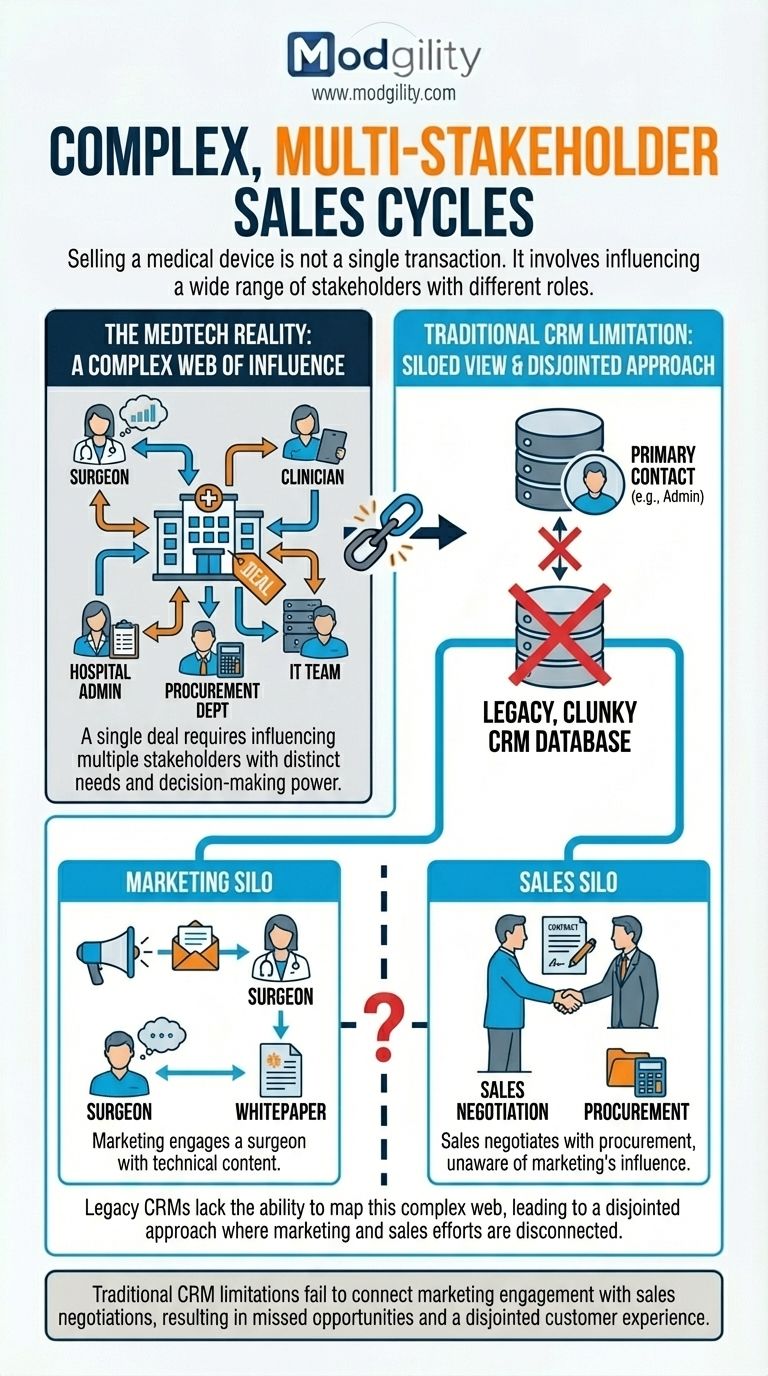
Selling a medical device or technology isn't a single transaction. It involves influencing a wide range of stakeholders—from clinicians and surgeons to hospital administrators, procurement departments, and IT teams.
- Traditional CRM Limitation: A legacy CRM may track a deal with one primary contact at a hospital but lacks the ability to map the complex web of influence. It cannot easily show how marketing content engaged a surgeon while the sales team negotiated with procurement, leading to a disjointed approach.
2. Stringent Regulatory and Compliance Demands
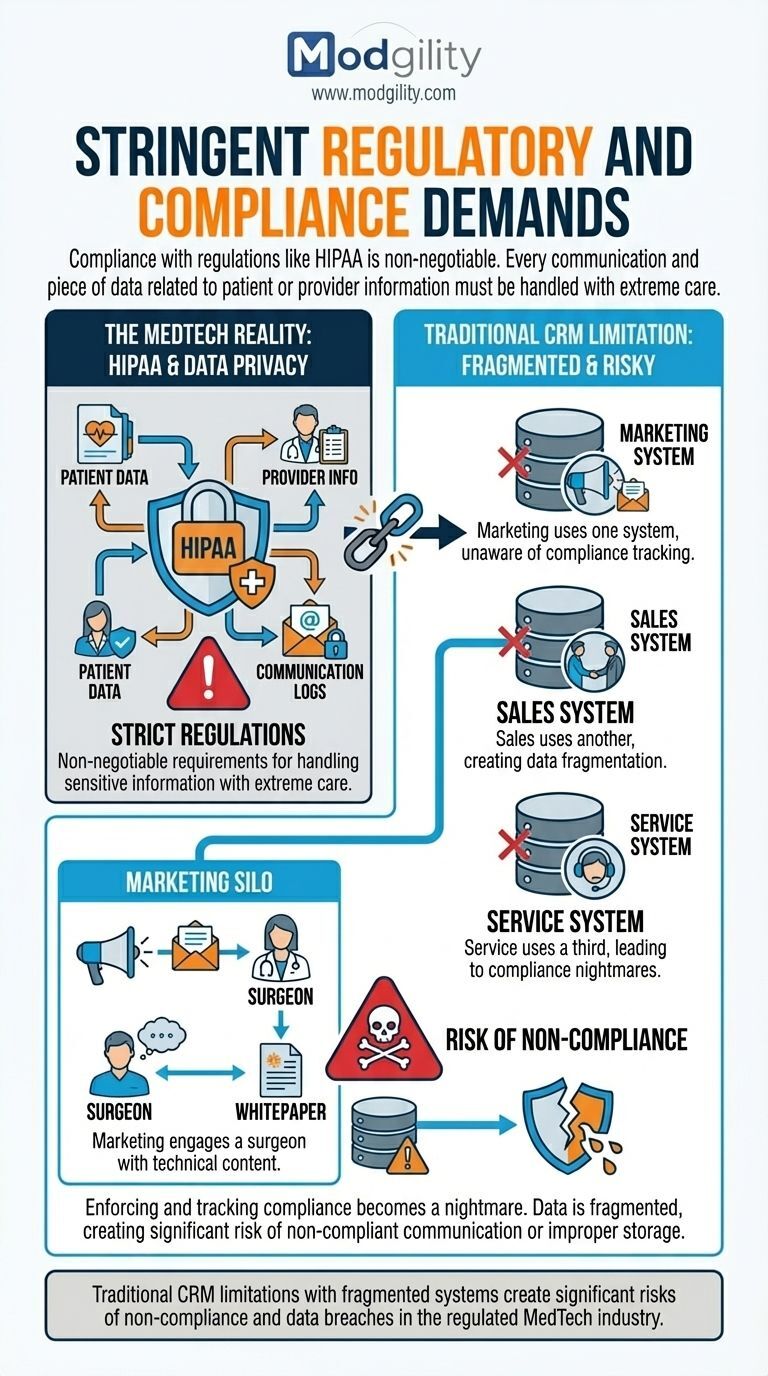
Compliance with regulations like HIPAA is non-negotiable. Every communication and piece of data related to patient or provider information must be handled with extreme care.
- Traditional CRM Limitation: When marketing uses one system, sales another, and service a third, enforcing and tracking compliance becomes a nightmare. Data is fragmented, creating significant risk of non-compliant communication or improper data storage.
3. The Need for Data-Driven Product Feedback Loops
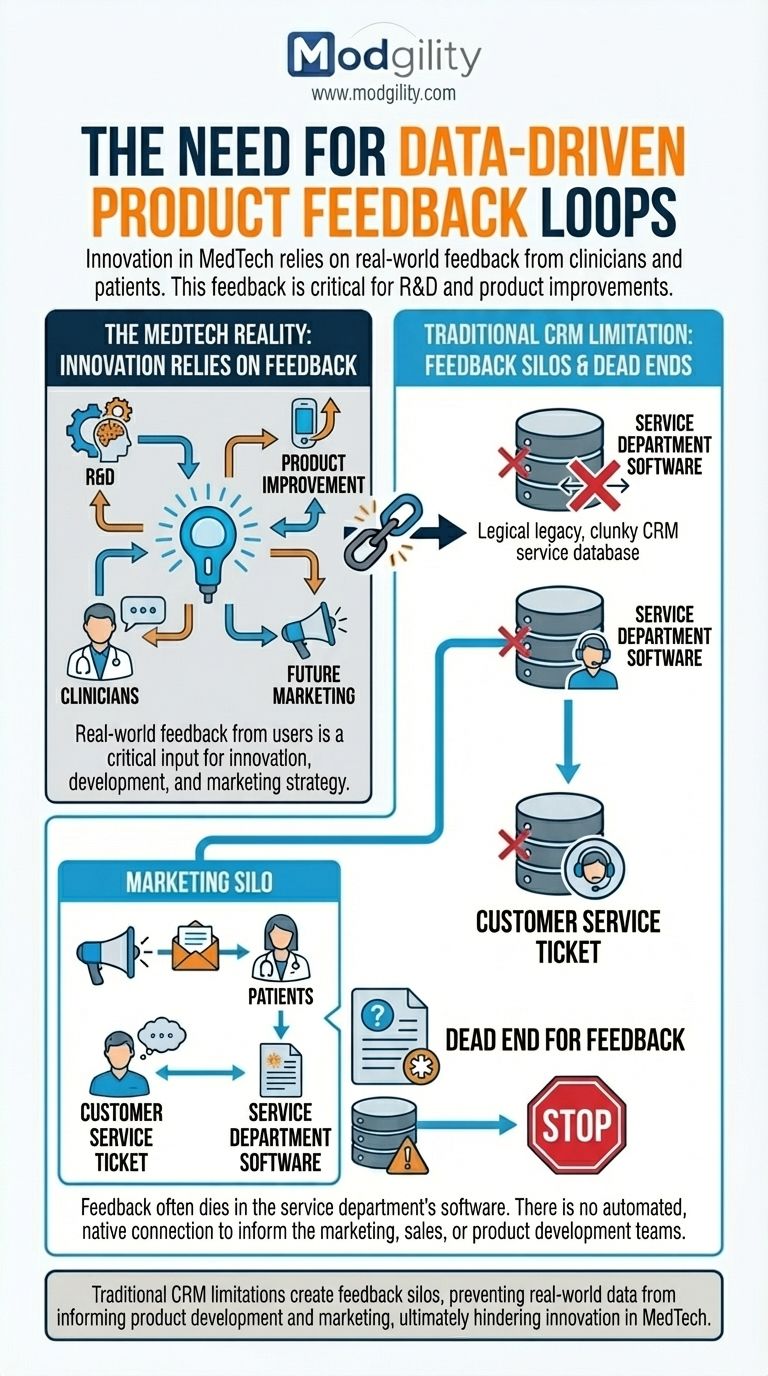
Innovation in MedTech relies on real-world feedback from the clinicians and patients who use the devices. This feedback is critical for R&D, product improvements, and future marketing campaigns.
- Traditional CRM Limitation: A customer service ticket detailing a device issue or a suggestion for improvement often dies in the service department's software. There is no automated, native connection to inform the marketing, sales, or product development teams.
How HubSpot RevOps Solves These MedTech Challenges
A unified platform built for RevOps directly addresses the shortcomings of traditional systems by creating a single, connected ecosystem for all revenue-generating activities.
Centralizing the Entire Customer Lifecycle
By bringing all teams onto one platform, HubSpot RevOps provides complete visibility into every customer interaction.
- How it Works: Marketing can see which content a surgeon downloaded right before a sales demo was booked. The sales team can see a prospect’s recent service tickets before making a renewal call. This 360-degree view ensures every conversation is relevant and informed, which is critical for building trust with sophisticated medical professionals. The custom pipeline configuration within HubSpot allows for tracking multiple stakeholders in a single deal.
Automating Compliance and Communication Workflows
A unified system is a compliant system. With all customer data and communication tools in one place, it's far simpler to manage and automate regulatory requirements.
- How it Works: HubSpot RevOps allows you to build automated workflows that ensure proper consent is documented before marketing materials are sent. All email, call, and meeting logs are centralized on a contact's record, providing a clear, auditable trail for compliance purposes across sales and service.
Leveraging AI for Deeper Buyer Insights
Understanding the distinct motivations of a hospital CFO versus a Head of Surgery is key to effective marketing and sales. Traditional methods are slow and often based on assumptions.
- How it Works: An advanced HubSpot RevOps implementation can integrate powerful AI tools like PersonaInsights AI. This allows your teams to generate data-rich insights into what each buyer persona cares about—their objections, their decision criteria, and their preferred communication style. This moves your strategy from "guess-and-test" to a data-driven approach, ensuring your messaging resonates with every stakeholder.
A Practical Comparison: HubSpot RevOps vs. Traditional CRM
| Feature/Function | Traditional CRM | HubSpot RevOps |
|---|---|---|
| Primary Goal | Manage sales pipeline and contacts. | Align all revenue teams (Marketing, Sales, Service) to drive predictable growth. |
| Data Structure | Siloed. Each department has its own view and often its own disconnected tools. | Unified. A single source of truth for all customer data across the entire lifecycle. |
| Sales Cycle Mgmt | Tracks linear deals with a primary contact. Struggles with multiple stakeholders. | Manages complex, multi-stakeholder journeys with custom pipelines and automation. |
| Compliance | Fragmented. Difficult to enforce and audit across different platforms. | Centralized. Automated workflows and a single data repository simplify compliance. |
| Customer Insights | Limited to sales interactions. | Holistic 360-degree view, enhanced by integrated AI for deep buyer persona analysis. |
| Inter-team Handoffs | Manual and prone to friction. Leads get lost; information isn't shared. | Seamless and automated. Workflows trigger tasks and notifications for smooth transitions. |
| Reporting | Focused on sales metrics (e.g., deals closed). | Comprehensive reporting on the entire revenue funnel, from first marketing touch to renewal. |
The Bottom Line: Why MedTech Needs More Than Just a CRM
For a MedTech company, a traditional CRM is like having a high-performance engine without a chassis, wheels, or steering. It’s a powerful component that can't function effectively on its own in a modern, complex environment.
The intricate sales processes, strict regulatory demands, and the critical need for a unified customer experience make a RevOps strategy essential. HubSpot RevOps provides the integrated platform necessary to execute that strategy, turning fragmented departmental efforts into a single, efficient, and compliant revenue machine built for sustainable growth.
Frequently Asked Questions
What is the core difference between HubSpot RevOps and a traditional CRM?
A traditional CRM is a siloed database designed primarily for the sales team to log contacts and track deals. In contrast, HubSpot RevOps is a unified platform and operational strategy that aligns marketing, sales, and service teams around a single source of data to eliminate friction and create a predictable revenue engine.
Why are traditional CRMs a poor fit for the MedTech industry?
Traditional CRMs are a poor fit for MedTech because they struggle to manage complex, multi-stakeholder sales cycles involving clinicians, administrators, and procurement. Their fragmented data structure creates significant risks for meeting stringent regulatory and compliance demands like HIPAA, and they lack the native connections needed to create effective product feedback loops from customer service to R&D.
How does HubSpot RevOps help MedTech companies with compliance?
HubSpot RevOps centralizes all customer data and communication tools, which simplifies compliance management and auditing. It allows for automated workflows to ensure proper consent is documented before sending marketing materials, and it maintains a clear, auditable trail of all emails, calls, and meetings on a single contact record.
Can HubSpot RevOps handle the complex, multi-stakeholder sales cycles in MedTech?
Yes. By providing a 360-degree view of every customer interaction, HubSpot RevOps is built to manage complex sales cycles. It allows teams to see how different stakeholders (e.g., a surgeon and a procurement officer) are interacting with the company. Custom pipeline configurations can be used to track the complex web of influence within a single deal, ensuring every conversation is relevant and informed.
No Comments Yet
Let us know what you think