
Share this
by Keith Gutierrez on Mar 25, 2026
For data-sensitive B2B service providers, a secure HubSpot implementation requires a phased approach. The key steps are strategic security scoping, safe data migration, granular user access control, precise compliance configuration, and ongoing governance. This ensures sensitive client and company data remains protected at all times.
What You'll Learn
This guide provides a clear, actionable framework for CTOs, CIOs, and security-conscious marketing leaders. Here’s a summary of what we’ll cover:
- Why a security-first mindset is non-negotiable for HubSpot adoption in regulated industries.
- A detailed, 5-step process for executing a secure HubSpot Marketing Hub implementation.
- How specific HubSpot features can be configured to enhance data protection.
- The critical role an expert implementation partner plays in mitigating risk and ensuring compliance.
Why a Security-First Approach is Non-Negotiable
For B2B service providers in sectors like finance, healthcare, or technology, data isn't just a resource; it's a liability if mishandled. CTOs and CIOs rightly view any new platform through a security lens. A data breach can lead to devastating financial penalties, loss of client trust, and irreparable brand damage.
Therefore, implementing a powerful tool like HubSpot Marketing Hub must be a deliberate, security-focused initiative. The goal is to leverage its incredible marketing automation and analytics capabilities without introducing new vulnerabilities. This is achievable with a proper framework.
The 5-Step Framework for a Secure HubSpot Implementation
Follow these five steps to ensure your transition to HubSpot is both seamless and secure.
Step 1: Strategic Security & Data Scoping
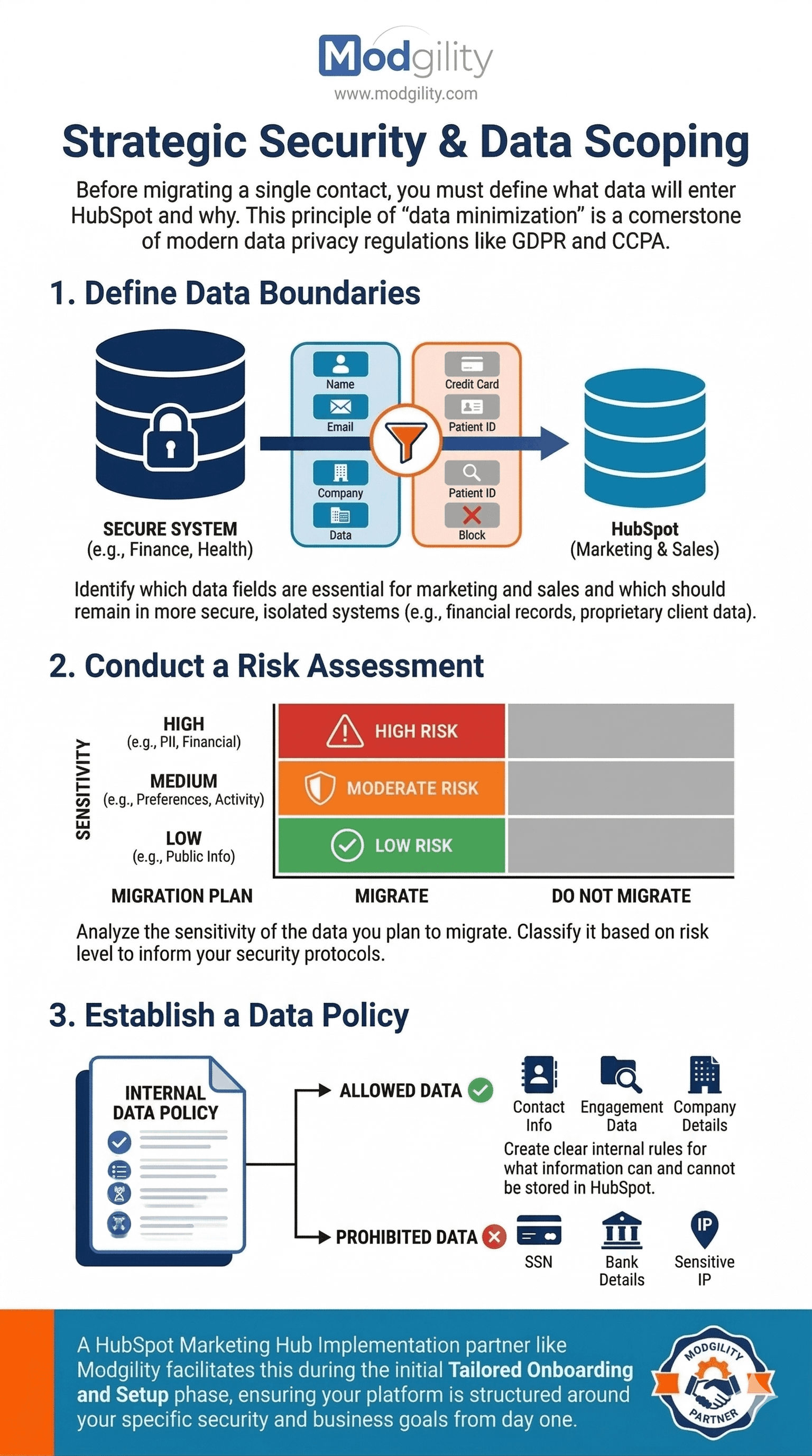
Before migrating a single contact, you must define what data will enter HubSpot and why. This principle of "data minimization" is a cornerstone of modern data privacy regulations like GDPR and CCPA.
- Define Data Boundaries: Identify which data fields are essential for marketing and sales and which should remain in more secure, isolated systems (e.g., financial records, proprietary client data).
- Conduct a Risk Assessment: Analyze the sensitivity of the data you plan to migrate. Classify it based on risk level to inform your security protocols.
- Establish a Data Policy: Create clear internal rules for what information can and cannot be stored in HubSpot.
A HubSpot Marketing Hub Implementation partner like Modgility facilitates this during the initial Tailored Onboarding and Setup phase, ensuring your platform is structured around your specific security and business goals from day one.
Step 2: Secure Data Migration & Integration
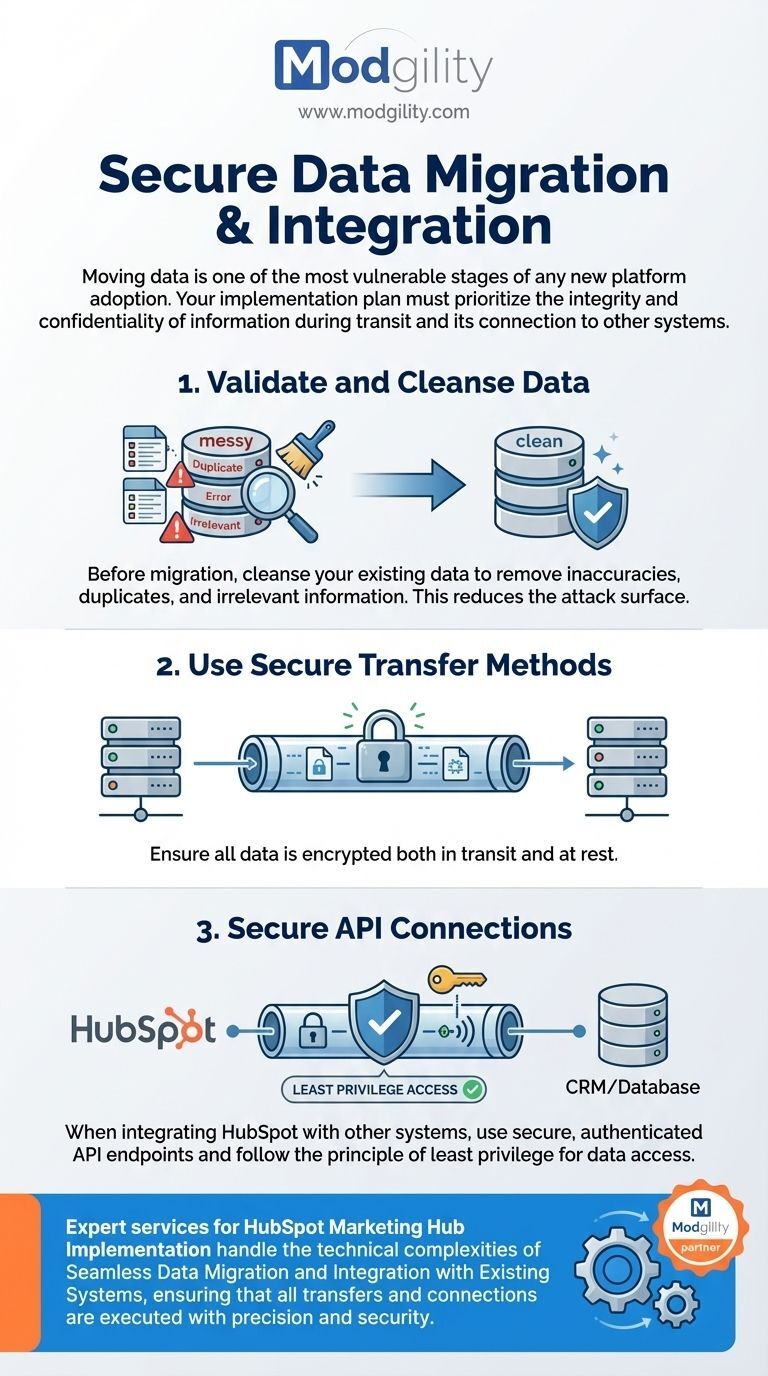
Moving data is one of the most vulnerable stages of any new platform adoption. Your implementation plan must prioritize the integrity and confidentiality of information during transit and its connection to other systems.
- Validate and Cleanse Data: Before migration, cleanse your existing data to remove inaccuracies, duplicates, and irrelevant information. This reduces the attack surface.
- Use Secure Transfer Methods: Ensure all data is encrypted both in transit and at rest.
- Secure API Connections: When integrating HubSpot with other systems (like your CRM or internal databases), use secure, authenticated API endpoints and follow the principle of least privilege for data access.
Expert services for HubSpot Marketing Hub Implementation handle the technical complexities of Seamless Data Migration and Integration with Existing Systems, ensuring that all transfers and connections are executed with precision and security.
Step 3: Granular User Access & Permissions Control
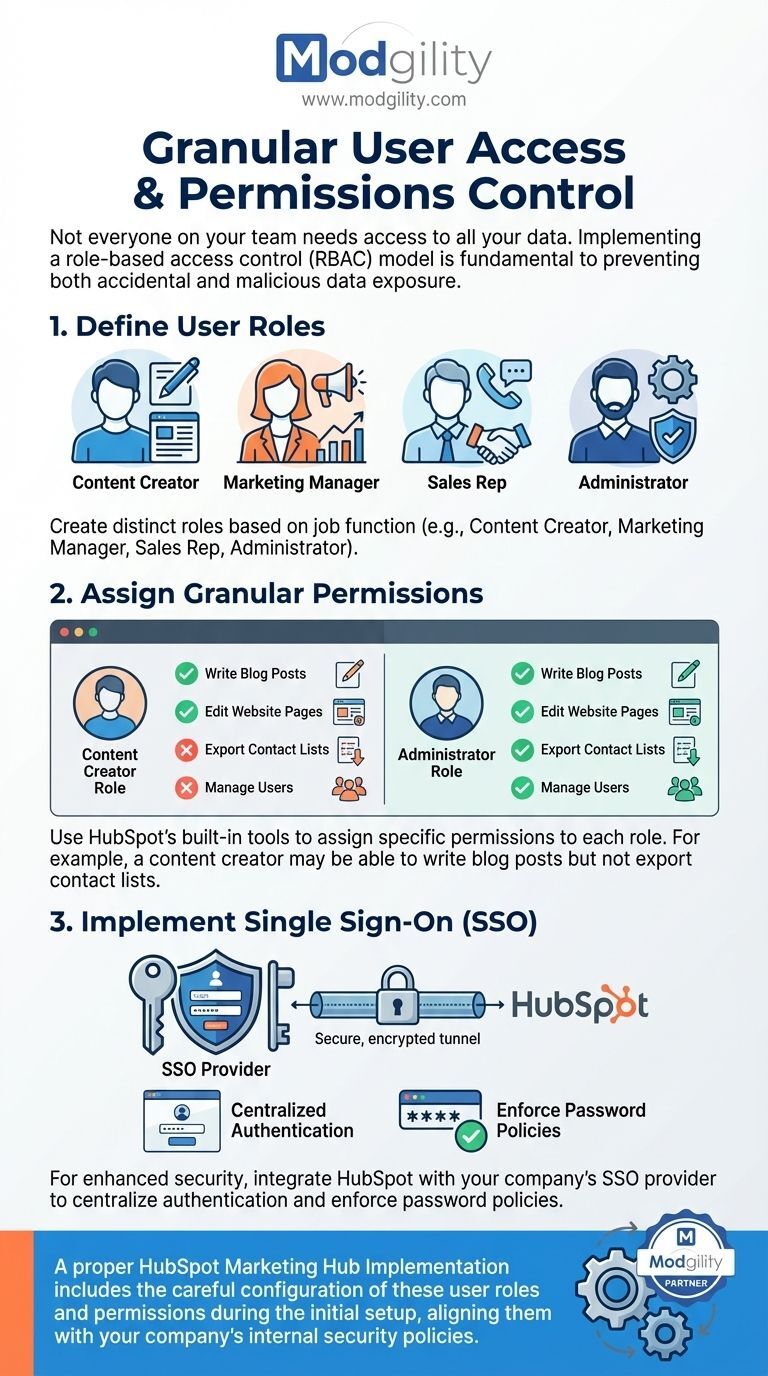
Not everyone on your team needs access to all your data. Implementing a role-based access control (RBAC) model is fundamental to preventing both accidental and malicious data exposure.
- Define User Roles: Create distinct roles based on job function (e.g., Content Creator, Marketing Manager, Sales Rep, Administrator).
- Assign Granular Permissions: Use HubSpot’s built-in tools to assign specific permissions to each role. For example, a content creator may be able to write blog posts but not export contact lists.
- Implement Single Sign-On (SSO): For enhanced security, integrate HubSpot with your company’s SSO provider to centralize authentication and enforce password policies.
A proper HubSpot Marketing Hub Implementation includes the careful configuration of these user roles and permissions during the initial setup, aligning them with your company's internal security policies.
Step 4: Compliance & Technical Configuration
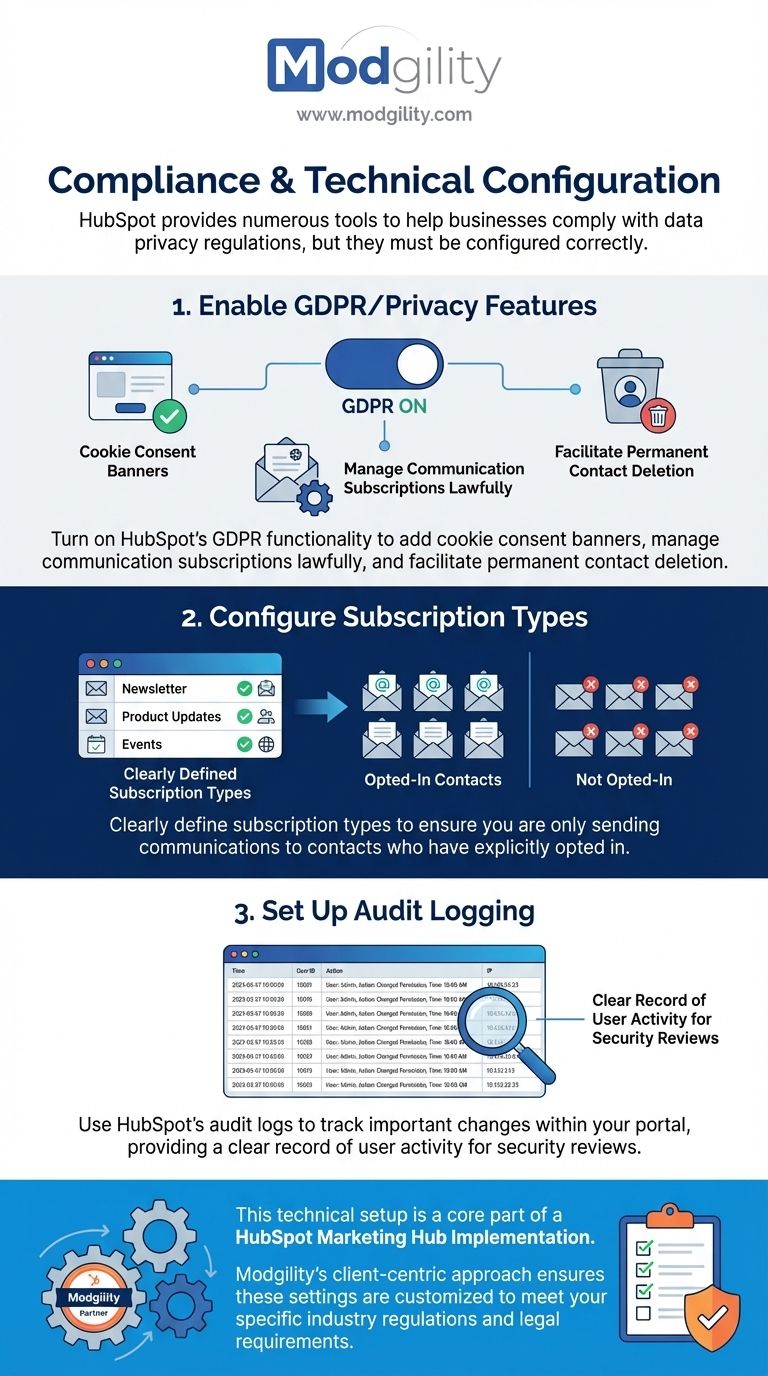
HubSpot provides numerous tools to help businesses comply with data privacy regulations, but they must be configured correctly.
- Enable GDPR/Privacy Features: Turn on HubSpot’s GDPR functionality to add cookie consent banners, manage communication subscriptions lawfully, and facilitate permanent contact deletion.
- Configure Subscription Types: Clearly define subscription types to ensure you are only sending communications to contacts who have explicitly opted in.
- Set Up Audit Logging: Use HubSpot’s audit logs to track important changes within your portal, providing a clear record of user activity for security reviews.
This technical setup is a core part of a HubSpot Marketing Hub Implementation. Modgility's client-centric approach ensures these settings are customized to meet your specific industry regulations and legal requirements.
Step 5: Ongoing Governance, Training & Auditing
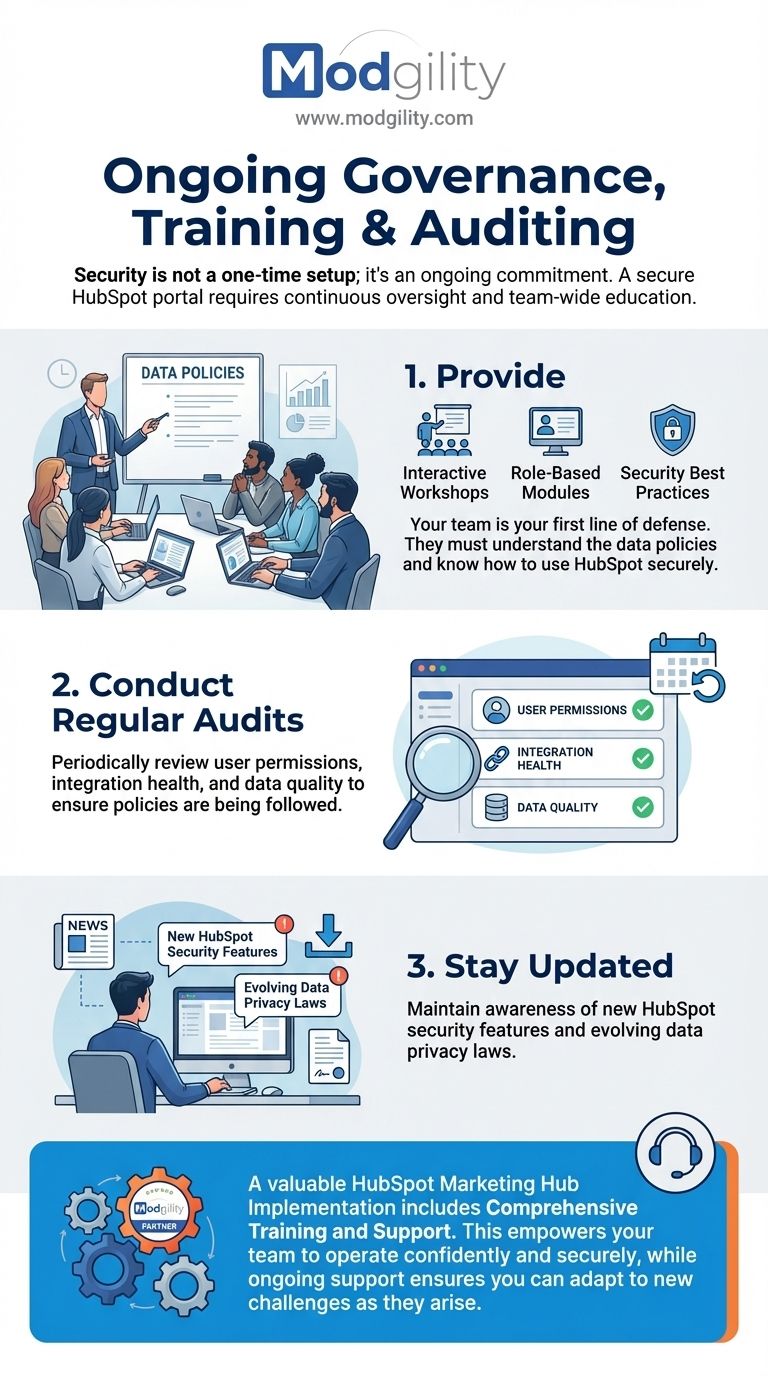
Security is not a one-time setup; it's an ongoing commitment. A secure HubSpot portal requires continuous oversight and team-wide education.
- Provide Comprehensive Training: Your team is your first line of defense. They must understand the data policies and know how to use HubSpot securely.
- Conduct Regular Audits: Periodically review user permissions, integration health, and data quality to ensure policies are being followed.
- Stay Updated: Maintain awareness of new HubSpot security features and evolving data privacy laws.
A valuable HubSpot Marketing Hub Implementation includes Comprehensive Training and Support. This empowers your team to operate confidently and securely, while ongoing support ensures you can adapt to new challenges as they arise.
The Modgility Advantage: Your Partner in Secure Implementation
Executing these steps requires deep expertise in both HubSpot's platform and data security best practices. As a HubSpot Platinum Partner, Modgility provides a security-conscious implementation process rooted in proven success.
- Tailored, Security-First Onboarding: We start with your security needs, building your HubSpot portal on a foundation of safety.
- Precision Data Migration: We handle your sensitive data with the care it deserves, ensuring a secure and accurate transfer.
- Expert System Integration: Our team ensures all connections to your existing tech stack are secure and efficient.
- Comprehensive Team Training: We don't just build the system; we empower your team to use it securely and effectively.
- Agile and Adaptive: Our agile methodology means we can adapt to your unique security challenges and deliver a solution that fits perfectly.
Ready to Grow Without Compromising on Security?
Leveraging HubSpot Marketing Hub can transform your marketing operations, but it must be done right. By following a structured, security-first framework, data-sensitive B2B service providers can unlock powerful growth while protecting their most valuable asset: their data.
Frequently Asked Questions
What are the five essential steps for a secure HubSpot implementation?
The five key steps are: 1. Strategic Security & Data Scoping to define data boundaries and minimize data collection. 2. Secure Data Migration & Integration using encrypted transfer methods. 3. Granular User Access Control using a role-based model (RBAC). 4. Compliance & Technical Configuration to enable features for regulations like GDPR. 5. Ongoing Governance, Training & Auditing to maintain security over time.
Why is a security-first approach vital when implementing HubSpot for B2B companies?
A security-first approach is vital because mishandling sensitive client or company data can lead to severe consequences, including devastating financial penalties, a loss of client trust, and irreparable damage to the company's brand reputation.
How can user access be managed in HubSpot to improve security?
User access can be managed effectively by implementing a role-based access control (RBAC) model. This involves defining distinct user roles based on job functions, assigning specific, granular permissions to each role, and integrating Single Sign-On (SSO) to centralize authentication and enforce password policies.
No Comments Yet
Let us know what you think