
Share this
by Keith Gutierrez on Jul 1, 2026
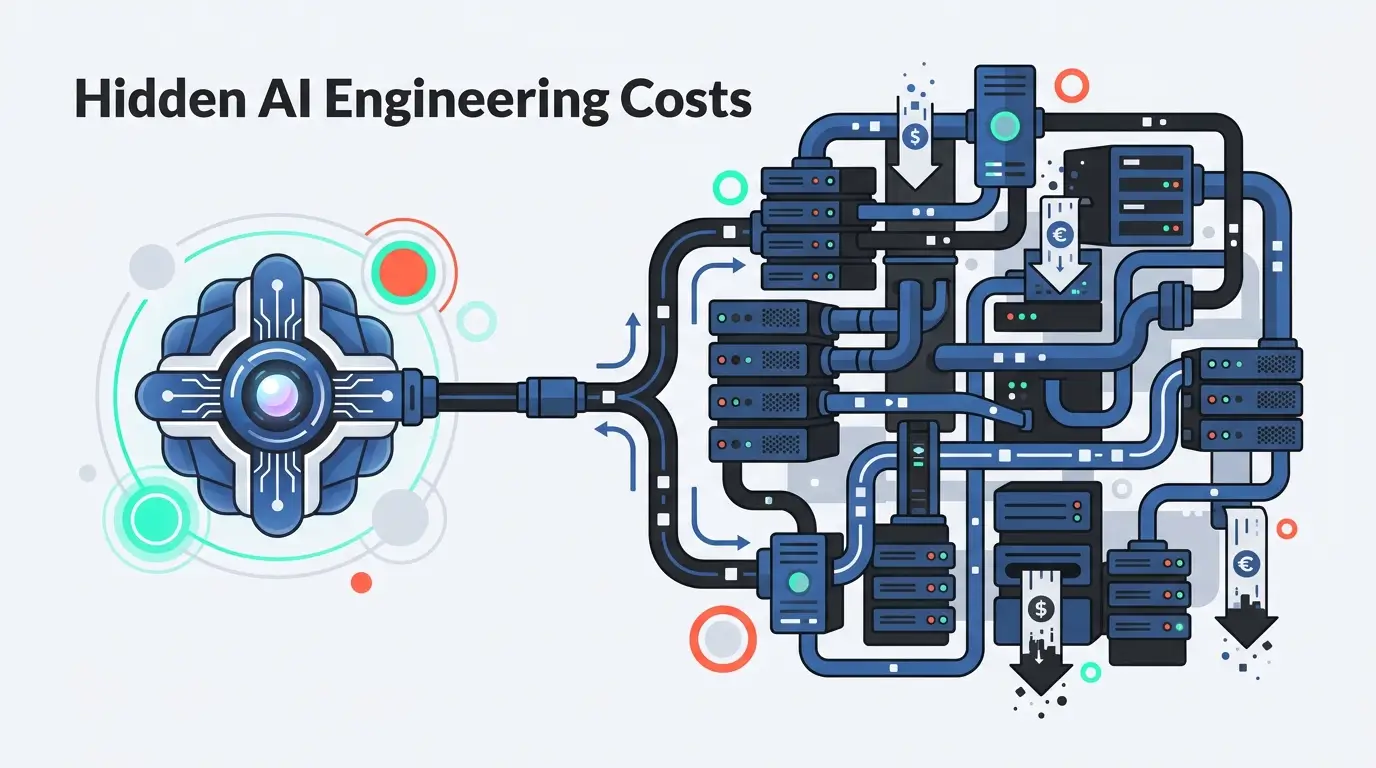
Most software vendors quote a flat monthly fee for artificial intelligence generation. Very few mention the data engineering required to stop those models from sounding exactly like your competitors.
That missing engineering effort is the difference between a high-ROI system and an expensive filing cabinet that drains your budget through data scrubbing and manual configuration.
Below is a breakdown of the specific integration barriers, compliance hurdles, and technical labor expenses that routinely break marketing budgets during implementation.
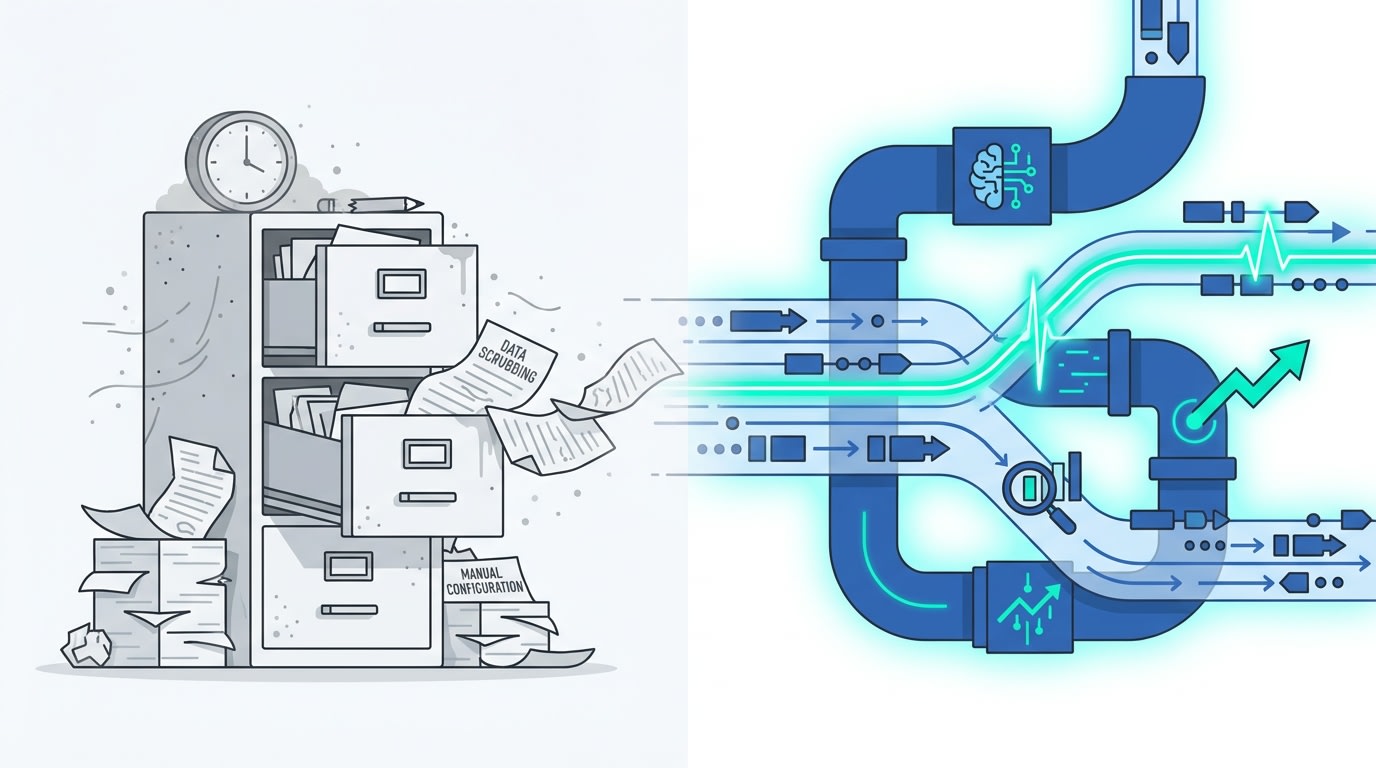
API Limits and Stack Sprawl Destroy Margins
In our own deployments of AEO MAX, initial subscription fees rarely represent the final software cost. Automated systems require continuous access to your existing tech stack to function correctly.
That access requires application programming interfaces. Those interfaces are strictly metered by your existing vendors. When you connect an automated system to your CRM, transaction volumes spike instantly.
Here is the thing:
If you fail to forecast this volume, your campaigns stop running mid-month. In our implementations with training organizations, we observed this friction directly with PowerSpeaking.
Their HubSpot prospecting agent credits were nearly exhausted precisely at the time of setup. The default allocation was not enough to handle the required volume.
This required the account owner to purchase an additional 7,000 credits to keep the system operational. That added approximately $64 per month to achieve a total working pool of 10,000 credits.
On top of that CRM cost, the necessary Apollo Pro plan integration costs approximately $49 to $50 per month after the free trial expires. The combined estimated monthly tool cost reaches approximately $110 to $115 just for the baseline prospecting stack.
For a VP of Marketing, these incremental expenses seem small in isolation. At an enterprise scale with dozens of seats and multiple data enrichment tools, these overages obliterate your software budget.
The RAG Pipeline Engineering Toll
The most difficult technical challenge in AEO MAX is building a continuously updating RAG-based knowledge base. You cannot rely on publicly available information because any artificial engine can access that same data.
To win, your system must be populated with proprietary evidence specific to your company. That data lives inside HubSpot meeting summaries, Databox metrics, Fathom call recordings, and Gong transcripts.
Extracting that data is not an automatic process. It requires sustained data engineering.
What does that look like in practice?
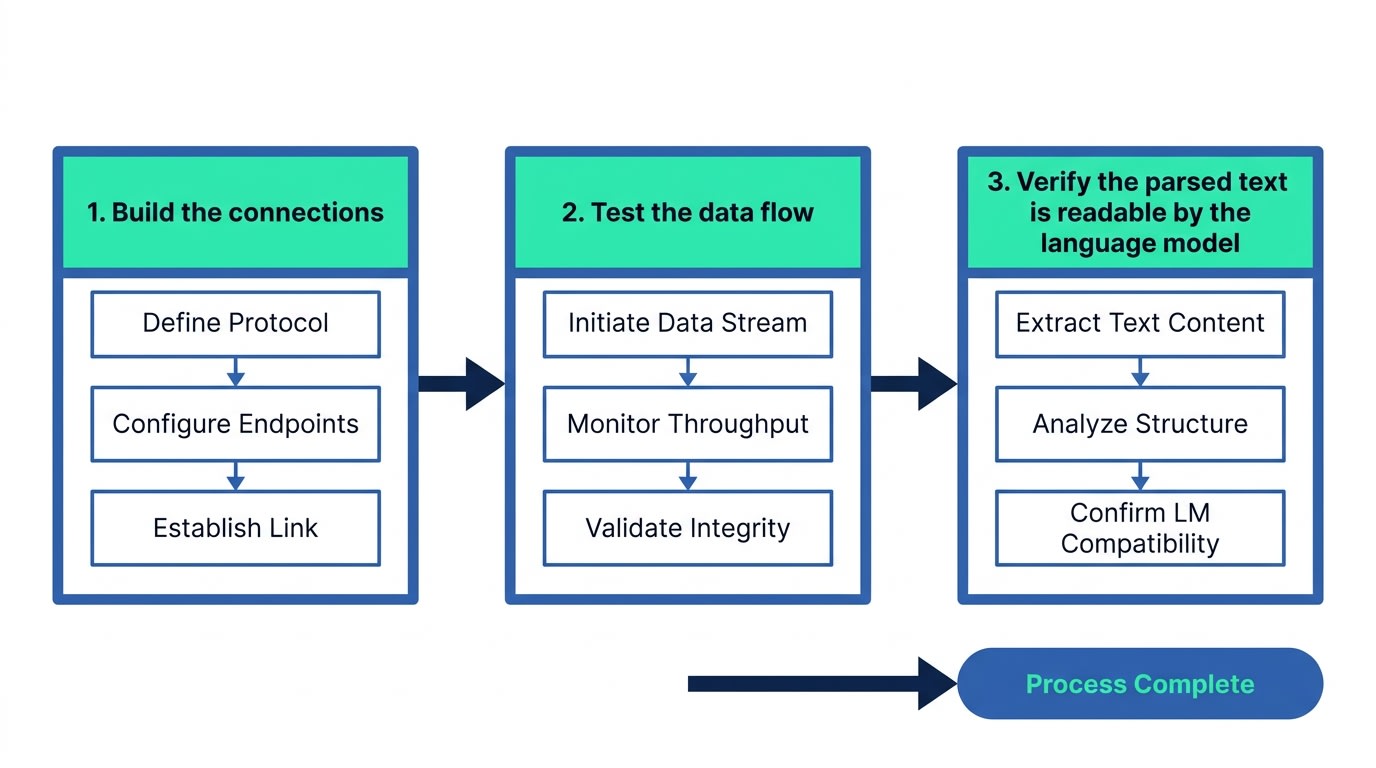
You have to build the connections, test the data flow, and verify the parsed text is readable by the language model. Internal system delays frequently stall this process.
During our work with Magnet Applications, their internal MAGI system had not yet been integrated into the content pipeline. An internal technical lead was still working on the connection weeks into the project.
This delay directly limited the volume and richness of proprietary data available for knowledge base ingestion. When your system is starved of data, your content production stalls.
You are paying the monthly subscription fee while waiting for internal engineering to clear the bottleneck. That wasted time is a massive hidden cost.
Manual Curation for Citability Scoring
You cannot dump raw files into a language model and expect credible output. The system needs to know which pieces of evidence are strong and which are weak.
Evaluating this evidence takes hours of highly skilled manual labor. Someone on your team has to review the uploaded assets and score them against industry baselines.
Within the AEO MAX knowledge base for Magnet Applications, we analyzed the topic cluster for compression bonded magnets. The system had two sources loaded and produced an average citability score of 75 out of 100.
The scoring mechanism evaluates evidence quality, uniqueness relative to what existing models already know from the open web, and overall citability. This provides a per-topic baseline for improvement prioritization.
But here is where it gets interesting:
Raising that score from 75 to 95 requires a subject matter expert to manually interview internal engineers, extract new specifications, and feed that unique text back into the system.
Software cannot conduct an internal engineering interview for you. The human labor required to acquire unique data is a cost you must forecast.
"Our primary focus is building a system that identifies ICP buyer queries currently searched in LLMs. We map those queries to the consideration and decision stages, cross-reference our proprietary evidence, and produce a scored ranking of the next best topic to write on. We have to align content output with intent while avoiding commoditized generation." Keith Gutierrez, VP Revenue Operations, Modgility
Structuring Unstructured Media Assets
When visual assets enter an automated system, text-parsing models routinely fail without human intervention. Language models cannot understand images without highly specific metadata.
Magnet Applications was identified as having an abundant supply of high-quality equipment images. These assets were perfect for supporting a future image retrieval pipeline.
The hidden cost emerged during the tagging phase. Magnet product images required intensely detailed meta descriptions beyond simple labels.
If a human simply labeled an image as a bonded magnet, the automated system failed to parse the specific technical value. The models defaulted to generic descriptions such as metallic round cylinder.
When your engine tags your highly engineered industrial product as a metallic round cylinder, accurate automated image selection becomes completely unreliable.
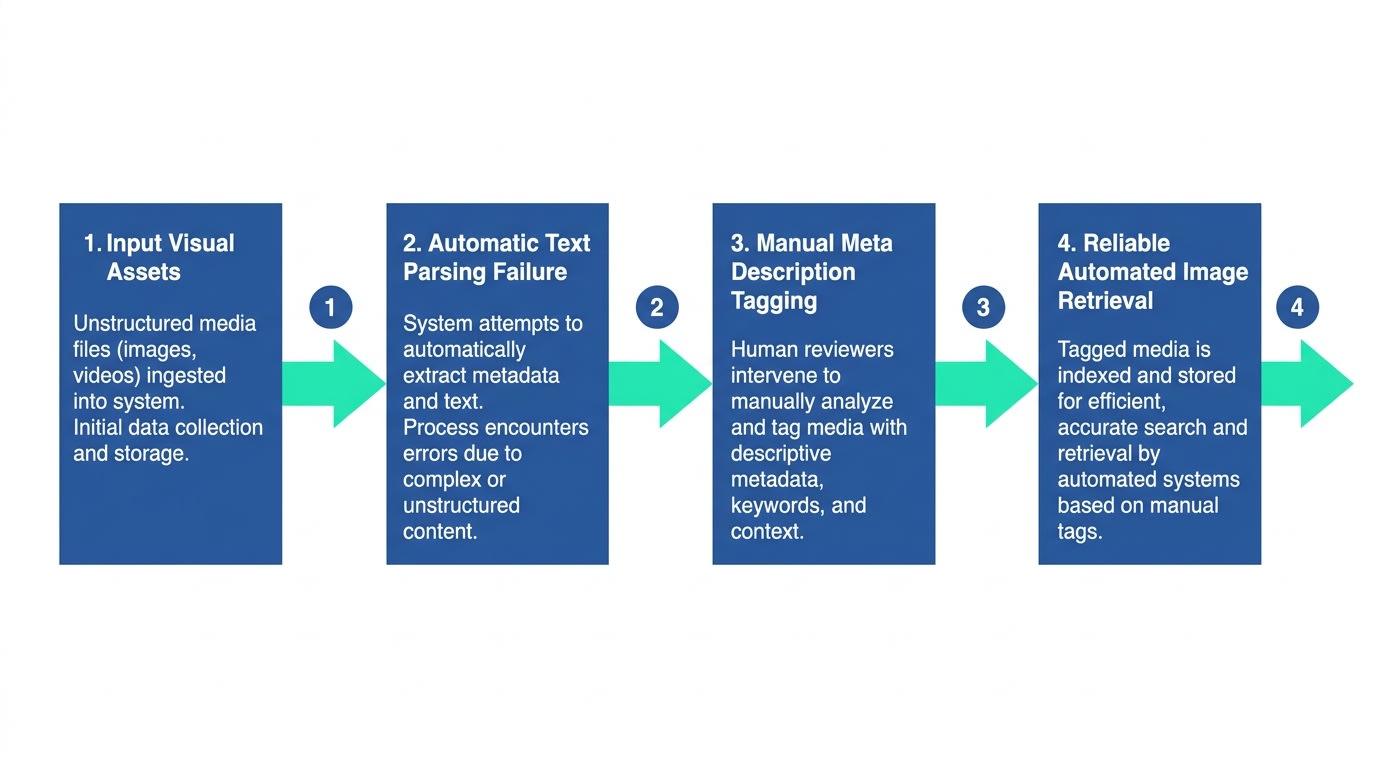
Your marketing team must spend weeks manually rewriting meta descriptions for thousands of existing image assets. This manual data structuring is mandatory before the automated system provides any real value.
The Friction of Regulatory Compliance
In our implementations with HIPAA-regulated clients like multi-location nursing home systems, compliance introduces massive friction. You cannot feed patient data or restricted operational metrics into a cloud-based language model.
A strict compliance layer must be built to limit what proprietary evidence can be captured and published. Every transcript from a sales call must be scrubbed of personally identifiable information.
Automated scrubbing tools frequently miss nuanced context. Your legal and operations teams must audit the ingestion pipeline.
The billing hours your compliance team spends reviewing the data architecture represent a significant hidden expense.
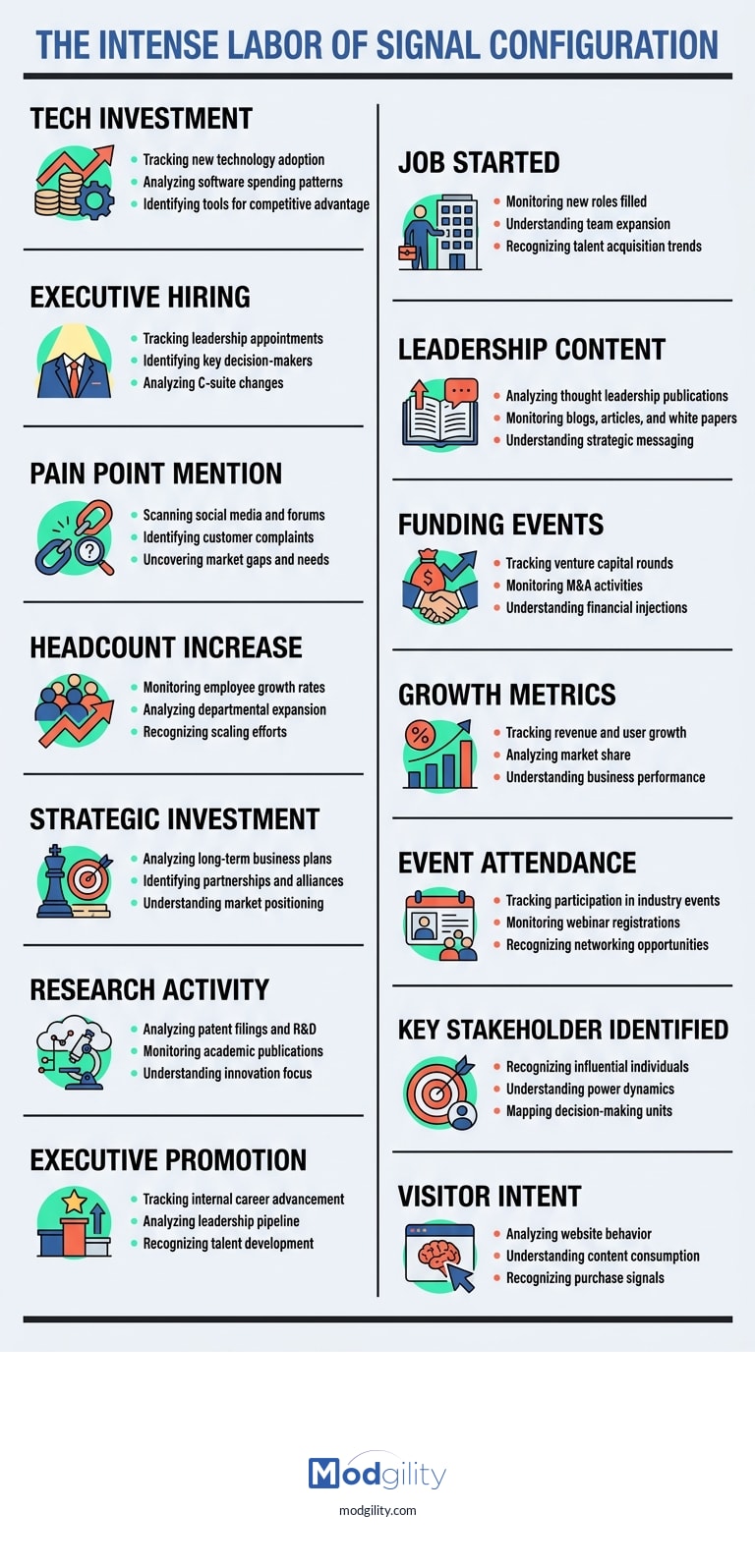
The Intense Labor of Signal Configuration
Default configurations produce generic outreach that your buyers ignore. If you use the standard settings provided by your software vendor, your campaigns routinely fail.
To generate consistent opportunity creation, you have to ruthlessly filter the signals your system monitors. This requires deep revenue operations expertise.
For the Data-Driven Storytelling learning and development prospecting play with PowerSpeaking, our team evaluated the database signals. We reduced the default 46 Apollo signals down to just 14 highly relevant triggers.
The 14 retained signals require continuous monitoring and validation. They include:
- Tech investment
- Job started
- Executive hiring
- Leadership content
- Pain point mention
- Funding events
- Headcount increase
- Growth metrics
- Strategic investment
- Event attendance
- Research activity
- Key stakeholder identified
- Executive promotion
- Visitor intent
The bottom line?
We had to manually evaluate and remove dozens of default signals that cluttered the system. Signals removed included geographic expansion, layoff events, mergers and acquisitions, and strategic partnerships.
We also eliminated product launch triggers, regulatory approvals, industry recognition, physical expansion, office closures, and product development flags. Deal timing, budget mentions, and client signing events were also deemed completely irrelevant to training sales.
If a marketing team skips this manual reduction, the automated system generates outreach based on irrelevant office closures. Your sales team wastes hours following up on terrible leads.
Mapping Three-Tier Buyer Personas
Beyond signal reduction, the system must speak differently to different levels of seniority. A Chief Learning Officer does not care about the same operational metrics as a mid-level director.
PowerSpeaking identified specific audience segments for outreach. These included learning leaders, sales leaders, and data analytics executives.
For their storytelling program, we determined that learning leaders hold the budget and buying authority. Data analytics leaders are merely the end beneficiaries.
The consensus was that the learning leader is the correct first-touch target. We then had to manually organize this persona into three distinct tiers:
- Tier One: Chief Learning Officer
- Tier Two: VP-level titles (VP Learning and Development, VP of Learning, VP Talent Development)
- Tier Three: Director-level titles (Head of Learning, Director of Training and Development, Director of Organizational Learning)
Each tier has distinct value propositions and pain points. These had to be configured separately within the HubSpot prospecting play.
Writing separate messaging tracks for three different seniority levels across 14 different buying signals requires dozens of hours of high-level copywriting. The machine does not write this strategy for you.
Pilot Pricing vs General Availability Escalation
Many departments lock into pilot pricing without forecasting general availability rates. Software companies frequently underprice their tools during beta testing to acquire users quickly.
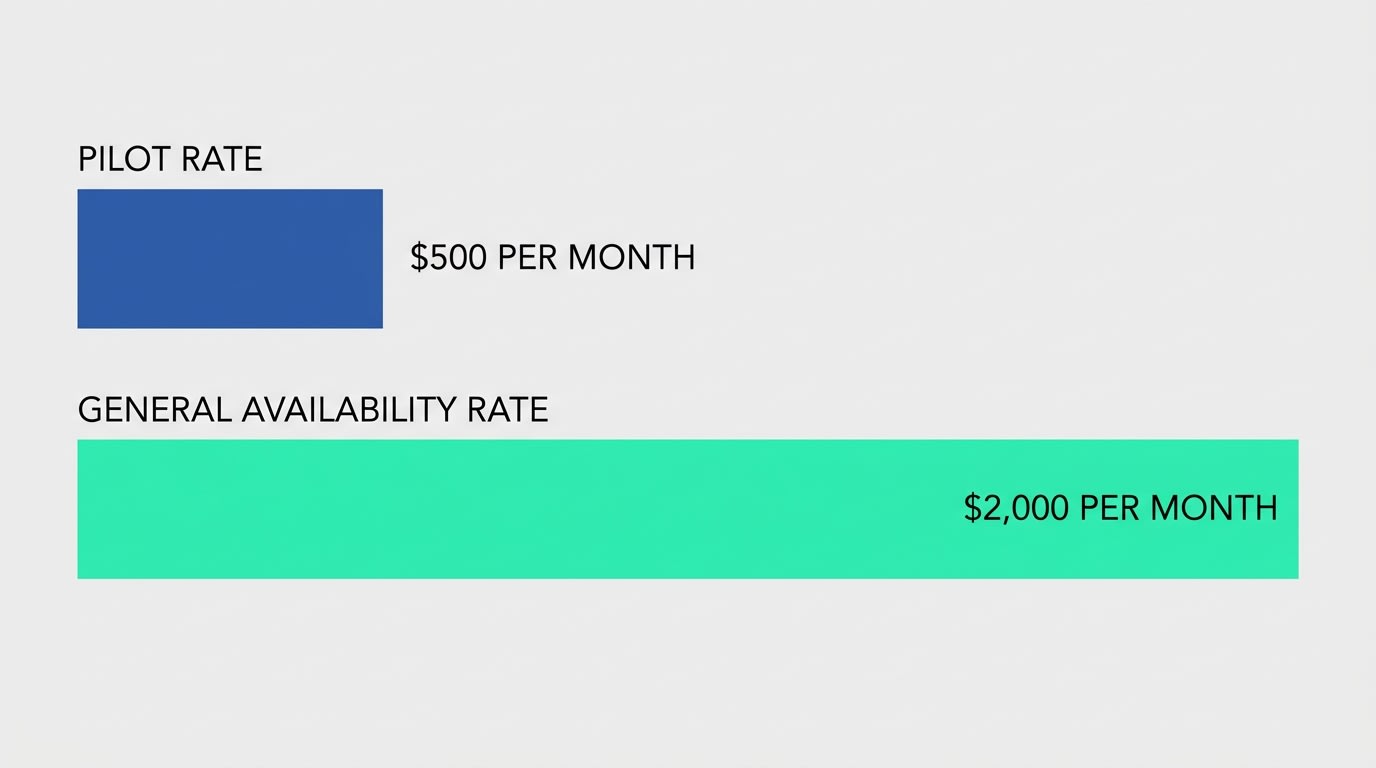
AEO MAX is currently in a beta pilot phase priced at $500 per month with a $750 one-time setup fee. The product developer fully acknowledges this is below true market value.
The stated pilot goal is to secure 25 clients across different industries. This builds sufficient cross-sector performance data before a full market launch.
Pricing is expected to increase materially at general availability. Both the monthly subscription and the implementation fee will adjust to reflect the actual cost of maintaining the infrastructure.
So what went wrong for early adopters of other tools?
They built their annual marketing budget around the $500 pilot rate. When the software graduates to a $2,000 monthly enterprise rate, the VP of Marketing has to ask the CFO for more money.
Marketing leaders lose credibility when they request additional funding for software that was supposed to drive efficiency.
The Penalty of Commodity Content
The ultimate hidden cost is lost revenue due to poor lead conversion. If you rely entirely on automated systems without investing in the data architecture, you produce commodity content.
The Ground phase exists because open web data produces content that sounds exactly like your competitors. Buyers can spot superficial engagement materials instantly.
When your buyers read generic material, they bounce from your site and buy from a competitor who provided specific, verifiable evidence.
You paid for the software subscription. You paid for the CRM credits. You paid for the Apollo integration. But because you avoided the hard work of structuring your proprietary knowledge base, you generated zero closed-won deals.
That zero-return scenario is the highest cost of all. Avoiding it requires treating automated tools as distribution engines, not substitute thinkers.
Audit Your Current Infrastructure First
Do not purchase new software tiers until you verify your existing data flows. Open your current CRM setup right now.
Navigate to your reporting dashboards. If your attribution model cannot trace a closed-won deal back to the specific automated campaign that started the conversation, stop buying new tools.
Fix your tracking architecture, structure your proprietary data, and establish baseline citability scores first. That foundation positions your next software investment to actually drive revenue.
No Comments Yet
Let us know what you think