
Share this
by Keith Gutierrez on Apr 28, 2026
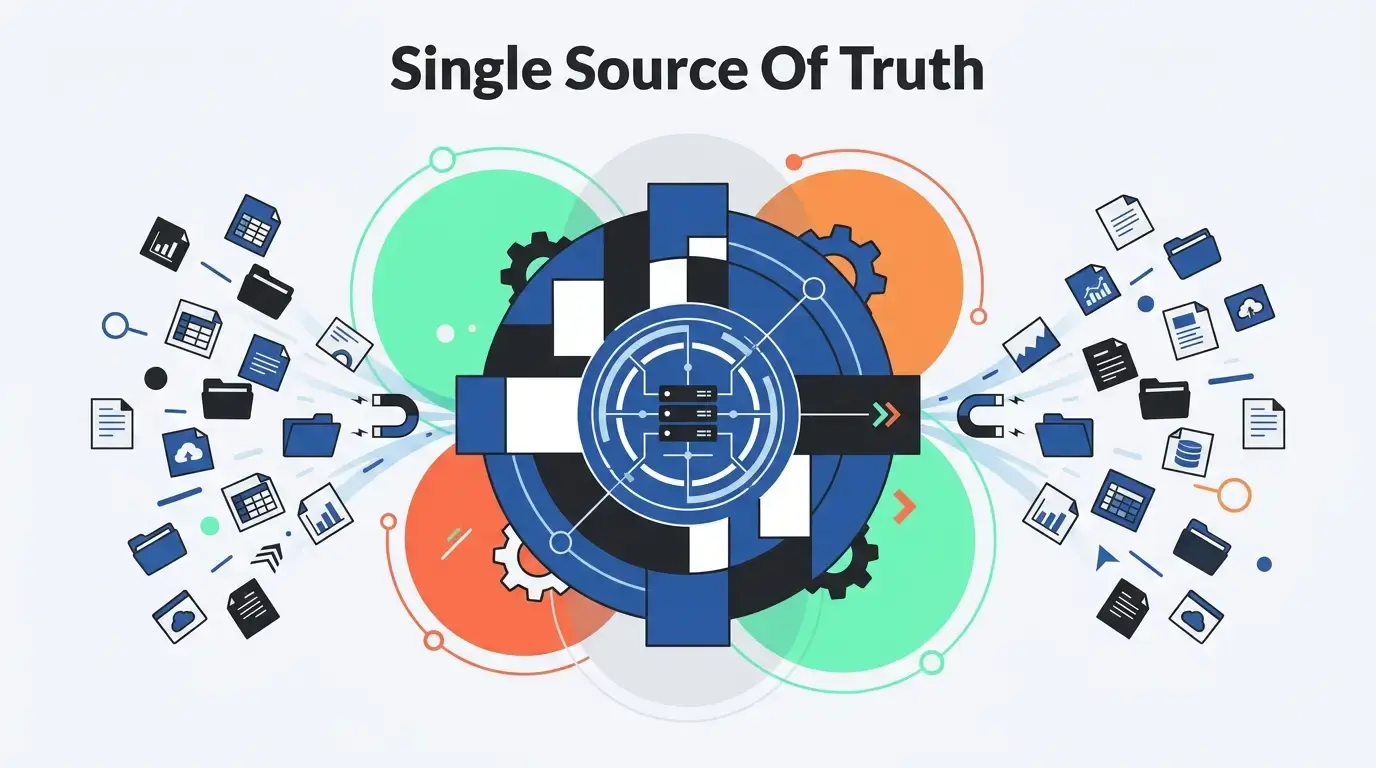
Stop managing revenue data across scattered spreadsheets. HubSpot RevOps eliminates data silos by transforming your CRM into a unified single source of truth. By automating workflows across your organization, every team gains real-time access to clean, decision-grade numbers, completely replacing manual data entry.
What You'll Learn
- The Cost of Inaction: Why relying on disconnected spreadsheets leads to a "Frankenstein" system and daily revenue leakage.
- The 90-Day Roadmap: A step-by-step guide to executing a diagnostic audit, refactoring your CRM architecture, and launching ongoing optimization.
- Practical Implementation: How mid-market teams can bridge the gap between back-office ERPs and frontline sales tools.
- Realized Benefits: How centralized data accelerates operational velocity, ensures cost-certainty, and improves customer personalization.
Why Mid-Market Teams Must Move Beyond Spreadsheets
Many organizations treat their CRM like a digital rolodex, relying on manual workarounds and endless spreadsheets to track performance. This "duct-tape" approach to revenue operations eventually breaks.
When you task a busy sales manager with fixing the CRM or try to patch together disconnected tools, you create a system where leads fall through the cracks. This fragmentation creates broken workflows that directly result in revenue leakage. Rather than guessing your way through quarterly planning, mid-market teams need a structured approach to unify sales, marketing, and service data.
How HubSpot RevOps Creates a Single Source of Truth
Achieving single source of truth data consolidation requires more than just buying software. It requires engineering your platform to align perfectly with your actual business logic.
HubSpot RevOps handles the administrative heavy lifting so your teams can stop fighting their data and start scaling the business. Here are the core areas where this consolidation transforms your operations:
1. Automating Sales Pipeline Visibility
- The Spreadsheet Problem: Sales reps waste hours manually updating forecasting spreadsheets, leading to outdated and inaccurate projections.
- The HubSpot RevOps Solution: By implementing automated data quality workflows to proactively identify and fix inconsistencies, HubSpot RevOps standardizes reporting across the board. Deal velocity insights and rep accountability metrics are captured automatically, giving leaders a real-time, accurate picture of pipeline health.
.webp?width=768&height=1596&name=automating-sales-pipeline-visibility-infographic-20260428-142228).webp)
2. Marketing Attribution and Content Production
- The Spreadsheet Problem: Marketing teams struggle to prove ROI because their campaign data is isolated from the sales pipeline.
- The HubSpot RevOps Solution: HubSpot RevOps integrates marketing execution directly with revenue outcomes. It replaces siloed tracking documents with full-funnel attribution, ensuring that every piece of AI-powered content and campaign is explicitly tied to closed-won deals.
3. Customer Journey and Support Tracking
- The Spreadsheet Problem: Customer success teams operate in a vacuum, relying on separate databases to track retention and support tickets.
- The HubSpot RevOps Solution: HubSpot RevOps breaks down the wall between pre-sale and post-sale interactions. It provides total customer journey visibility and retention insights in one unified dashboard, enabling better expansion readiness and personalized customer care.
A Step-by-Step Guide to Centralizing Your Data
When executing mid-market B2B services RevOps, building a sustainable system requires discipline and clarity. We recommend following a proven 90-day revenue roadmap to ensure a smooth transition from spreadsheets to a governed system.
.webp?width=1376&height=768&name=technical-process-flow-diagram-three-steps-20260428-141143).webp)
Step 1: The Diagnostic Audit
Before building anything, you must dive into your current tech stack to identify friction points and data leaks. This audit maps out exactly where spreadsheets are causing operational lag and defines what data must be migrated into the unified system.
Step 2: The Structural Build
This step involves refactoring your CRM architecture. Instead of building on top of a shaky foundation of legacy debt, you clean up outdated code and redundant processes. By aligning the system with how your organization actually operates, you establish a resilient, modern data foundation.
Step 3: Ongoing Optimization
Launching the CRM is only the beginning. Proper HubSpot onboarding and training ensures your team actually adopts the new system. Ongoing fractional management provides continuous optimization, equipping your team to use AI tools and modern workflows without adding internal headcount.
Practical Implementation Paths for Industrial Teams
Implementing RevOps for industrial and distribution companies often involves unique technical challenges, primarily the need to connect modern sales tools with legacy software.
.webp?width=1376&height=768&name=factory-engineers-erp-crm-integration-20260428-141159).webp)
For many manufacturers, valuable data lives inside custom ERPs, inventory systems, or back-office databases. You cannot achieve true data consolidation if these systems remain disconnected. As experienced HubSpot partners for manufacturing, specialized agencies handle the difficult integration work. By linking complex ERPs (like Quickbase) directly into your CRM environment, operations teams gain real-time insight into inventory, pricing, and fulfillment alongside their core sales activities.
The Case for a Fully Managed Revenue Engine
Building an elite revenue engine internally carries significant hiring risk. Finding, training, and retaining a top-tier RevOps director is expensive and time-consuming.
Partnering with elite HubSpot RevOps agencies provides mid-market teams with predictable cost-certainty. Instead of enduring high-risk, lengthy hiring cycles and mounting overhead, you gain access to a full suite of engineers and strategists for a flat monthly fee.
HubSpot RevOps fundamentally changes how you manage your business. It allows you to ditch the manual spreadsheets, stop guessing, and confidently lead with clean, decision-grade facts.
Frequently Asked Questions
How does HubSpot RevOps solve spreadsheet sprawl?
HubSpot RevOps eliminates spreadsheet sprawl by engineering your CRM into a single source of truth. It automates workflows, connects disconnected tools, and unifies sales, marketing, and service data so teams have real-time access to clean, decision-grade numbers instead of relying on manual workarounds.
What is the 90-day roadmap for centralizing data?
The 90-day roadmap includes three phases: a diagnostic audit to identify friction points and data leaks, a structural build to refactor your CRM architecture and clean up legacy debt, and ongoing optimization that involves team onboarding and continuous workflow management.
How do industrial and manufacturing teams integrate custom ERPs?
Industrial teams integrate custom ERPs and back-office databases directly into their HubSpot CRM environment. By linking these complex systems, operations teams gain real-time insights into inventory, pricing, and fulfillment alongside their core sales activities.
Why partner with a HubSpot RevOps agency instead of hiring internally?
Partnering with an elite HubSpot RevOps agency provides predictable cost-certainty for a flat monthly fee. It allows mid-market teams to avoid the high hiring risk, expensive overhead, and lengthy recruitment cycles associated with finding and training an internal RevOps director.
No Comments Yet
Let us know what you think