
Share this
by Keith Gutierrez on Jul 20, 2026
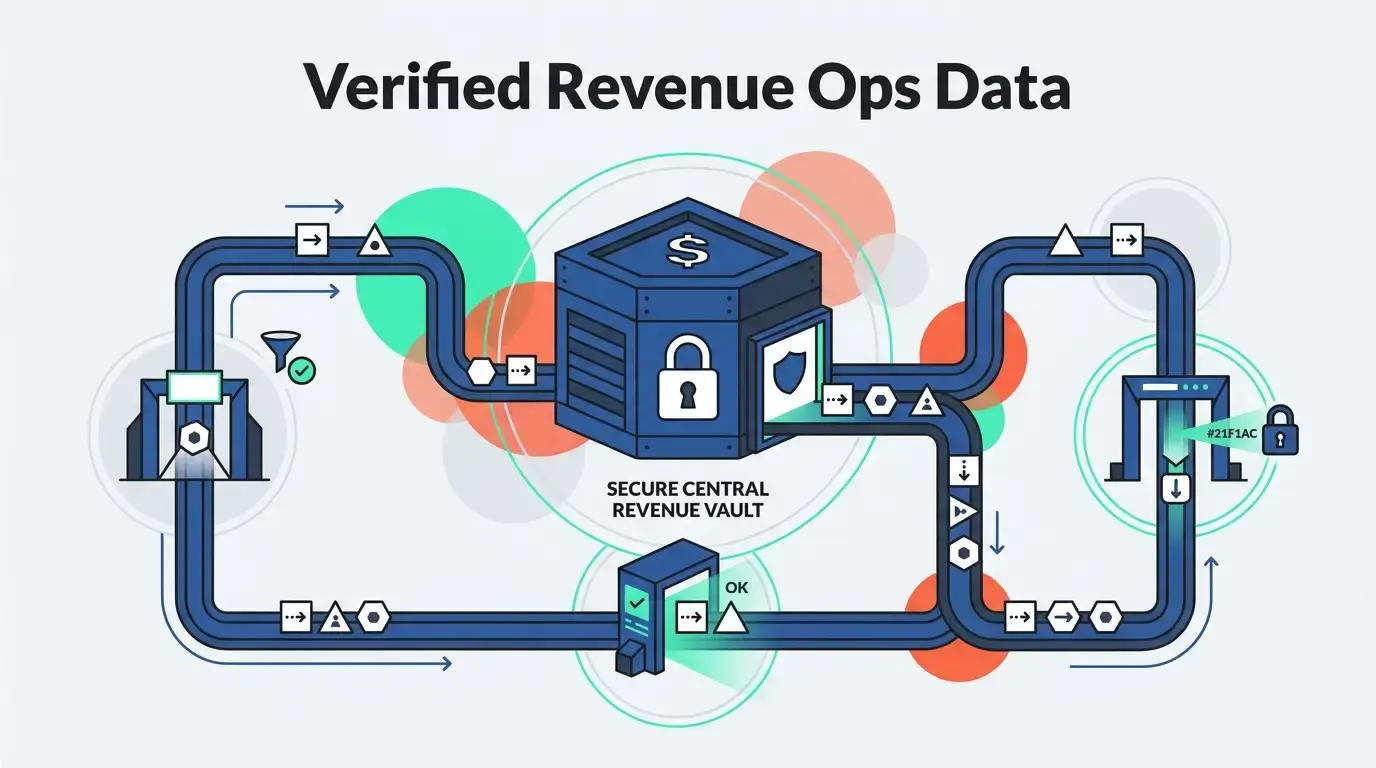
Most revenue leaders are making aggressive quarterly forecast decisions on data that is fundamentally broken.
If you are asking which RevOps metrics can a CRO actually trust, you are likely looking at a multi-touch attribution dashboard that credits a single blog post for a massive enterprise deal, while your sales reps report the lead came from a conference. A trustworthy revenue engine requires a closed loop connecting marketing lead capture, sales pipeline velocity, and post-sale retention data in a single system.
This guide breaks down exactly what breaks in standard reporting, which metrics actually correlate to closed-won revenue, and the structural rules required to build an accurate and unified data model.
Before Asking Which RevOps Metrics Can a CRO Actually Trust, Audit Your Transition Gates
In our implementations, the most common post-migration failure is contaminated data that erodes executive trust in reporting within the first 30 days of go-live.
A dashboard displaying pipeline health is only as accurate as the friction required to move a deal to the next stage. Traditional CRM implementations fail because they rely on sales teams to voluntarily update records. When a rep can manually drag a deal from Discovery straight to Closed-Won just before a Friday afternoon forecast call, the entire data model collapses.
Here's the thing:
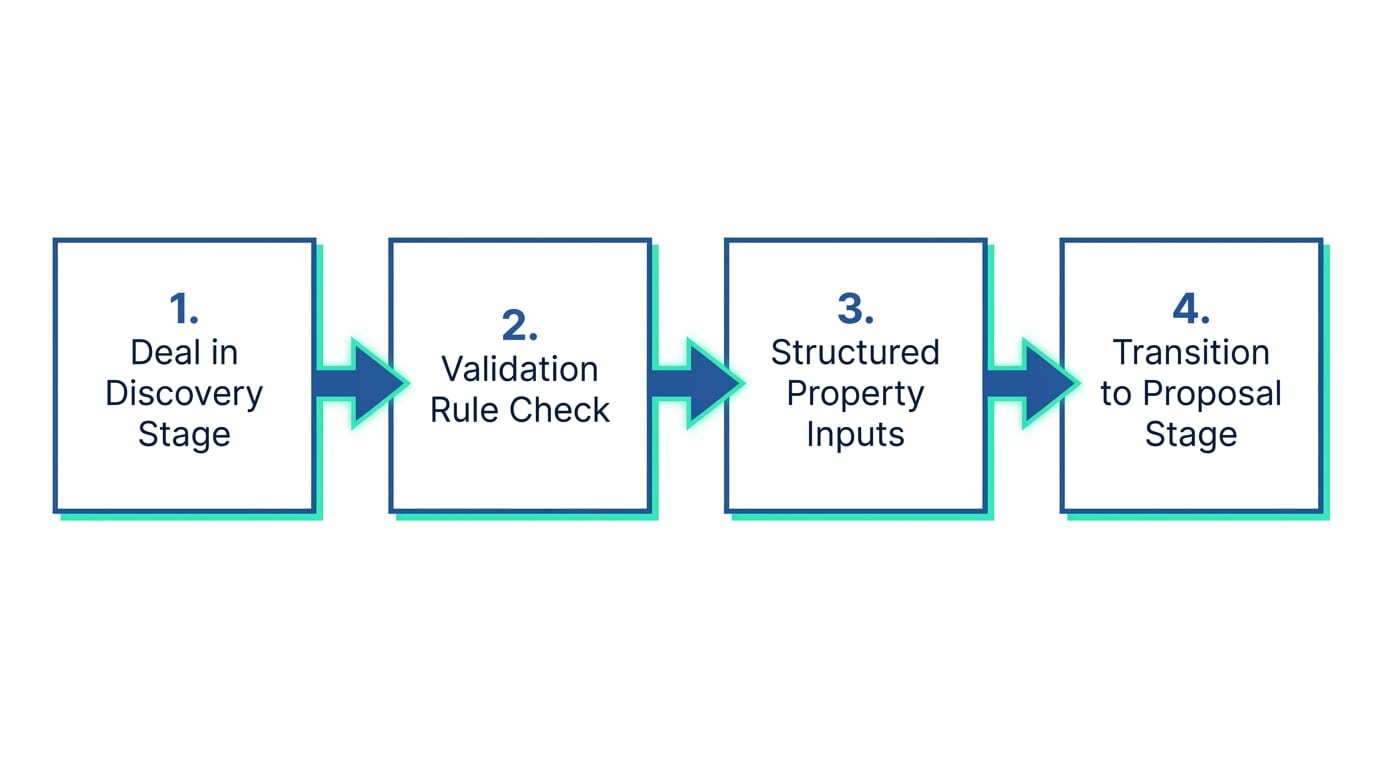
To configure advanced multi-touch revenue attribution frameworks in HubSpot Professional and Enterprise, you must first enforce data governance upstream. This means implementing rigorous validation rules at every lifecycle stage transition gate.
The system must block manual stage changes. If a deal moves to the proposal stage, the architecture must require specific, structured property inputs before allowing the transition. This methodology tracks macro-metrics, specifically Opportunity Status (Open, Won) and Customer Status (Active, Churned), meaning that the data populating your executive dashboard is a reflection of reality, not optimism.
Following HubSpot RevOps best practices, without this governance, the attribution data is never reliable enough for a CRO to trust for resource allocation decisions.
The Post-Sale Blind Spot: Wiring Service Metrics Back to Acquisition
A standard HubSpot implementation activates basic software features and completely ignores the post-sale loop.
Revenue operations is fundamentally broken when the organization treats customer support as an isolated department rather than a revenue retention mechanism. To automate the evolve stage of Loop Marketing, true Revenue Operations requires customer retention data. Our RevOps engagements dismantle these organizational data silos to build a unified, high-velocity revenue engine.
What does that look like in practice?
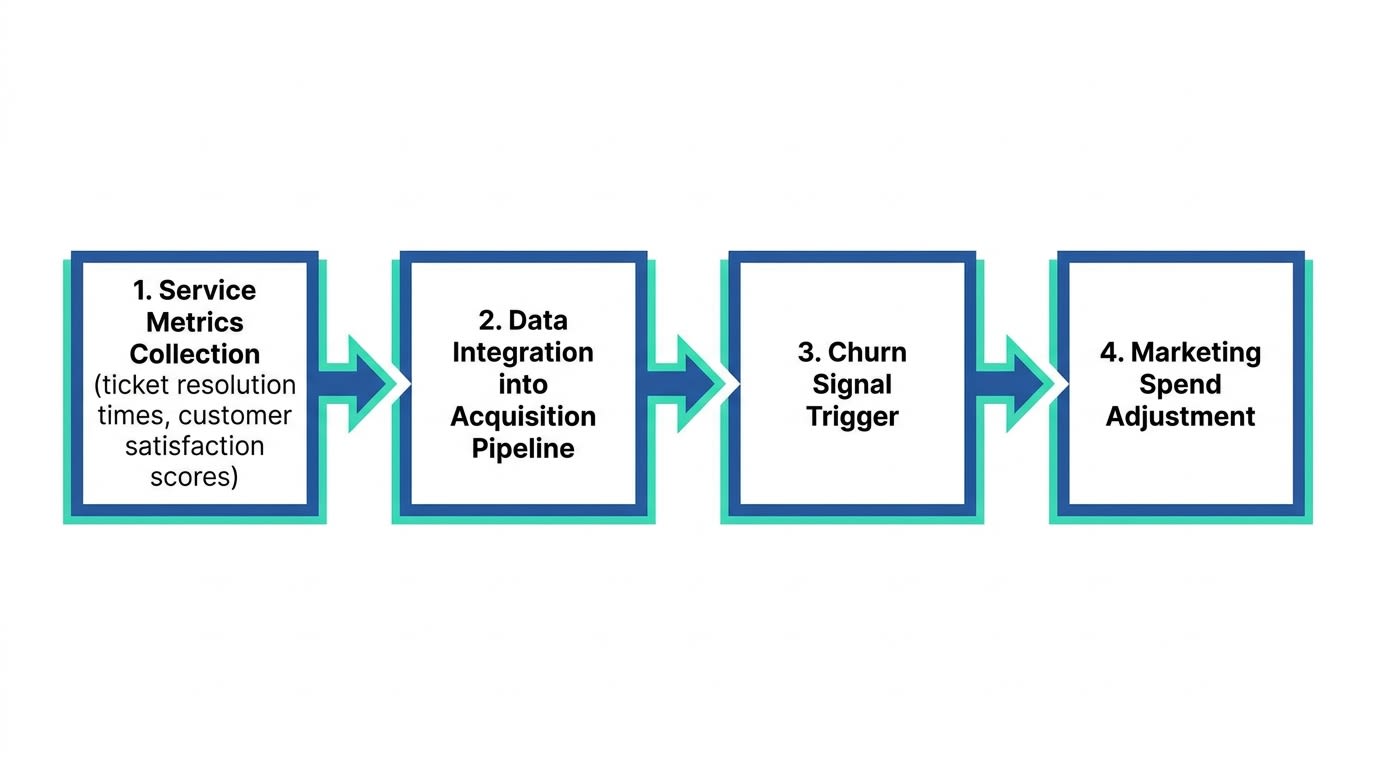
We embed HubSpot Service Hub as the foundational core of every RevOps engagement. This architecture treats retention data as acquisition intelligence, informing campaigns built with AI-powered content tools. Service metrics such as ticket resolution times and customer satisfaction scores are wired directly back into acquisition pipelines and custom multi-touch revenue attribution models.
If a specific customer segment has a catastrophic ticket resolution time, that churn signal is sent back to marketing to halt spend on acquiring that specific persona. The churn signals and health metrics reveal which customer segments produce the highest Lifetime Value (LTV), allowing the CRO to focus sales capacity exclusively on profitable cohorts.
Isolating True ICP Fit vs. High-Intent Noise
In our implementations for healthcare technology and provider networks, we see sales capacity drained by leads that show high intent but possess zero purchasing power.
A resident physician might download five whitepapers and attend three webinars, triggering massive lead scores in a standard CRM configuration. But they cannot buy a hospital-wide software platform. If your metrics count this engagement as a qualified pipeline opportunity, your forecast is inflated.
But here is where it gets interesting:
To fix this, we build strict ICP segmentation filters inside HubSpot using custom global firmographic properties. Contact classification is structured around two distinct dimensions.
- Business Segmentation and Firm Type: Sorting the database into strict categories such as Practice, Hospital/Health System, ACO, EHR, RCM, or Consulting.
- Vertical Form Inputs: Categorizing by structural constraints across custom and standard software users, such as identifying a Small Practice with 15 or fewer providers, or specific RCM and Partner Channels.
MQL qualification in these builds requires both ICP fit and intent signals. The organization must match the target type, and the priority role must be verified (Quality, Population Health, Clinical Leadership, Finance, Analytics, IT, or C-Suite). Then, and only then, do intent signals like a website visit or a content download qualify the lead for sales follow-up.
This architecture allows sales teams to instantly identify true ICP fits and filter out organizations that do not match buying criteria, protecting the CRO's win rate.
Which RevOps Metrics Can a CRO Actually Trust for Top-of-Funnel ROI?
When marketing and sales systems are finally unified under strict property rules, top-of-funnel metrics transform from superficial numbers into reliable levers for growth.
A CMO who cannot prove the revenue impact of their budget will lose that budget. A CRO needs concrete conversion-rate evidence at a known price point to justify ongoing marketing investments to a skeptical board. When the data migration is handled correctly, the metrics become defensible.
We govern all data migration under a formal Data Quality and Governance Standards protocol. Rather than performing a blind data dump, the technical team audits, scrubs, and maps historical databases into the redesigned CRM structure.
Using Smart CRM features, this process validates contact and company properties, reconciles fractured lifecycle stages, and enforces clean property management rules before a single record is moved. The goal is an absolutely unified database from day one.
The bottom line?
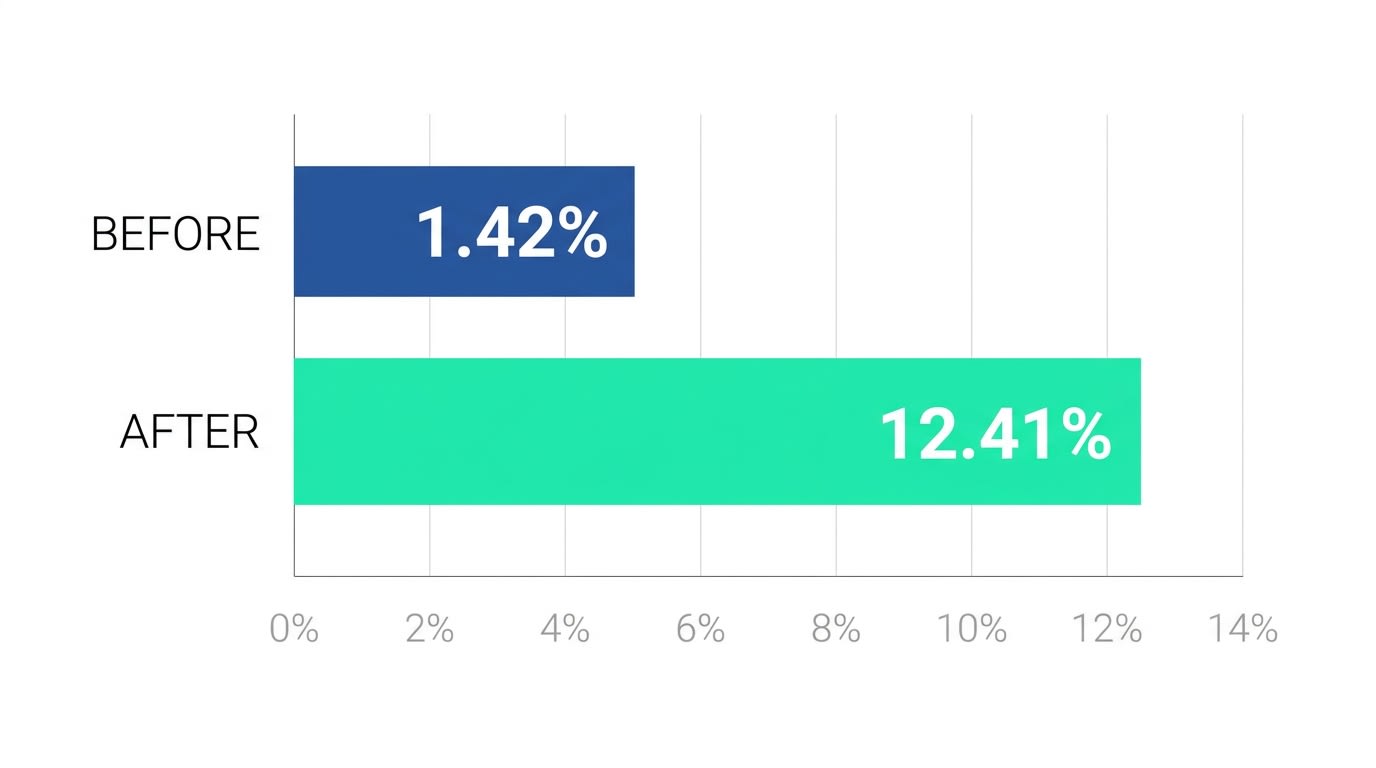
When the foundation is clean, the top-of-funnel conversion metrics finally correlate to revenue. For a local-government software company with 201 to 500 employees based in Kansas, we raised top landing page conversion rates from 1.42% to 12.41%.
This generated over 500 lead submissions on a retainer averaging $4,000 per month, entirely through HubSpot CMS migration and systematic A/B testing of high-impact landing pages.
"You're not likely to find someone at this price with their level of expertise. They're the machine that makes our HubSpot go."Mark Friesen, Marketing Director, Verified Client Company
Structuring the Fix: The 90-Day Revenue Roadmap
Systemic data contamination cannot be fixed with a few new dashboard widgets or a weekend cleanup project.
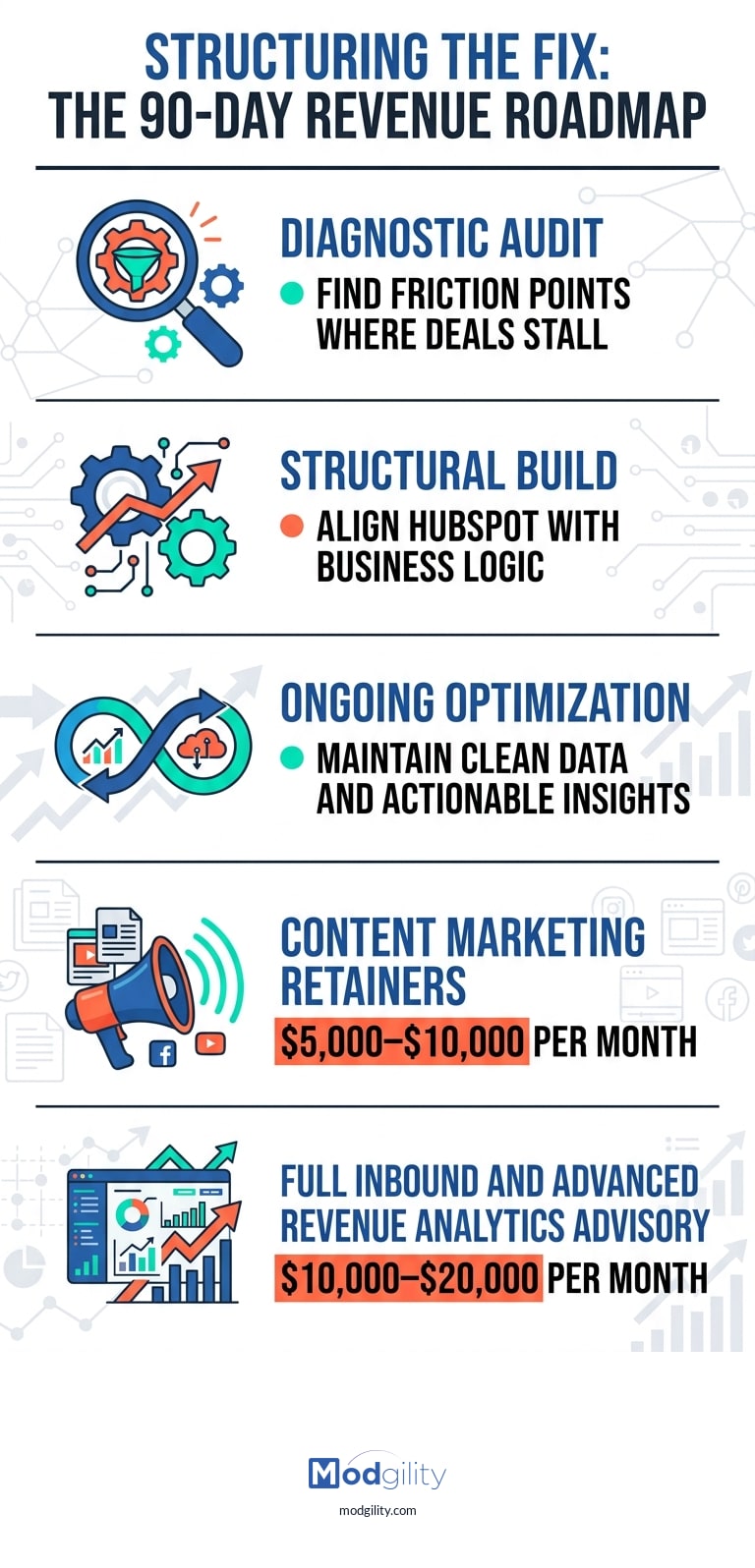
To establish a repeatable engine that supports aggressive quarterly targets, the organization must follow a structured process. The 90-Day Revenue Roadmap is a structured three-phase process designed to audit, build, and optimize your revenue systems.
It begins with a Diagnostic Audit to find friction points where deals stall. It moves into a Structural Build to align HubSpot with your specific business logic. Finally, it concludes with Ongoing Optimization where a fractional RevOps partner works to keep your data clean and actionable.
And the best part?
Post-implementation, this structure transitions naturally into continuous optimization. We offer structured retainers in two tiers to maintain the environment. Content Marketing Retainers range from $5,000 to $10,000 per month for continuous content production and campaign optimization. For organizations requiring comprehensive demand generation, the Full Inbound and Advanced Revenue Analytics Advisory ranges from $10,000 to $20,000 per month.
Clients in the retainer track maintain the same dedicated team that built their system, meaning the data infrastructure established during the 90-Day Revenue Roadmap continues to produce reliable executive reporting for the long term.
Where to Look First
Open your HubSpot portal right now. Go to Service > Tickets and filter by product line. If you cannot instantly see the ticket resolution times for your highest-tier customers, your retention loop is broken, and your acquisition pipeline is flying blind. Run this diagnostic test today to map out exactly where your data architecture needs restructuring.
No Comments Yet
Let us know what you think