Share this
by Keith Gutierrez on Feb 5, 2026
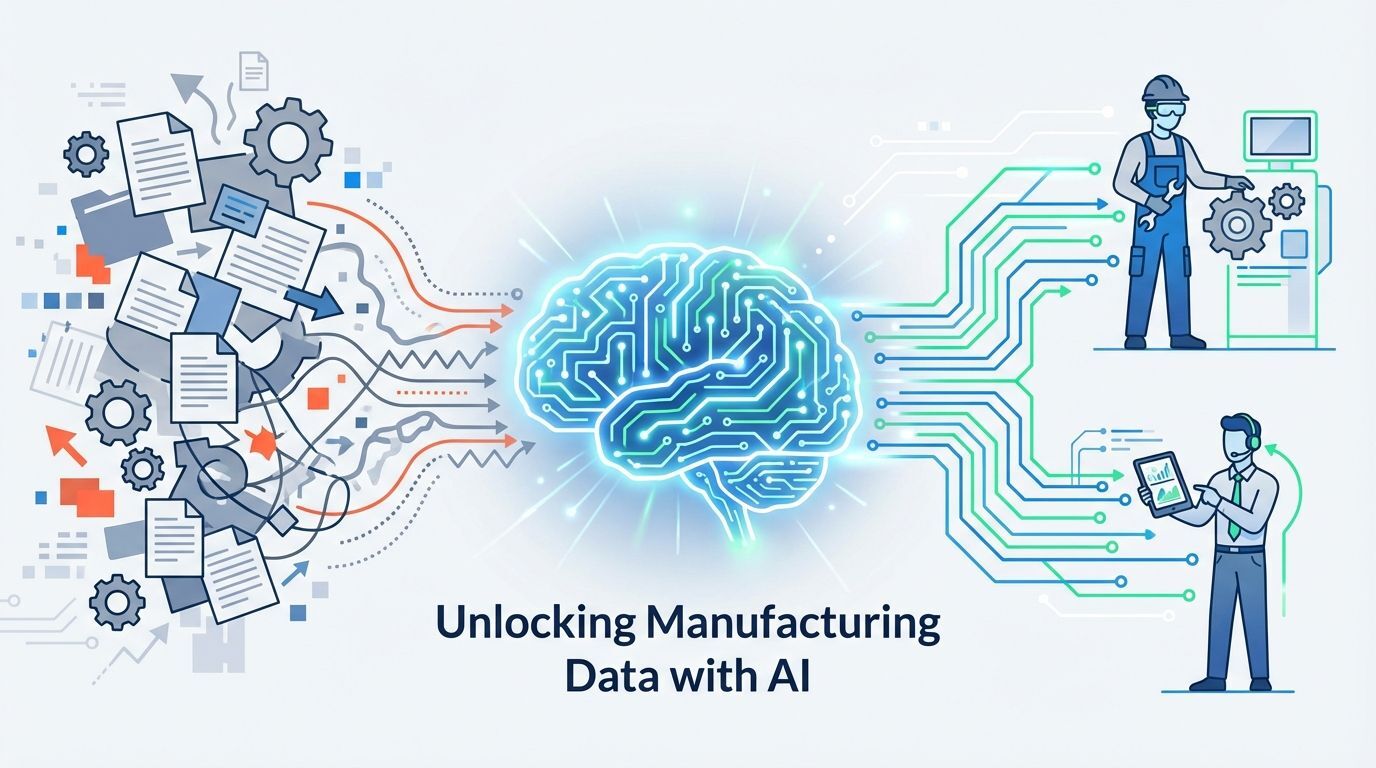
An Agentic RAG System integrates with existing manufacturing technologies by creating a unified intelligence layer. It ingests the unstructured data from your systems, like operational reports, maintenance logs, and quality control documents, making that information instantly accessible and actionable for your teams through conversational queries.
What You'll Learn
This article details the specific integration capabilities of an Agentic RAG System for the manufacturing sector. You will learn how it connects with your existing operational workflows to:
- Enhance Maintenance and Repair: Provide instant access to technical manuals and historical repair data.
- Streamline Quality Control: Synthesize insights from QC reports and compliance documents.
- Accelerate Operator Training: Create an AI-powered knowledge base for new and existing employees.
- Empower Technical Sales Teams: Deliver accurate product specifications and support information on demand.
Bridging the Gap: How Agentic RAG Integrates with Manufacturing Workflows
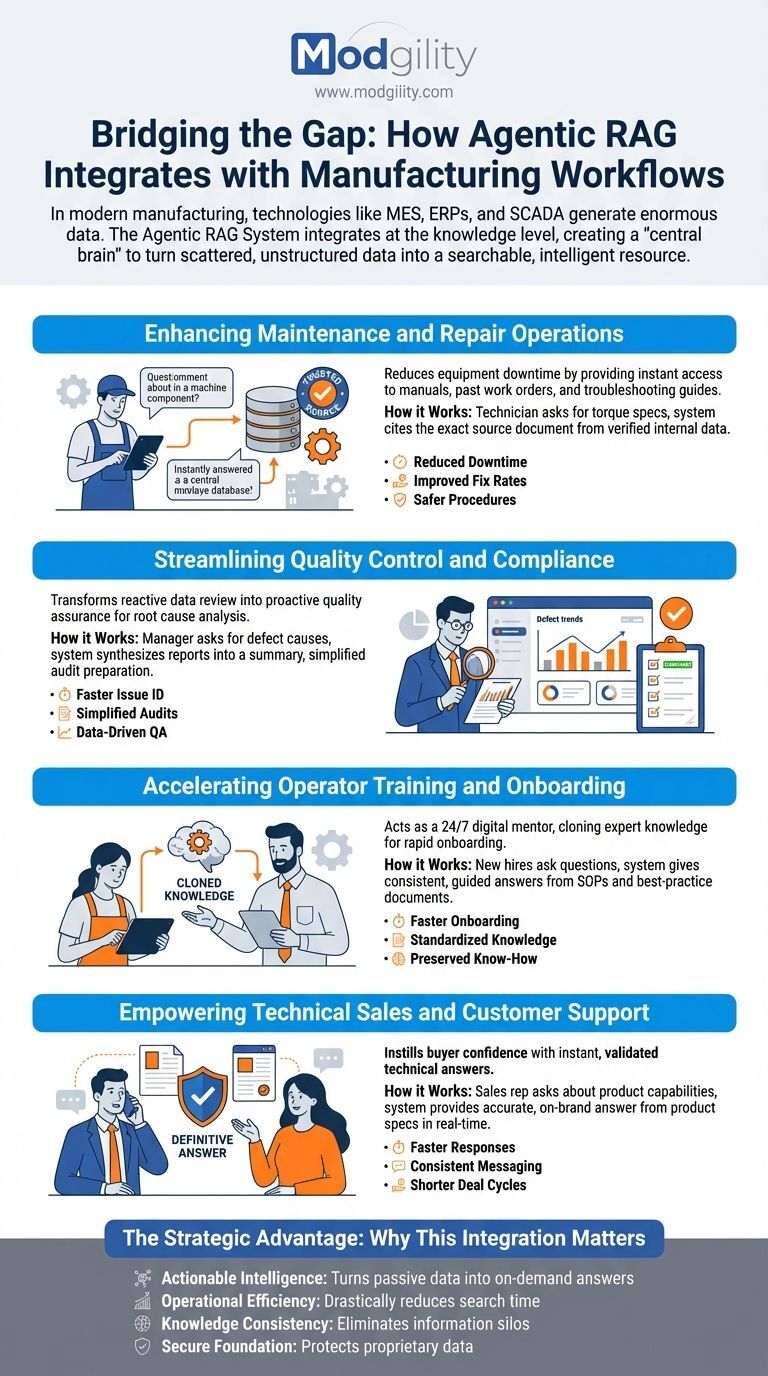
In modern manufacturing, technologies like Manufacturing Execution Systems (MES), ERPs, and SCADA generate enormous amounts of data. However, much of this valuable information—operator notes, maintenance logs, quality reports, and standard operating procedures (SOPs)—remains unstructured and siloed. This is where traditional systems fall short.
An Agentic RAG System doesn't replace these core technologies. Instead, it integrates at the knowledge level, creating a "central brain" for your entire operation. It securely ingests this unstructured data, turning scattered documents into a searchable, intelligent resource that understands the context of your business.
Key Integration Capabilities for Manufacturing Technologies
The true power of this system lies in its ability to augment the human teams that rely on your existing tech stack. It bridges the gap between data generation and practical application.
Enhancing Maintenance and Repair Operations
The Challenge: When a machine on the factory floor malfunctions, technicians spend critical time searching through digital folders or physical binders for the correct manual, repair history, or schematic. This downtime directly impacts production targets.
How an Agentic RAG System Integrates:
The system connects to your document repositories, ingesting all technical manuals, past work orders, and troubleshooting guides. A technician can then ask a direct question like, "What are the torque specifications for the main bearing on a Model C-7 press?"
- An Agentic RAG System provides an immediate, accurate answer, citing the exact source document and page number. This is possible because it is grounded in your verified internal data, ensuring zero hallucinations or fabricated information.
Benefits:
- Reduced equipment downtime.
- Improved first-time fix rates.
- Standardized and safer repair procedures.
Streamlining Quality Control and Compliance
The Challenge: Quality managers must constantly analyze reports to identify defect trends, perform root cause analysis, and ensure regulatory compliance. This often involves manually sifting through spreadsheets, PDFs, and inspection notes—a slow and error-prone process.
How an Agentic RAG System Integrates:
By processing all your quality inspection reports, non-conformance documents, and compliance checklists, the system enables powerful insight discovery. A manager can ask, "What were the top three causes of defects for Product Line B last quarter?" and receive a synthesized summary in seconds.
- This capability transforms reactive data review into proactive quality assurance, leveraging over 80% of your company's previously untapped internal knowledge.
Benefits:
- Faster identification of production issues.
- Simplified audit preparation and compliance reporting.
- Data-driven improvements to quality processes.
Accelerating Operator Training and Onboarding
The Challenge: Getting new operators up to speed on complex machinery is time-consuming and heavily reliant on the availability of senior staff. Institutional knowledge is often lost when experienced employees leave.
How an Agentic RAG System Integrates:
The system acts as a digital mentor. By training it on your best-practice documents, video transcripts of expert operators, and SOPs, you create a 24/7 resource for your team. This facilitates rapid onboarding for new talent, allowing them to ask questions and receive guided, consistent answers.
- Think of it as cloning the knowledge of your best employees. An Agentic RAG System ensures every operator receives consistent, accurate information that aligns perfectly with your established brand and technical standards.
Benefits:
- Reduced training time from months to weeks.
- Standardized operational knowledge across all shifts.
- Preservation of critical institutional know-how.
Empowering Technical Sales and Customer Support
The Challenge: Sales teams in manufacturing often face highly technical questions from prospective clients about product capabilities, material specifications, or integration options. A slow or inaccurate answer can lead to a stalled deal and a loss of buyer confidence.
How an Agentic RAG System Integrates:
The system provides your sales and support teams with an instant, trusted source for answers. It is trained exclusively on your internal, validated data—product spec sheets, case studies, and engineering notes. Your data remains 100% secure and private, never used to train external models.
- When a customer asks, "Can your machine handle XYZ material at this speed?" your sales rep can get a definitive, brand-consistent answer in real-time, instilling confidence and accelerating the sales cycle.
Benefits:
- Faster and more accurate responses to technical queries.
- Improved messaging consistency across the entire sales team.
- Increased buyer confidence and shorter deal cycles.
The Strategic Advantage: Why This Integration Matters
Integrating an Agentic RAG System is more than a technology upgrade; it's a strategic decision to transform your company's collective knowledge into a competitive advantage. It ensures that the valuable data produced by your existing manufacturing systems is not just stored, but fully utilized.
The key advantages include:
- Actionable Intelligence: Turns passive data from MES, ERPs, and other systems into on-demand answers.
- Operational Efficiency: Drastically reduces time spent searching for information, allowing teams to focus on high-value tasks.
- Knowledge Consistency: Eliminates information silos and ensures every team member operates from a single source of truth.
- Secure Foundation: Builds your AI capabilities on a secure, private framework that protects your proprietary data.
By making your internal knowledge instantly accessible, an Agentic RAG System empowers every department to act faster, smarter, and more consistently, turning your unstructured data into a powerful engine for structured growth.
Frequently Asked Questions
What is the primary function of an Agentic RAG System in a manufacturing environment?
An Agentic RAG System acts as a unified intelligence layer that integrates with existing manufacturing technologies like MES and ERPs. It does not replace these systems; instead, it ingests unstructured data such as operational reports, maintenance logs, and quality control documents, making this information searchable and actionable through conversational queries.
How does an Agentic RAG System assist with equipment maintenance and repair?
The system enhances maintenance by connecting to document repositories containing technical manuals, past work orders, and troubleshooting guides. A technician can ask a specific question (e.g., 'What are the torque specifications for a specific part?') and receive an immediate, accurate answer with a citation to the source document. This reduces equipment downtime and improves first-time fix rates.
Can the system improve quality control processes?
Yes, it streamlines quality control by processing all quality inspection reports, non-conformance documents, and compliance checklists. This enables managers to ask complex questions to discover defect trends or perform root cause analysis, transforming reactive data review into proactive quality assurance.
Is a company's proprietary data secure when using an Agentic RAG System?
Yes, data security is a key feature. The system is trained exclusively on your company's internal, validated data. This information remains 100% secure and private and is never used to train external models.
No Comments Yet
Let us know what you think