
Share this
by Keith Gutierrez on Jan 23, 2026
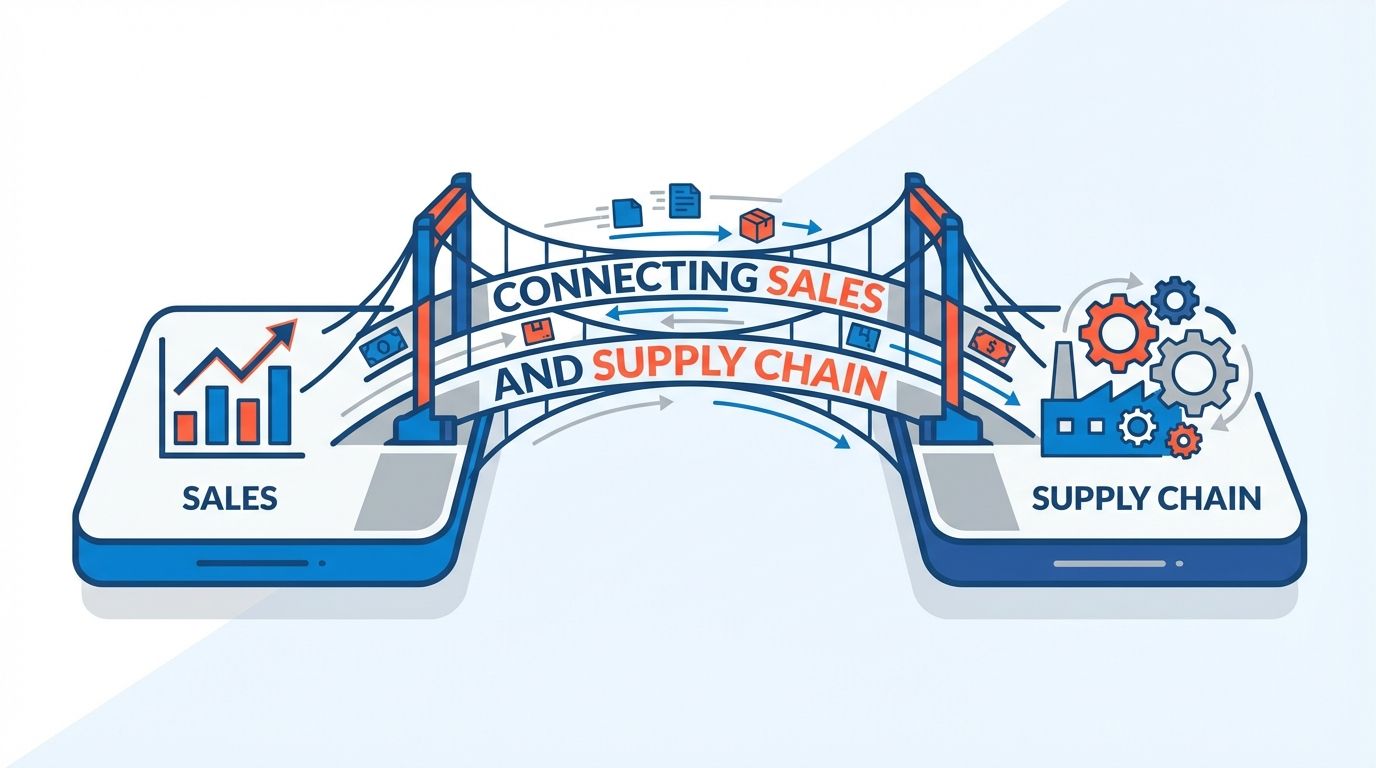
Yes, HubSpot Sales Hub can integrate with supply chain management (SCM) tools for manufacturers. While direct, one-click integrations are rare, custom connections built via APIs allow you to sync sales data with your operational software, creating a seamless flow from lead to fulfillment.
What You'll Learn
This article provides a clear breakdown of how manufacturers can connect their sales and supply chain systems. You’ll learn:
- Why integrating HubSpot Sales Hub with SCM software is critical for modern manufacturing.
- How these integrations are technically achieved through APIs and strategic implementation.
- The key benefits, including real-time inventory visibility, automated order fulfillment, and more accurate demand forecasting.
- The essential role a professional HubSpot Sales Hub Implementation plays in building a reliable and effective connection between these vital systems.
Why SCM Integration is a Game-Changer for Manufacturers
In manufacturing, the sales team is the tip of the spear, but the supply chain is the engine that delivers on their promises. When these two functions operate in silos, the consequences are significant: sales reps promise timelines they can't meet, production teams are caught off guard by large orders, and inventory levels are a constant guessing game.
Integrating your CRM (HubSpot Sales Hub) with your SCM or ERP system breaks down these walls. It transforms siloed data into shared intelligence, ensuring that your sales process is directly connected to your operational reality. This alignment is vital for scaling efficiently and maintaining customer satisfaction.
How HubSpot Sales Hub Connects with SCM Systems
Connecting two powerful but separate platforms like HubSpot and a dedicated SCM system requires a strategic approach. It's not about flipping a switch; it's about building a bridge.
The Role of APIs and Custom Integration
The connection is made possible through Application Programming Interfaces (APIs). Think of an API as a secure messenger that allows different software applications to talk to each other and exchange data. A developer can use HubSpot's API and your SCM's API to build a custom integration that passes information back and forth based on specific triggers.
The Need for a Strategic Implementation
Simply connecting the systems isn't enough. The integration must be designed around your unique business logic and workflows. This is where a strategic HubSpot Sales Hub Implementation becomes essential. An expert-led implementation ensures the connection isn't just functional but is tailored to solve your specific operational challenges, from data mapping to workflow automation.
Key Benefits of an Integrated Sales Hub and SCM
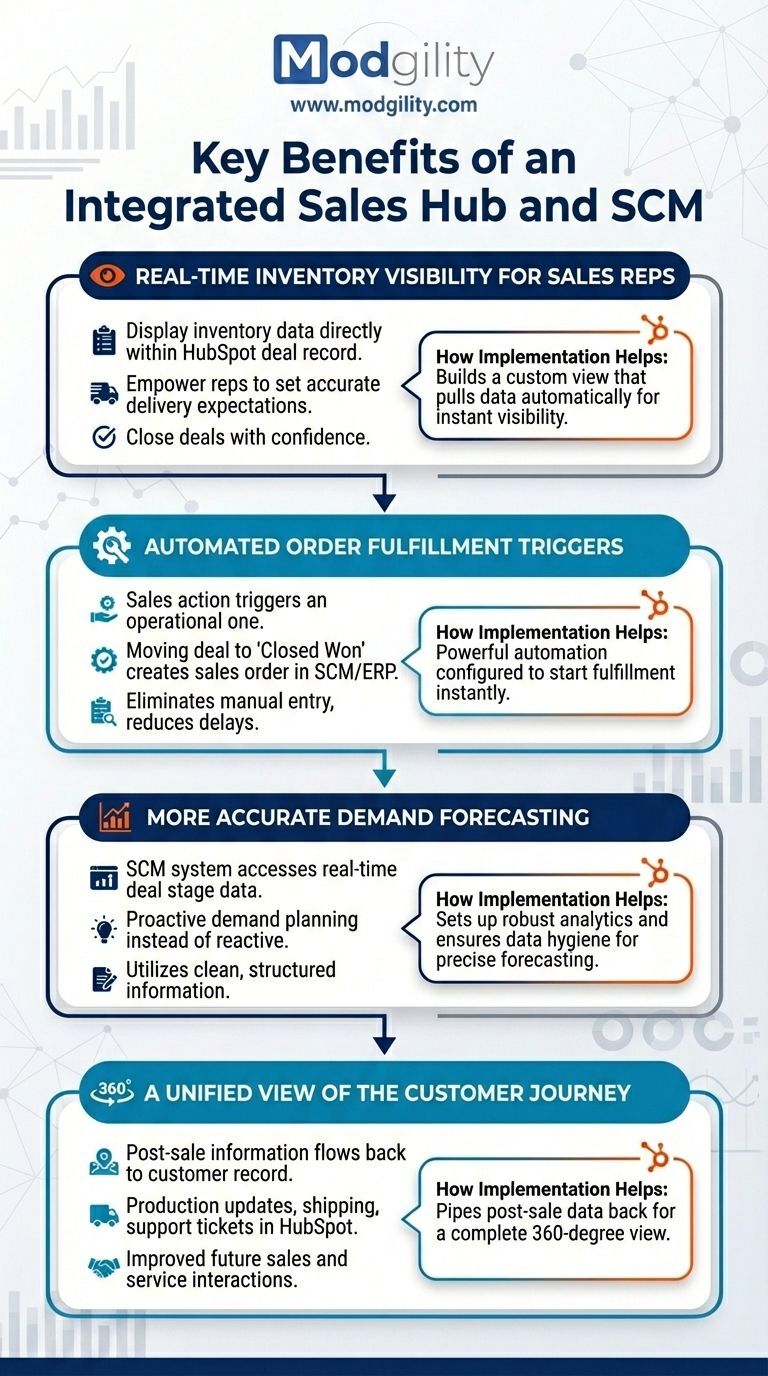
When done correctly, this integration unlocks powerful efficiencies that directly impact your bottom line. A proper HubSpot Sales Hub Implementation helps you realize these benefits faster and more reliably.
-
Real-Time Inventory Visibility for Sales Reps
Your sales team can't sell what you don't have. Instead of reps having to check a separate system or ask the operations team for stock levels, an integration can display inventory data directly within the HubSpot deal record. A tailored HubSpot Sales Hub Implementation can build a custom view that pulls this data automatically, empowering reps to set accurate delivery expectations and close deals with confidence. -
Automated Order Fulfillment Triggers
Manual handoffs are slow and prone to error. With an integrated system, a sales action can trigger an operational one. Through the powerful automation configured during a HubSpot Sales Hub Implementation, moving a deal to "Closed Won" in HubSpot can automatically create a sales order in your SCM or ERP, eliminating manual entry, reducing delays, and getting the fulfillment process started instantly. -
More Accurate Demand Forecasting
Your sales pipeline is a goldmine of forecasting data. When your SCM system has access to reliable, real-time data from your HubSpot deal stages, your demand planning becomes proactive instead of reactive. A key part of a HubSpot Sales Hub Implementation is setting up robust analytics and ensuring data hygiene, which provides your SCM with the clean, structured information needed for precise forecasting. -
A Unified View of the Customer Journey
The customer relationship doesn't end when a deal is won. A truly integrated RevOps strategy ensures that post-sale information flows back to the customer record. A comprehensive HubSpot Sales Hub Implementation can pipe production updates, shipping notifications, and support tickets back into the HubSpot contact timeline. This gives your entire customer-facing team a 360-degree view, improving future sales and customer service interactions.
Why a Partner-Led Implementation is Crucial
While technically possible to build in-house, a custom integration between your CRM and SCM is a complex project with little room for error. Partnering with an expert ensures success.
- Deep Technical and Process Expertise: A certified HubSpot Platinum Partner like Modgility brings years of experience with the HubSpot ecosystem and best practices for complex integrations.
- Customization, Not Just Configuration: A partner-led HubSpot Sales Hub Implementation focuses on understanding your unique sales and manufacturing processes first, then building a tailored solution—not forcing you into a one-size-fits-all model.
- Ensuring Data Integrity: The success of any integration hinges on clean data. Implementation specialists use proven data-mapping and testing methodologies to ensure all information flows accurately between systems, maintaining reporting reliability.
Transform Your Operations with a Connected Sales Engine
HubSpot Sales Hub is a powerful platform for accelerating revenue, but its true potential for a manufacturer is unlocked when it’s deeply integrated with your supply chain. By connecting sales promises to operational reality, you create a more efficient, predictable, and scalable business.
Achieving this seamless connection requires more than just software—it requires a strategic plan and expert execution. A professional HubSpot Sales Hub Implementation is the key to building that bridge and transforming the way your business runs.
Frequently Asked Questions
Can HubSpot Sales Hub integrate with supply chain management (SCM) tools for manufacturers?
Yes, HubSpot Sales Hub can integrate with SCM tools. While direct, one-click integrations are uncommon, custom connections can be built using APIs to sync sales data with your operational software, creating a seamless flow from lead to fulfillment.
How does HubSpot Sales Hub connect to an SCM system?
The connection is made through Application Programming Interfaces (APIs). A developer uses the APIs from both HubSpot and the SCM system to build a custom integration that allows the two platforms to exchange data based on specific business logic and triggers, such as a deal closing.
What are the main benefits of integrating HubSpot Sales Hub with SCM software?
The key benefits of this integration include providing sales reps with real-time inventory visibility directly in HubSpot, automating the order fulfillment process when a deal is won, enabling more accurate demand forecasting by sharing sales pipeline data, and creating a unified 360-degree view of the customer journey.
Why is a professional implementation important for this type of integration?
A professional, partner-led implementation is crucial because integrating CRM and SCM systems is a complex technical project. An expert partner provides deep technical and process expertise, customizes the solution to your unique workflows, and ensures data integrity is maintained between the two systems.
Comments (1)