
Share this
by Keith Gutierrez on Jan 20, 2026
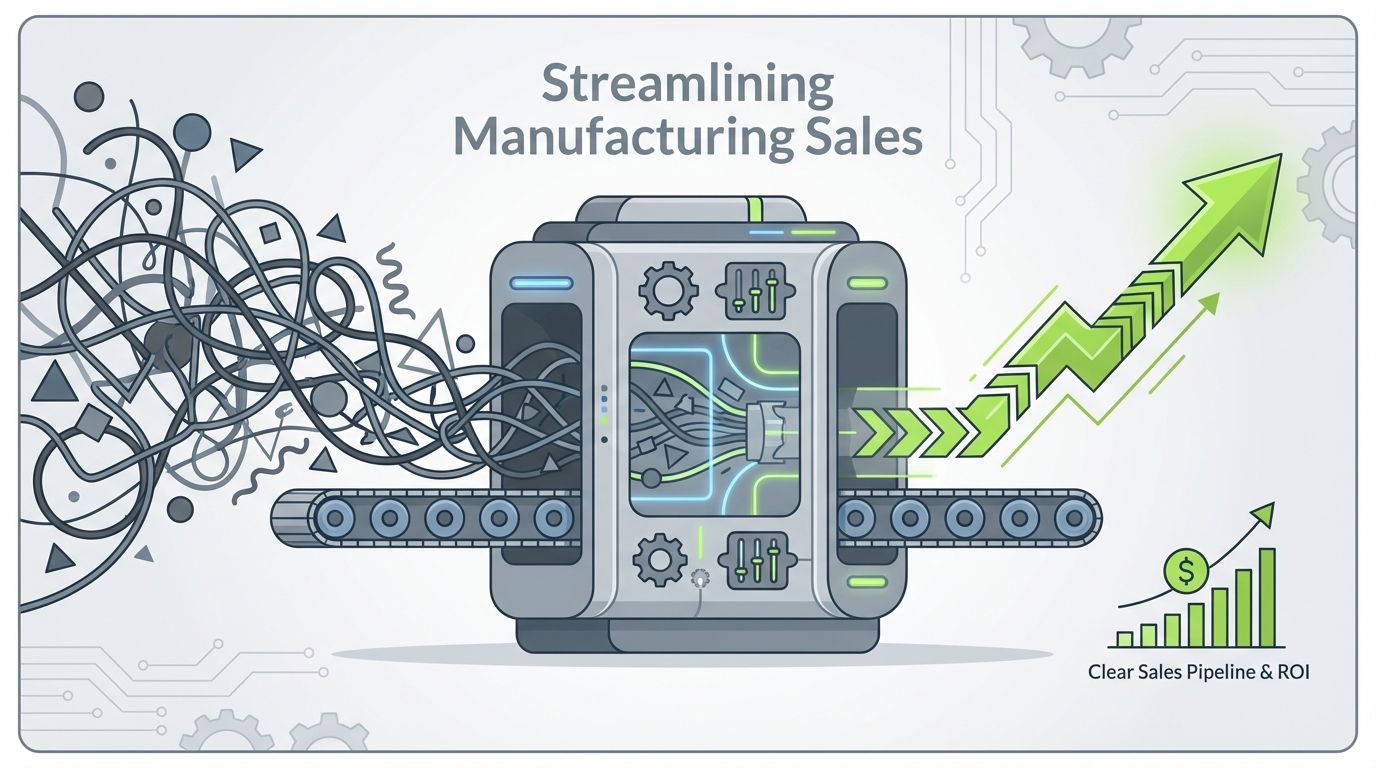
While specific ROI varies, mid-sized manufacturing firms often see significant returns within 12-18 months of implementation. This ROI is driven by a 20-30% average increase in sales productivity and a 15% shorter sales cycle, achieved through streamlined processes and enhanced data visibility.
What You'll Learn
This article breaks down the financial and operational returns you can expect from a strategic HubSpot Sales Hub implementation. We will cover:
- The four key drivers that generate a positive ROI for manufacturing firms.
- How Sales Hub directly solves common challenges like long sales cycles and inaccurate forecasting.
- Why a professional HubSpot Sales Hub Implementation is critical to maximizing the platform's value.
- The essential metrics to track for measuring your success.
Beyond the Numbers: Understanding True ROI in Manufacturing
For a mid-sized manufacturing firm, Return on Investment (ROI) isn't just a simple percentage on a spreadsheet. It’s the tangible result of untangling complex processes, empowering your sales team, and gaining clear visibility into your entire revenue pipeline.
Manufacturing sales cycles are notoriously long and complex, often involving multiple stakeholders, technical specifications, and custom quotes. A generic CRM setup simply can't manage this complexity. The true value of HubSpot Sales Hub is unlocked when it's precisely configured to address these specific challenges, turning operational friction into measurable growth.
Key ROI Drivers for Manufacturing Firms Using HubSpot Sales Hub
The most significant returns come from improvements in four core areas. Here’s how a well-executed HubSpot Sales Hub Implementation delivers value at each stage.
1. Shortening the Complex Sales Cycle
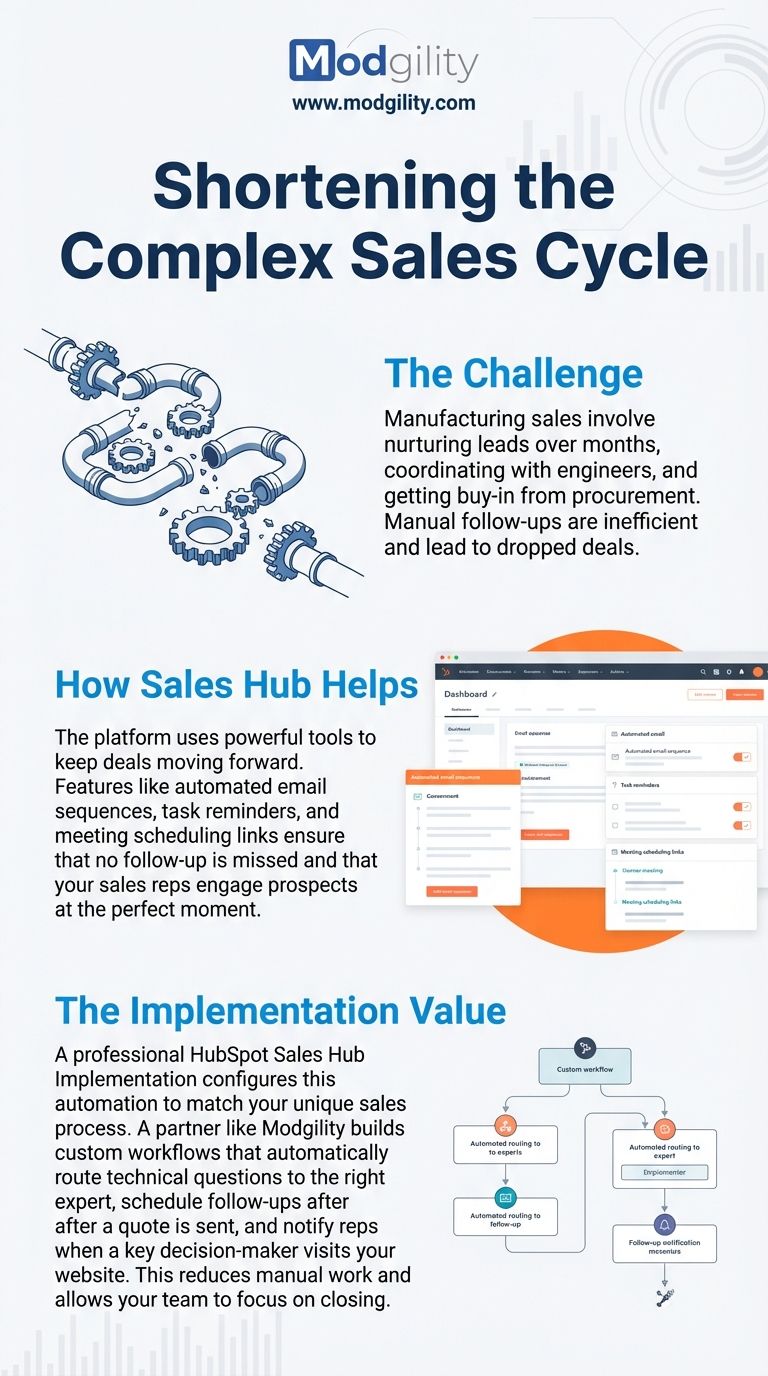
The Challenge: Manufacturing sales involve nurturing leads over months, coordinating with engineers, and getting buy-in from procurement. Manual follow-ups are inefficient and lead to dropped deals.
How Sales Hub Helps: The platform uses powerful tools to keep deals moving forward. Features like automated email sequences, task reminders, and meeting scheduling links ensure that no follow-up is missed and that your sales reps engage prospects at the perfect moment.
The Implementation Value: A professional HubSpot Sales Hub Implementation configures this automation to match your unique sales process. A partner like Modgility builds custom workflows that automatically route technical questions to the right expert, schedule follow-ups after a quote is sent, and notify reps when a key decision-maker visits your website. This reduces manual work and allows your team to focus on closing.
2. Increasing Sales Team Productivity and Efficiency
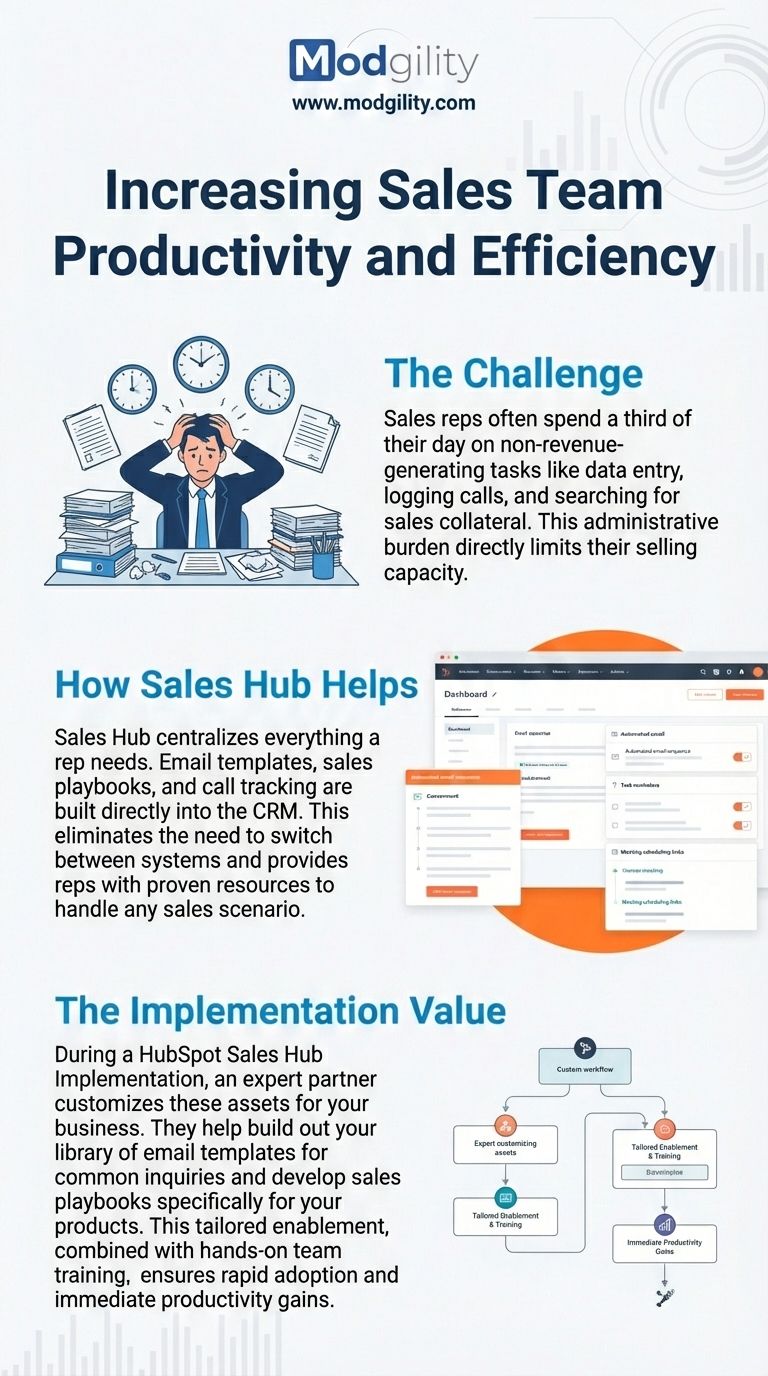
The Challenge: Sales reps often spend a third of their day on non-revenue-generating tasks like data entry, logging calls, and searching for sales collateral. This administrative burden directly limits their selling capacity.
How Sales Hub Helps: Sales Hub centralizes everything a rep needs. Email templates, sales playbooks, and call tracking are built directly into the CRM. This eliminates the need to switch between systems and provides reps with proven resources to handle any sales scenario.
The Implementation Value: During a HubSpot Sales Hub Implementation, an expert partner customizes these assets for your business. They help build out your library of email templates for common inquiries and develop sales playbooks specifically for your products. This tailored enablement, combined with hands-on team training, ensures rapid adoption and immediate productivity gains.
3. Gaining Clear Pipeline Visibility and Accurate Forecasting
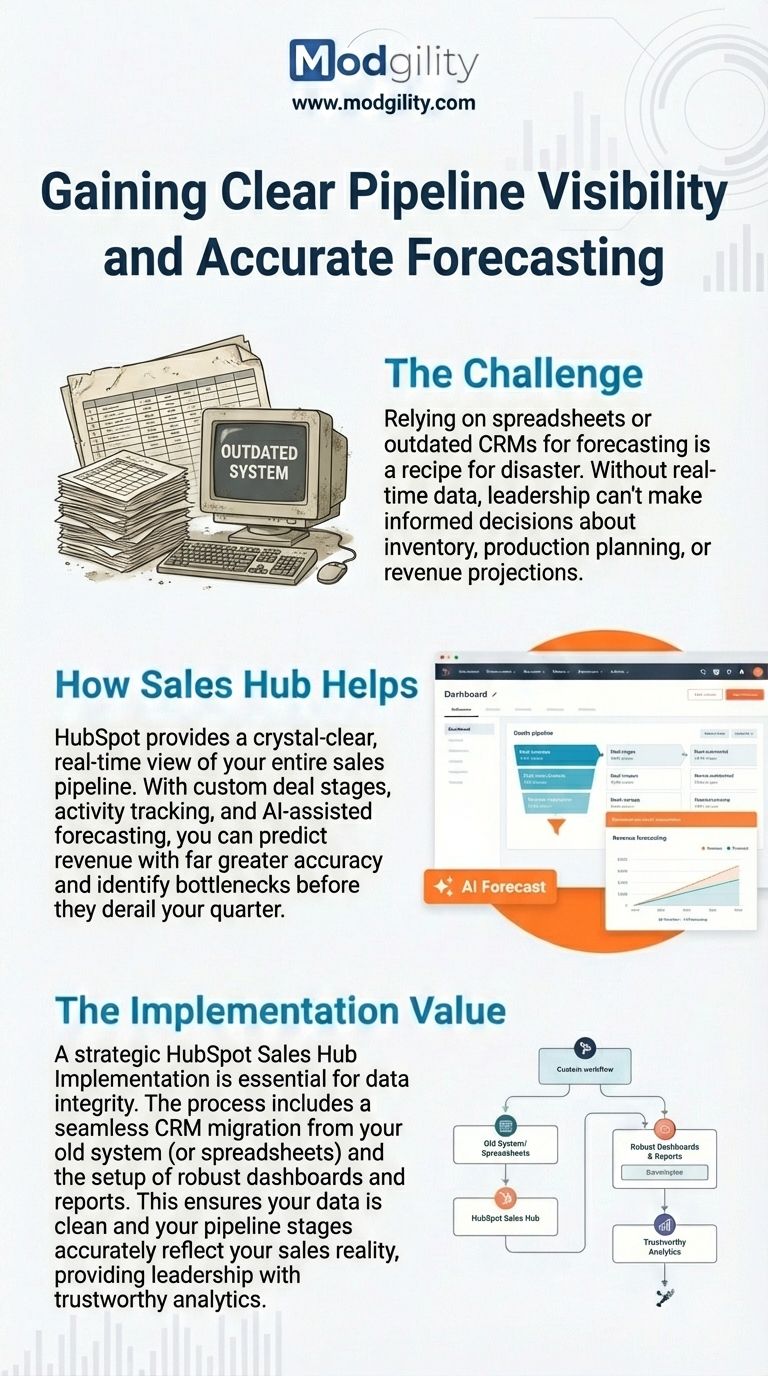
The Challenge: Relying on spreadsheets or outdated CRMs for forecasting is a recipe for disaster. Without real-time data, leadership can't make informed decisions about inventory, production planning, or revenue projections.
How Sales Hub Helps: HubSpot provides a crystal-clear, real-time view of your entire sales pipeline. With custom deal stages, activity tracking, and AI-assisted forecasting, you can predict revenue with far greater accuracy and identify bottlenecks before they derail your quarter.
The Implementation Value: A strategic HubSpot Sales Hub Implementation is essential for data integrity. The process includes a seamless CRM migration from your old system (or spreadsheets) and the setup of robust dashboards and reports. This ensures your data is clean and your pipeline stages accurately reflect your sales reality, providing leadership with trustworthy analytics.
4. Aligning Sales, Marketing, and Service
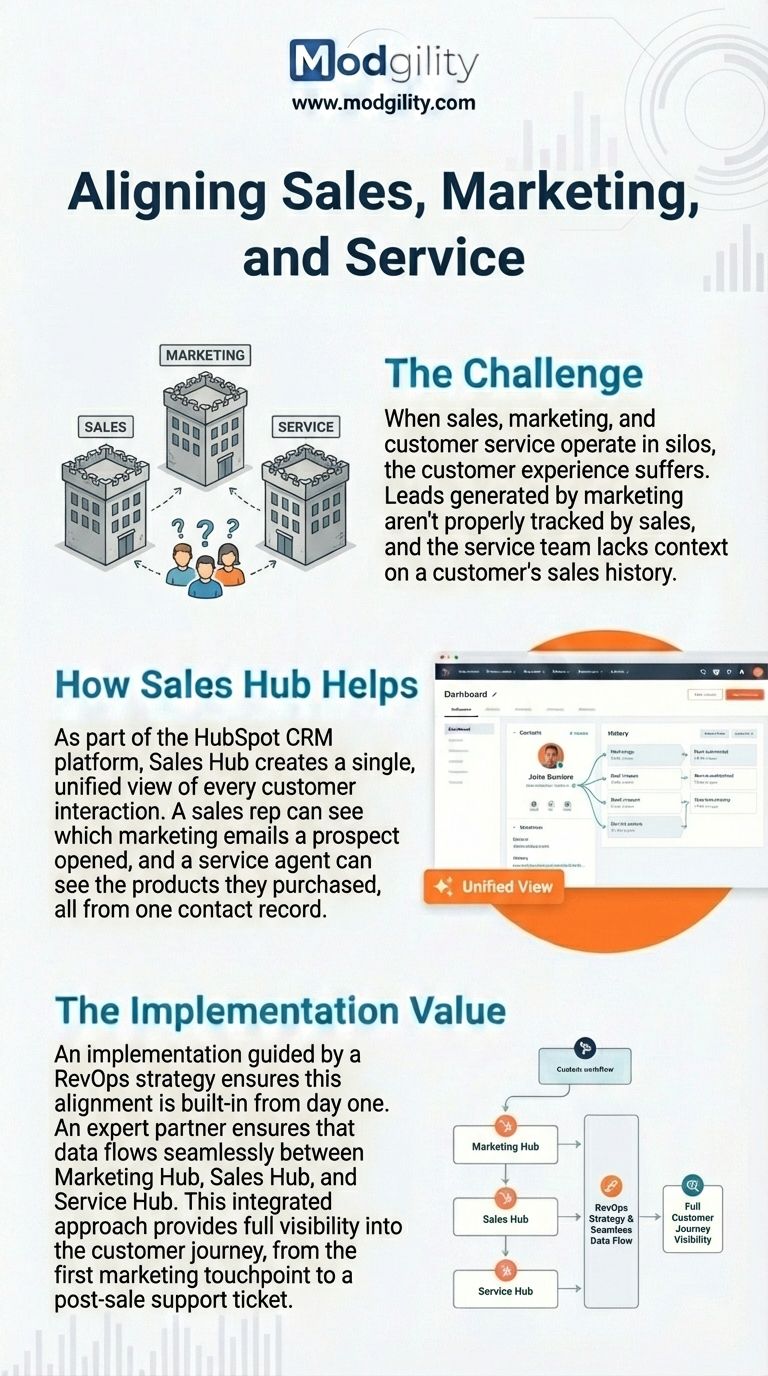
The Challenge: When sales, marketing, and customer service operate in silos, the customer experience suffers. Leads generated by marketing aren't properly tracked by sales, and the service team lacks context on a customer's sales history.
How Sales Hub Helps: As part of the HubSpot CRM platform, Sales Hub creates a single, unified view of every customer interaction. A sales rep can see which marketing emails a prospect opened, and a service agent can see the products they purchased, all from one contact record.
The Implementation Value: An implementation guided by a RevOps strategy ensures this alignment is built-in from day one. An expert partner ensures that data flows seamlessly between Marketing Hub, Sales Hub, and Service Hub. This integrated approach provides full visibility into the customer journey, from the first marketing touchpoint to a post-sale support ticket.
How to Measure the ROI of Your HubSpot Sales Hub Implementation
To justify your investment and track progress, focus on these key performance indicators (KPIs):
- Sales Cycle Length: The average time it takes to close a deal, from initial contact to signed contract.
- Lead-to-Customer Conversion Rate: The percentage of leads that become paying customers.
- Rep Quota Attainment: The percentage of your sales team hitting their sales targets.
- Time Spent on Manual Tasks: Survey your team before and after implementation to quantify time savings.
- Forecast Accuracy: The variance between your sales forecast and actual revenue.
The Bottom Line: ROI is a Result of Strategic Implementation
Investing in a powerful platform like HubSpot Sales Hub is the first step. The true, measurable ROI is realized when the tool is strategically configured to solve the unique challenges of your manufacturing business. A purposeful HubSpot Sales Hub Implementation transforms the platform from a simple CRM into a growth engine that shortens sales cycles, boosts productivity, and provides the clarity needed to scale with confidence.
Frequently Asked Questions
What is the typical ROI for a manufacturing firm using HubSpot Sales Hub?
Mid-sized manufacturing firms often see significant returns within 12-18 months, driven by an average 20-30% increase in sales productivity and a 15% shorter sales cycle.
How does HubSpot Sales Hub shorten the long sales cycle in manufacturing?
HubSpot Sales Hub shortens the complex manufacturing sales cycle using automation tools like email sequences, task reminders, and meeting scheduling links. This ensures timely follow-ups and keeps deals moving forward, reducing manual work for the sales team.
How does Sales Hub improve sales team productivity?
Sales Hub boosts productivity by centralizing essential tools directly within the CRM. Features like email templates, sales playbooks, and call tracking eliminate the need for reps to switch between systems, significantly reducing time spent on non-revenue-generating administrative tasks.
Why is a professional implementation important for maximizing ROI?
A professional implementation is critical because it tailors the platform to a manufacturer's specific challenges. An expert partner configures custom automation, ensures data integrity during migration, and aligns the system with the company's unique sales process, transforming the tool into a true growth engine.
No Comments Yet
Let us know what you think